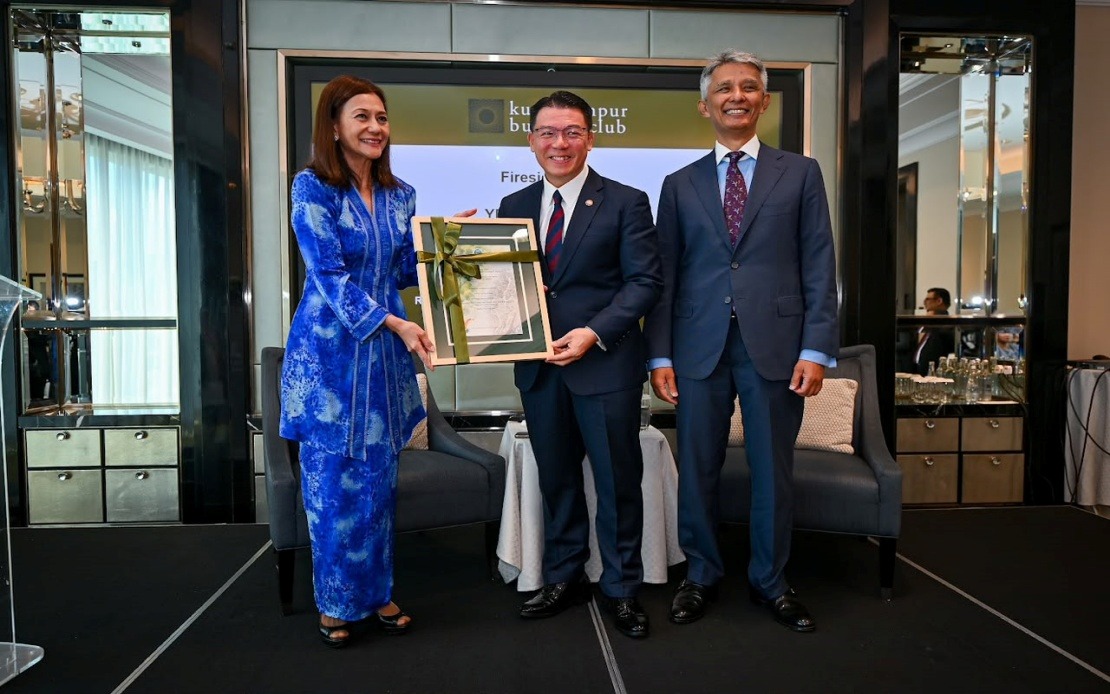
Housing and Local Government Minister Nga Kor Ming has underscored the importance of maintaining unwavering commitment to the MADANI framework's reform agenda, arguing that sustained policy direction remains the cornerstone of Malaysia's broader economic transformation. Speaking after a fireside chat at the Kuala Lumpur Business Club, Nga emphasised that continuity in governance allows comprehensive reforms already initiated to reach fruition and generate durable economic benefits rather than yielding temporary gains that fail to reshape underlying structural weaknesses.
The minister stressed that investor confidence hinges fundamentally on predictability and consistency from government leadership. Markets reward stability, and Malaysia's ability to maintain a clear reform trajectory signals to international capital that the country offers a secure environment for long-term deployment of resources. This consistency directly influences Malaysia's competitive position within Southeast Asia and the broader Indo-Pacific region, where neighbouring economies are equally aggressively pursuing foreign investment and structural modernisation.
Nga articulated that securing a renewed electoral mandate would furnish the administration under Prime Minister Datuk Seri Anwar Ibrahim with the political capital necessary to deepen structural reforms further, enhance institutional capacity across government agencies, and bring existing economic transformation initiatives to full maturity. Without such continuity, reform programmes risk being diluted, reversed, or abandoned mid-implementation, undermining their effectiveness and signalling policy unpredictability to overseas investors evaluating their options.
The MADANI government, Nga noted, has already demonstrated measurable progress across several reform domains including governance improvements, more sophisticated economic management practices, and enhanced international engagement. These efforts have collectively strengthened Malaysia's appeal as an investment destination, particularly among multinational corporations and sovereign wealth funds seeking stability alongside growth opportunities. The improvements reflect a deliberate strategy to position Malaysia as a reformist nation committed to institutional excellence rather than relying solely on conventional competitive advantages.
The minister highlighted Malaysia's significantly improved standing on the Corruption Perceptions Index, noting that cleaner governance perceptions directly translate into lower investment risk assessments and improved borrowing terms. International credit rating agencies have also recognised the government's fiscal discipline and economic stewardship through stronger ratings, validating the credibility of Malaysia's macroeconomic management. These external validations matter substantially because they reduce the cost of government borrowing and signal to private investors that fiscal fundamentals remain sound despite global economic headwinds.
Trade resilience has emerged as another crucial achievement under the current administration. Malaysia's merchandise exports and trade flows have weathered significant global uncertainties including supply chain disruptions, geopolitical tensions, and wavering commodity prices. This resilience demonstrates that diversified economic policies and proactive trade diplomacy are generating tangible results in insulating Malaysia from external shocks that have destabilised less diversified economies throughout the region.
Malaysia's emerging position as a premier investment destination reflects more than market forces alone. The government has cultivated this standing through transparent policymaking, clear regulatory frameworks, and credible commitments to rules-based commerce. These fundamentals appeal particularly to sophisticated investors evaluating long-term commitments, which generate durable employment and technological spillovers rather than speculative capital seeking quick arbitrage opportunities.
Diplomatic engagement has opened substantial new economic partnerships. Nga referenced a RM52.73 billion strategic partnership framework with Turkmenistan alongside long-term energy collaboration initiatives with Russia, demonstrating that deliberate foreign policy strategy creates tangible commercial opportunities. These partnerships diversify Malaysia's international economic exposure and create new avenues for investment inflows beyond traditional markets. Such strategic positioning would prove fragile if domestic policy direction shifted unpredictably, as it would undermine the credibility of Malaysia's diplomatic commitments and long-term development partnerships.
For Malaysian businesses and entrepreneurs, policy continuity translates into improved planning horizons. Companies can make confident investments in capacity expansion, workforce development, and technology adoption when government policy signals clarity about the regulatory environment, infrastructure development, and economic priorities. Conversely, policy volatility forces firms to adopt defensive postures, deferring investments and maintaining excessive cash reserves rather than deploying capital productively throughout the economy.
The regional dimension merits particular attention for Malaysia readers. Neighbouring countries including Vietnam, Thailand, and Indonesia are pursuing aggressive economic modernisation strategies. Malaysia's competitive advantage rests partly on perceived governance quality and institutional reliability. Wavering policy commitment would erode this differentiation and potentially redirect foreign investment flows toward competitor nations perceived as offering greater stability. ASEAN integration efforts also depend on Malaysia maintaining consistent participation in regional frameworks and agreements, which becomes complicated by domestic policy shifts.
For the broader economy, Nga's argument suggests that short-term electoral cycles create real economic costs when they disrupt long-term reform implementation. The most transformative economic changes—institutional modernisation, regulatory harmonisation, infrastructure development—require sustained commitment extending beyond typical political cycles. This structural reality means that policies focused on generating reliable governance continuity potentially deliver greater developmental benefits than populist measures designed for immediate electoral appeal but lacking persistent impact.
The emphasis on long-term planning reflects international development evidence demonstrating that successful economic transformation requires decades of consistent implementation. Countries that have achieved substantial living standard improvements and structural modernisation share common characteristics including sustained policy direction, institutional coherence, and protection of reform programmes from short-term political fluctuations. Malaysia faces competition from other middle-income economies pursuing similar transformational trajectories, making policy constancy a genuine competitive advantage.