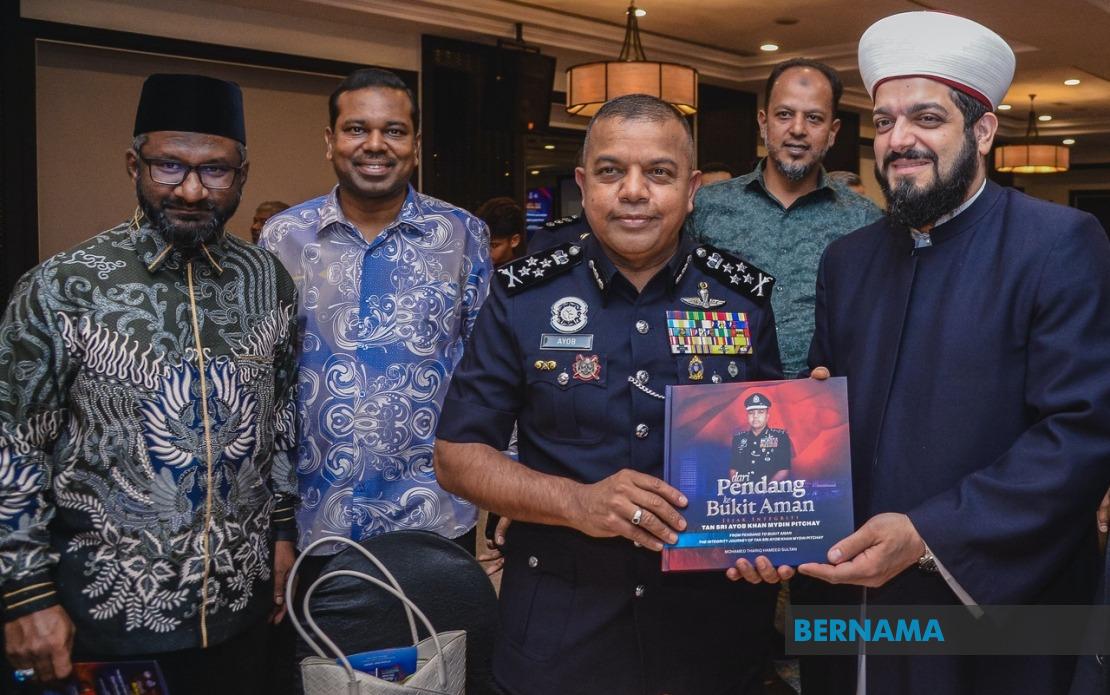
The Malaysian police force is sounding the alarm over a fundamental transformation in how militant and extremist organisations are operating within the country, with Tan Sri Ayob Khan Mydin Pitchay, the Deputy Inspector-General of Police, warning that these threats show no signs of abating as tactics become increasingly sophisticated and difficult to detect. Speaking after the launch of his biography in Kuala Lumpur on July 23, Ayob Khan emphasised that the evolution of extremist methods represents one of the most pressing contemporary challenges facing law enforcement, requiring constant adaptation and innovation in counter-terrorism strategies.
Traditionally, extremist recruitment operated through face-to-face networks, relying on intimate settings such as religious study circles known as usrah sessions to build ideological commitment and foster group cohesion. These conventional recruitment pathways, while still present, have been substantially eclipsed by a new digital ecosystem that offers recruiters far greater reach and anonymity. The migration to online spaces has fundamentally altered the recruitment landscape, removing geographical constraints and enabling potential radical actors to identify and cultivate recruits across state and national borders with minimal physical interaction or detection risk.
Among the most concerning developments is the weaponisation of mainstream entertainment platforms, particularly video games, as recruitment vehicles. The use of platforms such as Roblox—a user-generated content gaming platform with millions of players globally, including substantial numbers in Southeast Asia—represents a troubling evolution. These digital spaces offer extremists multiple tactical advantages: they provide anonymity through avatars and usernames, foster communities based on shared interests that can gradually be redirected toward radical ideology, and exist in environments where parental oversight and law enforcement monitoring remain limited. The interactive and immersive nature of gaming environments creates psychological conditions conducive to radicalisation, with individuals often spending extended periods within these digital communities.
Ayob Khan's assessment points to a critical shift in the ideological drivers underpinning extremist mobilisation. Rather than extremism stemming exclusively from religious doctrine or theological interpretation, contemporary recruits are increasingly motivated by emotional and psychological triggers—encompassing anger, alienation, a sense of injustice, or social grievance. This broadening of motivational factors complicates law enforcement responses, as traditional counter-narratives rooted in religious scholarly refutation become less effective when the underlying grievances are primarily psychological or social in nature. The targeting of teenagers has proven particularly effective, as younger individuals navigating identity formation and social belonging are inherently vulnerable to communities offering acceptance and purpose, particularly when grievances are skilfully weaponised against perceived enemies or systemic injustices.
Recent arrests of teenagers involved in extremist activities underscore the urgency of this challenge and demonstrate that Malaysian youth are actively being targeted by radicalisation networks. These cases reveal that recruitment is succeeding across diverse demographic and socioeconomic backgrounds, suggesting that standard risk profiling approaches may be inadequate for identifying vulnerable individuals in digital environments. The modus operandi evident in these arrests indicates that extremist networks have developed sophisticated understanding of adolescent psychology and are deliberately calibrating their messaging and community engagement strategies to exploit developmental vulnerabilities specific to teenagers.
Ayob Khan's insistence that law enforcement must maintain a proactive rather than reactive posture reflects the temporal challenge inherent in countering digital-native extremism. Detection becomes exponentially more difficult when recruitment occurs within encrypted or semi-private digital spaces, where conversations are ephemeral and networks operate according to principles of operational security learned from both historical terrorist organisations and contemporary cybercriminal enterprises. The window between identification of a potential recruit and radicalisation to the point of operational intent may be significantly compressed in digital environments, leaving little time for intervention.
The Deputy Inspector-General's emphasis on intelligence failure carries particular weight for Malaysian security infrastructure. A successful attack on Malaysian soil would not only represent a loss of life and national trauma but would constitute a fundamental failure of preventive security architecture. This framing positions counter-terrorism as an intelligence competition rather than merely a law enforcement matter, requiring integration of signals intelligence, human intelligence, and digital forensics alongside traditional policing. The implication is that Malaysia's police institutions must substantially upgrade their digital capabilities and threat assessment methodologies to match the sophistication of contemporary extremist networks.
The role assigned to the Special Branch's Counter-Terrorism Division, designated as E8, becomes correspondingly more demanding. These units must develop expertise not only in terrorism prevention but in digital culture, gaming platforms, online community dynamics, and the psychology of digital radicalisation. This represents a significant capacity-building challenge, as recruitment and training of personnel with expertise across these diverse domains is time-consuming and expensive. Furthermore, technological change occurs at a pace that often outstrips organisational adaptation, meaning that counter-terrorism units may perpetually find themselves addressing threats using tools and methodologies already partially obsolete.
For Malaysia specifically, the emergence of extremist recruitment through gaming platforms has additional regional dimensions. Southeast Asia's substantial and youthful digital-native population, combined with widespread internet penetration and high engagement with gaming platforms, creates an environment where radicalisation networks can operate with relative ease. Cross-border recruitment becomes feasible, with individuals in Malaysia potentially radicalised by actors in neighbouring countries or beyond, while Malaysian-based networks may extend their influence regionally. This transnational character of digital extremism complicates national counter-terrorism responses and requires enhanced regional intelligence sharing and coordination.
The convergence of technological innovation, psychological vulnerability, and ideological adaptation described by Ayob Khan presents law enforcement with a challenge that cannot be addressed through conventional policing alone. Effective response requires sustained investment in digital intelligence capabilities, educational initiatives addressing online radicalisation risk factors, collaboration with technology platforms to restrict extremist content and networks, and community-based interventions capable of reaching at-risk youth before radicalisation occurs. The stakes are sufficiently high that failure to adapt security approaches to match evolving extremist tactics could result in significant loss of life and erosion of national security.

