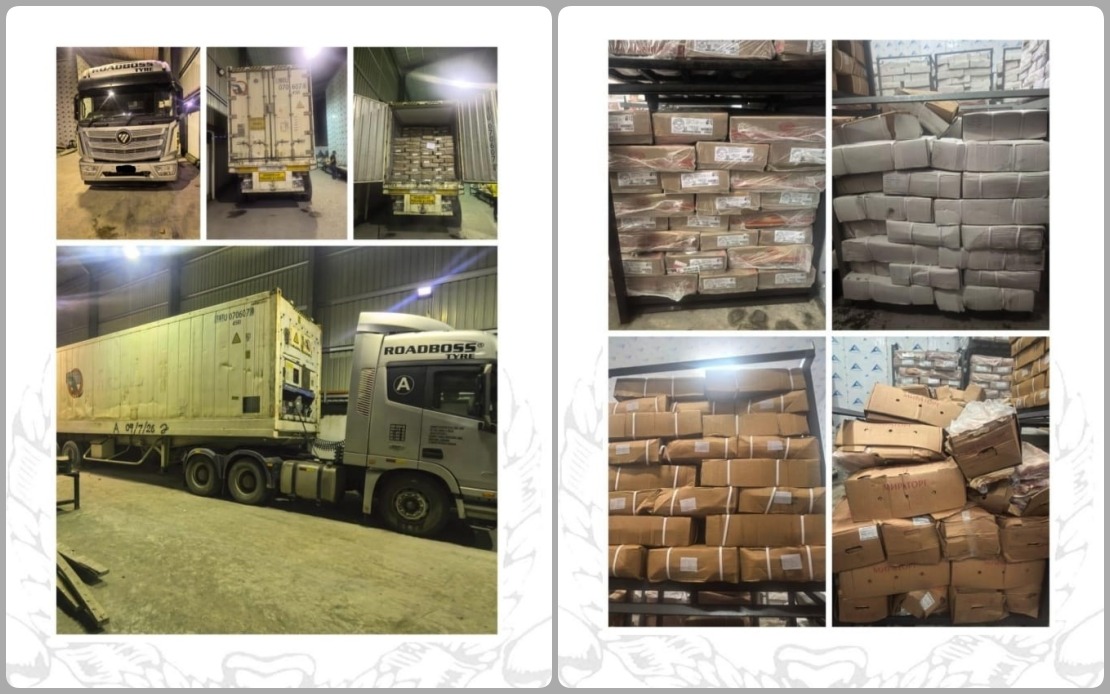
Malaysian authorities have cracked down on what appears to be a significant illicit food import operation, with police seizing RM6.19 million worth of frozen pork products at a warehouse in Miri, Sarawak. The enforcement action, conducted late on a recent evening, resulted in the arrest of a 26-year-old local resident and has drawn attention to ongoing challenges in monitoring food imports across Malaysia's states. The operation, identified as Op Taring Chiller, reflects escalating police efforts to combat organised food smuggling and protect domestic food security standards.
According to Datuk Seri Mohd Yusri Hassan Basri, director of the Internal Security and Public Order Department, the warehouse raid uncovered an extensive stockpile of pork products in various forms. Among the seizures were approximately 30,000 kilogrammes of cooked frozen pork large intestines, 18,000 kilogrammes of pork loin distributed across 15 pallets, 750 kilogrammes of pork in a single pallet, several pallets of bone-in pork bellies with rind, and frozen pork shoulders. The sheer quantity suggests this was not a small-scale operation but rather an organised effort to import and store significant volumes of meat products outside regulatory channels.
The enforcement operation carries particular significance for Malaysia given the country's regulatory framework around halal certification and food safety standards. Officials emphasised that the operation directly targets the storage of frozen food products with unknown halal status, a critical concern in a Muslim-majority nation where halal assurance is both a religious requirement and a foundational element of food industry oversight. The absence of valid permits indicates these products entirely bypassed the established certification and inspection processes that legitimate importers must navigate, potentially posing food safety risks to consumers.
The investigation has been assigned to multiple enforcement agencies, demonstrating the multi-layered approach Malaysian authorities employ against large-scale smuggling operations. The Wildlife Crime Bureau and Special Investigation Intelligence division coordinated with the Miri district police headquarters and the Sarawak Veterinary Services Department, indicating that such operations require both local knowledge and specialised investigative expertise. This inter-agency cooperation has become increasingly important as smuggling networks grow more sophisticated in exploiting vulnerabilities across state borders and maritime entry points.
Under Malaysian law, the seized products fall under the Veterinary Public Health Ordinance 1999, under which the suspect faces investigation under Sections 9(1) and 9(3). Authorities have simultaneously issued a RM25,000 compound notice, though the relatively modest fine compared to the seizure value may reflect Malaysia's strategy of combining financial penalties with product confiscation to deter future violations. This graduated enforcement approach aims to make smuggling economically unviable while avoiding penalties so severe they push operators further underground.
The Miri operation is part of a broader, intensified enforcement campaign that has yielded substantial results in recent months. Between January 1 and July 10, the Wildlife Crime Bureau conducted 201 raids nationwide, leading to 375 arrests and seizures totalling RM264.86 million across multiple categories of contraband. These operations have targeted smuggled goods evading customs duties, leaked controlled and subsidised commodities, frozen food products, wildlife trafficking, and electronic waste. The scale of these operations underscores the serious resource commitment Malaysia has dedicated to tackling organised smuggling networks.
For Malaysian consumers and legitimate food importers, such enforcement actions carry important implications. Smuggled food products bypass mandatory quality checks, veterinary inspections, and halal certification processes, creating potential health and safety risks for unknowing consumers. Legitimate importers operating within regulatory frameworks find themselves competing against actors who avoid compliance costs, creating market distortions. The sustained enforcement campaign signals that authorities are attempting to level this playing field and protect both public health and fair competition within the food supply chain.
The operation also highlights Malaysia's vulnerability to cross-border smuggling, particularly through maritime routes and across land borders with neighbouring countries. Sarawak, as a state bordering Indonesia and occupying a significant coastline, represents a strategic entry point for contraband goods. The concentration of enforcement resources in such locations suggests authorities recognise these geographic vulnerabilities and are prioritising monitoring in high-risk zones.
From a regional perspective, Malaysia's experience reflects broader Southeast Asian challenges in controlling food product flows and ensuring compliance with food safety standards. Countries throughout the region struggle with similar issues as smugglers exploit regulatory differences and seek profitable opportunities by bypassing certification requirements. The Miri case demonstrates that effective enforcement requires sustained intelligence work, coordinated multi-agency operations, and adequate resourcing—capacity that varies significantly across the region.
Moving forward, police officials have reaffirmed their commitment to intensifying intelligence gathering and integrated enforcement operations against smuggling and organised crime networks. The continuation of operations like Op Taring Chiller, combined with enhanced monitoring capabilities, reflects recognition that food smuggling is not merely a regulatory violation but part of broader criminal enterprise often linked to organised crime groups. Authorities acknowledge that combating these networks demands sustained, systematic pressure rather than sporadic enforcement actions.
The case also raises questions about how such large quantities of contraband products enter Malaysia without detection, and whether current border control mechanisms adequately address evolving smuggling tactics. Industry observers note that professional smuggling operations often exploit procedural gaps, corrupt officials, or deliberate misdeclaration of cargo. Addressing these vulnerabilities requires not only enforcement action but also systemic improvements to monitoring, verification protocols, and inter-agency intelligence sharing.
For Malaysian consumers and policymakers, the RM6.19 million seizure serves as a reminder of hidden vulnerabilities within the food supply chain. While enforcement actions generate headlines and seizure statistics, preventing contraband from entering circulation in the first place remains the more challenging objective. The operations launched thus far represent important progress, but sustained vigilance and resource allocation will be essential to maintain momentum against increasingly sophisticated smuggling operations seeking to exploit gaps in Malaysia's food security framework.

