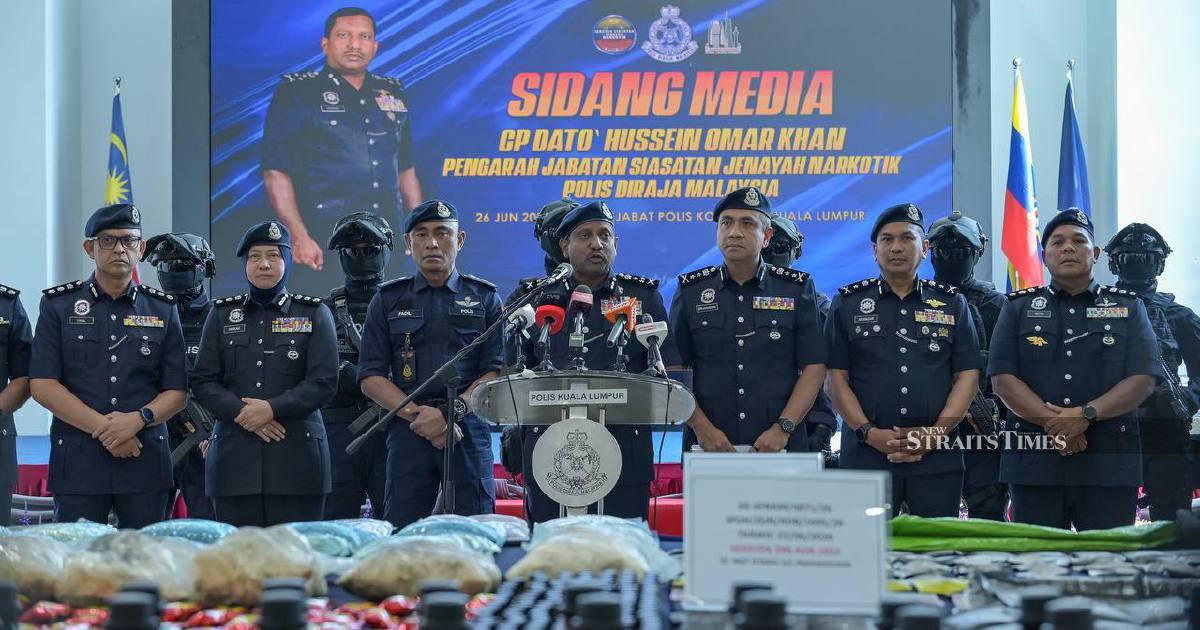
A major anti-drug operation by Malaysian police has resulted in the seizure of narcotics valued at approximately RM135.63 million, with seven individuals taken into custody following three simultaneous raids conducted in the Cheras area on June 20. The enforcement action, carried out by multiple police units, represents one of the significant interdictions aimed at stemming the flow of illegal substances into Malaysia's domestic market.
The coordinated raids in Cheras, a district that has increasingly featured in police drug enforcement reports, were designed to target a suspected trafficking network. By conducting three operations simultaneously rather than sequentially, authorities were able to prevent suspects from alerting associates and moving contraband to alternate locations. This tactical approach has become standard practice among Malaysian narcotics units seeking to maximise the impact of operations and minimise the possibility of evidence destruction or fugitive escapes.
The magnitude of the seizure underscores persistent challenges facing Malaysia in combating organised drug trafficking. The estimated street value of RM135.63 million reflects the substantial profit margins inherent in the drug trade, which continues to incentivise criminal networks despite enhanced enforcement efforts and severe penalties. The sheer quantity intercepted in a single operation suggests that the suspected network had accumulated considerable stocks, pointing towards wholesale distribution rather than street-level dealing.
Police stated that the operation's primary objective extended beyond mere arrest and seizure. Authorities indicated they had intelligence suggesting the trafficking group intended to introduce these substances into the broader Malaysian market systematically. Such large-scale infiltration attempts typically involve coordination with street-level distributors and retail dealers, creating distribution networks that permeate urban and suburban areas. By moving against the group when they did, police aimed to disrupt the entire supply chain at its highest level.
The seven suspects detained during the raids are now undergoing investigation under relevant provisions of Malaysia's drug laws. The identity of these individuals and their specific roles within the suspected organisation have not yet been publicly disclosed, though such details typically emerge once the initial investigation phase concludes. The severity of potential charges will depend on factors including individual involvement levels, the specific drugs seized, and evidence of intent to distribute.
The Cheras location of these raids reflects broader trends in Malaysian drug trafficking geography. Residential districts within Kuala Lumpur and surrounding areas have become increasingly attractive to trafficking networks due to proximity to major markets and relative ease of access. Cheras, being a densely populated and relatively accessible area, provides opportunities for criminals to operate while maintaining reasonable operational security compared to more central locations.
Malaysia's ongoing battle against narcotics trafficking takes place within the context of broader regional drug flows. The country serves as both a transit point and ultimate destination market for substances originating from Golden Triangle production areas and international trafficking networks. Enhanced enforcement in Malaysia therefore carries implications beyond national borders, potentially disrupting supply chains that feed addiction and criminal activity throughout Southeast Asia.
The types and quantities of drugs seized in such operations often provide intelligence officials with insights into trafficking trends and preferred narcotics. Authorities monitor whether specific substances gain prominence seasonally or whether criminal networks are diversifying their product portfolios. The composition of this RM135.63 million haul would have informed police assessments regarding current market preferences and organisational capabilities within trafficking hierarchies.
Successful operations like the Cheras raids require substantial police resources, coordinated planning, and intelligence gathering. The advancement of Malaysian law enforcement capabilities, including improved surveillance technologies, informant networks, and inter-agency coordination, has incrementally enhanced the likelihood of intercepting major trafficking efforts. However, experts acknowledge that such operations represent individual victories within an ongoing struggle, as trafficking networks continuously adapt their methods and routes to evade enforcement.
The detention of seven individuals removes specific operators from circulation, but broader organisational structures likely persist. Malaysian police accordingly focus not merely on one-off seizures but on developing cases that target entire networks, identifying leadership and financial mechanisms. The success of future prosecutions will depend on whether investigators can establish organisational links, demonstrate financial flows, and prove complicity in distribution intentions among those arrested.
This operation adds to Malaysia's cumulative interdiction efforts throughout 2024. Annual drug seizure statistics, when aggregated, reveal the persistence of trafficking activities despite sustained police pressure. The Cheras raids exemplify how Malaysian authorities continue targeting high-value shipments and supplier-level organisations, attempting to raise costs and risks for criminal enterprises while simultaneously addressing demand-side challenges through rehabilitation and community awareness initiatives.
Government agencies have repeatedly emphasised that combating drug trafficking requires multi-faceted approaches extending beyond law enforcement. Community vigilance, youth prevention programmes, treatment capacity expansion, and international cooperation all feature in Malaysia's comprehensive anti-narcotics strategy. However, operations such as the June 20 Cheras enforcement action remain critical components, directly reducing narcotics availability and disrupting criminal organisations seeking to establish or expand market presence within Malaysian territory.

