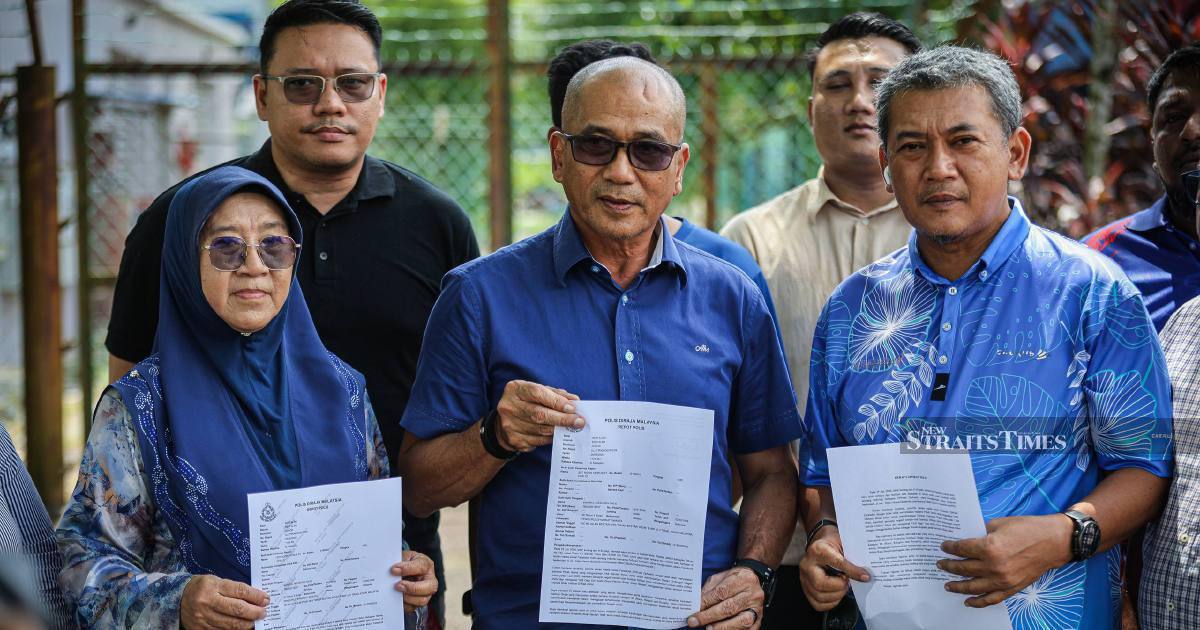
Political tensions in Johor have escalated dramatically following claims made by Datuk Dr Mohd Puad Zarkashi, a former member of Umno's supreme council, regarding the alleged influence of the Johor palace over state party and political affairs. The allegations have prompted several Johor Barisan Nasional members to take the matter to police, lodging formal complaints against Puad in what appears to be a coordinated response to his public statements.
The nature of Puad's allegations centres on concerns about institutional overreach, with suggestions that palace officials have wielded undue influence over Johor Umno's direction and decision-making processes. Such claims carry significant weight in Malaysian politics given the constitutional role and social standing of royal institutions. The palace traditionally maintains a position of political neutrality, though questions about the extent and form of royal influence occasionally surface in state-level politics across the federation.
Johor holds particular importance within the Umno framework and broader Malaysian politics as a traditionalist stronghold for the party and a state where established power structures have remained relatively stable over decades. Any public suggestion of unconventional political interference thus generates considerable concern among party ranks and prompts swift institutional responses designed to protect both party cohesion and palace reputation. The decision to lodge police reports represents an effort to formalize these concerns through official channels.
Puad's position as a former supreme council member grants him standing and credibility within Umno circles, making his allegations difficult for the party to dismiss or ignore entirely. His comments appear to have struck a nerve among Johor Barisan Nasional leadership, who likely view public discussion of palace involvement as potentially damaging to institutional relationships and party governance structures. The coordinated filing of police reports suggests organization at senior levels and indicates how seriously Johor party leadership has taken the matter.
From a legal perspective, the complaints raise questions about the specific nature of allegations that prompted police involvement. Malaysian law contains provisions governing defamation and the making of false accusations, which may form the basis of these reports. However, the decision to involve police rather than pursue civil remedies or internal party mechanisms suggests that those filing complaints perceive the matter as sufficiently serious to warrant criminal investigation.
The incident reflects broader tensions within Malaysian politics regarding institutional boundaries and the appropriate roles of various power structures. While Umno has historically maintained close relationships with royal institutions across the federation, explicit discussion of palace involvement in partisan political matters remains unusual and potentially controversial. The public airing of such claims creates complications for all parties involved, as it forces discussion of topics typically handled discretely.
For readers across Southeast Asia observing Malaysian politics, this episode illustrates the complex interplay between traditional monarchical institutions and modern party politics within the federation's constitutional framework. Unlike democracies where such matters might be debated openly, Malaysian conventions generally favour quieter resolution of tensions between established power structures. Puad's willingness to voice concerns publicly thus represents a break from customary practice.
The timing of the complaints and the identity of those filing them may prove significant in understanding the broader political landscape in Johor. Whether the action represents genuine institutional concern or carries factional dimensions remains unclear from available information. Nevertheless, the escalation suggests that disagreements about political direction or governance within Johor Umno may run deeper than surface appearances indicate.
Going forward, the police investigation will determine whether any substantive allegations warrant formal charges or further action. The outcome will likely influence perceptions of institutional integrity and may affect factional alignments within Johor Barisan Nasional. Should the complaints proceed without substantiation, questions may arise about the appropriateness of involving law enforcement in internal party disputes. Conversely, if investigations reveal concerning conduct, the findings could have implications for party governance and palace-party relationships throughout Malaysia.
The broader context matters too: Johor has experienced political transitions in recent years, and questions about power distribution and influence invariably surface during periods of institutional change. Understanding whether Puad's allegations reflect genuine concerns about governance or represent part of ongoing factional maneuvering requires careful attention to political dynamics within the state.
For Malaysian readers particularly in Johor, this situation underscores the importance of institutional transparency and clear governance structures within political parties. The preference for discretion in handling disagreements between major institutions, while protecting formal relationships, can sometimes obscure fundamental questions about appropriate conduct and accountability. Public debate, however uncomfortable for those involved, may ultimately strengthen institutional integrity by clarifying expectations and boundaries.

