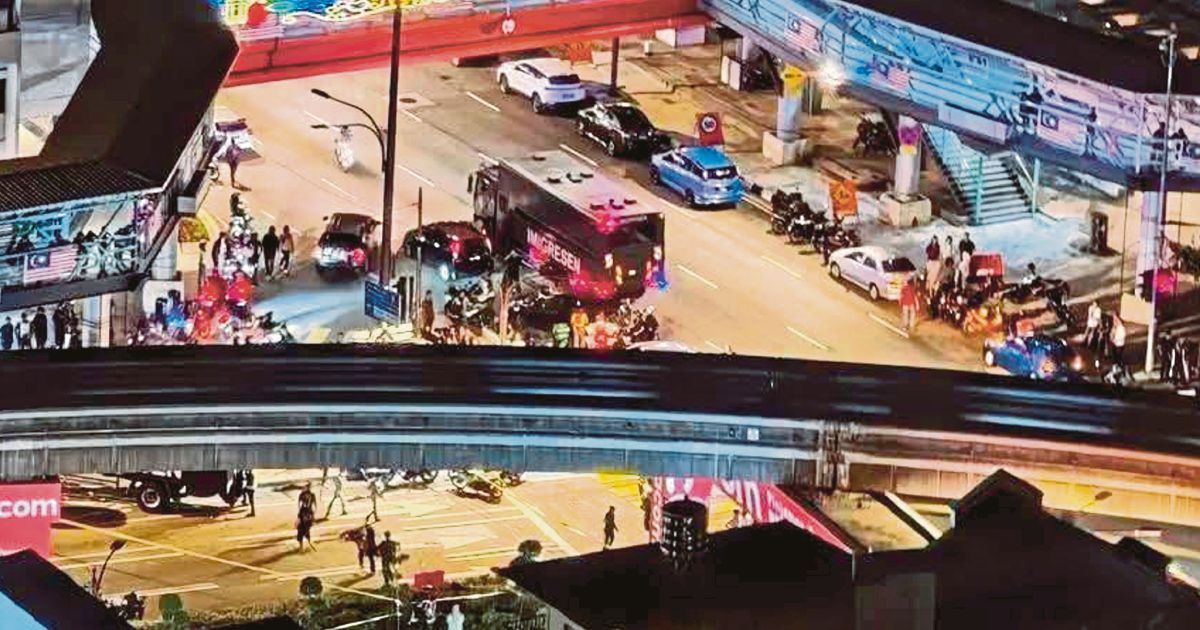
A tragic collision involving an Immigration Department truck claimed the lives of three people—a father and his two daughters—on Jalan Sultan Ismail in the early hours yesterday, prompting police to launch a comprehensive investigation into the circumstances of the crash. The incident has sparked immediate scrutiny over how the accident unfolded, with authorities now reviewing multiple sources of video evidence to reconstruct the sequence of events and establish responsibility.
Investigators from the Royal Malaysian Police are methodically examining dashcam recordings and CCTV footage from the vicinity of the collision in a bid to determine the precise factors that led to the fatal encounter. This footage-based approach reflects modern investigative practice in serious traffic accidents, where visual documentation can clarify disputed accounts and provide an objective timeline of what transpired in the seconds before impact. The review process is expected to consume considerable investigative resources, as officers must carefully analyze frame-by-frame sequences to identify vehicle movements, speeds, and potential warning signs.
The use of dashcam and CCTV data represents a significant advantage in contemporary accident investigations. Rather than relying solely on eyewitness testimony—which can be inconsistent or incomplete—police now have technological tools that capture precise details of vehicular movements and road conditions. Such evidence has become standard in traffic fatality cases across Malaysia, particularly in high-profile incidents where public interest and accountability concerns are heightened.
The involvement of an Immigration Department vehicle adds a layer of complexity to the investigation. Government-operated vehicles are typically subject to maintenance schedules and driver protocols that differ from private transport, and these standards may become relevant as investigators determine whether mechanical failure or human error contributed to the collision. The department may face questions about its fleet management practices, driver training standards, and whether the vehicle involved was fit for operation at the time of the accident.
Jalan Sultan Ismail, a prominent thoroughfare in central Kuala Lumpur, experiences substantial traffic volume and serves as a key route connecting various commercial and residential districts. The timing of the accident in the early morning hours may have implications for how the crash occurred, as reduced traffic density and different lighting conditions at that time could have affected driver visibility and vehicle control. Understanding the road conditions and traffic patterns at the specific moment of collision will be crucial to the investigation's findings.
Fatalities involving government vehicles naturally draw heightened scrutiny from both the public and official quarters. When state-operated transport is involved in serious accidents, questions inevitably arise about regulatory oversight, procurement standards, and whether public resources are being managed with adequate safety considerations. This incident may prompt reviews of broader government vehicle safety protocols across multiple departments.
The loss of a father and two young daughters has devastating implications for the extended family and broader community. Such tragedies underscore the serious consequences of traffic accidents and the importance of robust investigation and accountability mechanisms. The emotional toll of such incidents often galvanizes public attention on road safety issues and may spark renewed debate about enforcement of traffic regulations and driver accountability.
Police investigations of this nature typically examine multiple dimensions simultaneously: vehicle mechanical condition, driver fatigue or impairment, adherence to traffic laws, road infrastructure conditions, and weather factors. While dashcam and CCTV footage forms the evidentiary backbone, investigators will cross-reference this material against witness statements, medical examinations, and vehicle inspection findings to build a comprehensive picture.
The investigation's eventual findings may have implications beyond this single incident. Should the investigation reveal systemic issues with vehicle maintenance, driver training, or departmental safety protocols, the Immigration Department might face requirements to implement corrective measures. Conversely, if the accident results from external factors beyond departmental control, the findings could inform broader road safety policy discussions at the municipal or national level.
Public expectations for transparency in such investigations remain high, particularly when government assets are involved in fatal incidents. Police will need to balance thorough investigative work with timely public communication about findings and conclusions. Once the video evidence review is complete and supplementary investigations conclude, authorities will likely release findings that clarify responsibility and any contributing factors. For road safety advocates, this incident serves as a stark reminder of the potential consequences of traffic accidents and the ongoing need for vigilance in enforcement and driver education throughout Malaysia.

