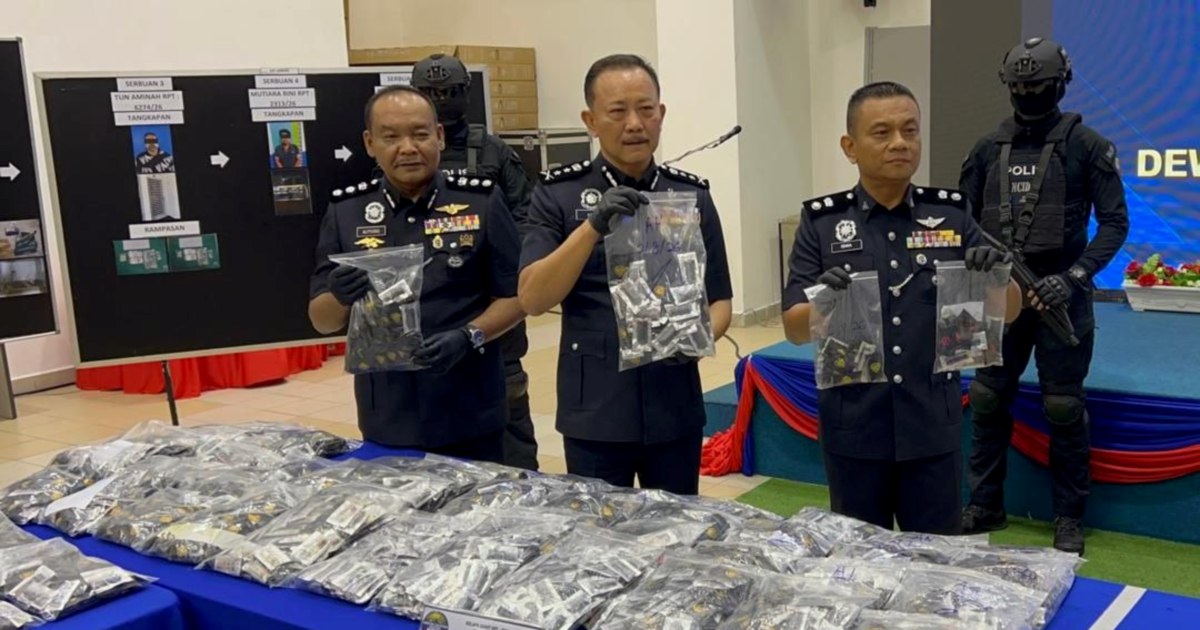
Authorities in Johor have successfully disrupted a sophisticated operation manufacturing and distributing vape products laced with illegal substances, marking a significant enforcement victory against drug trafficking. The coordinated action involved five simultaneous raids across the state on Sunday that culminated in the apprehension of seven suspects and the seizure of merchandise valued at RM10.68 million. The operation represents an escalating challenge for Malaysian law enforcement, as criminals increasingly exploit vaping devices and nicotine delivery systems as vectors for controlled substance distribution.
The syndicate's operational model reflects emerging trends in drug distribution networks across Southeast Asia, where traditional smuggling routes and methods are being supplemented or replaced by more sophisticated mechanisms. By infusing vape cartridges with psychoactive substances, traffickers exploit the relatively compact nature of these devices and their acceptance in casual consumer settings, making detection at borders and through routine surveillance considerably more difficult than conventional drug shipments. The scale of this particular operation—with confiscated material representing a seven-figure asset value—indicates the profitability of this distribution model and the substantial demand sustaining such networks within Malaysia's illicit drug market.
The choice to target vaping products demonstrates the adaptive nature of criminal enterprises in response to law enforcement pressure on traditional narcotic trafficking channels. Vape devices have become ubiquitous consumer items across Malaysia and throughout the region, particularly among younger demographics, providing ideal cover for illicit products moving through supply chains and retail distribution networks. The ability to disguise contraband within legitimate consumer goods creates both operational security benefits for traffickers and significant detection challenges for authorities attempting to interdict these materials.
Police methodology in executing these five coordinated raids underscores the importance of intelligence gathering and surveillance in disrupting organised crime networks. Simultaneous strikes across multiple locations prevent suspects from coordinating responses, destroying evidence, or attempting to relocate critical manufacturing infrastructure. This tactical approach, increasingly common in major narcotics enforcement operations across Malaysia, requires substantial coordination between different police divisions and operational units to be executed effectively.
The consequences of drug-laced vaping products extend beyond immediate narcotics control concerns. Public health authorities face mounting complexity in addressing vaping-related illness and addiction when controlled substances are introduced into products many consumers may believe contain only nicotine or flavouring compounds. Users lack knowledge regarding what substances they are inhaling, dosage quantities, or potential health interactions with medications they may be taking. This information asymmetry creates significant harm potential and distinguishes these operations from conventional drug trafficking that typically involves substances whose dangers are at least nominally understood by consumers.
Johor's designation as a focal point for this operation reflects the state's geographic significance within Malaysia's narcotics landscape. Proximity to Singapore, international maritime routes through the Johor Strait, and established smuggling corridors connecting to Peninsular Malaysian distribution networks make Johor a logical operational hub for traffickers seeking to service national markets. Law enforcement's success in this case suggests that intelligence networks and enforcement capabilities within the state have matured sufficiently to identify and dismantle operations of considerable sophistication and scale.
The value attributed to confiscated materials—RM10.68 million—provides insight into the financial magnitudes involved in these operations and the profit potential sustaining criminal investment in vape-based distribution systems. That figure likely reflects wholesale value rather than retail street value, indicating the volume of products involved and the number of transactions across distribution channels such an seizure disrupts. The financial impact on the syndicate, however, represents only one dimension of enforcement success; dismantling manufacturing and distribution infrastructure creates operational disruptions that extend beyond the immediate loss of inventory.
Regional perspectives on this enforcement action matter significantly for Malaysian policy makers and law enforcement agencies. Vape-based drug trafficking is not uniquely Malaysian but rather reflects regional and global trends as criminal organisations experiment with alternative distribution methods. Thailand, Singapore, and other Southeast Asian jurisdictions face similar challenges, suggesting opportunities for cross-border information sharing and coordinated enforcement approaches to disrupt networks that may operate across multiple countries.
The seven arrests represent individuals spanning various operational roles within the syndicate hierarchy, though detailed information regarding their specific functions—whether manufacturing, distribution, retail, or logistics—remains important for understanding how such operations structure themselves and maintain operational security. Breaking down the organisational elements of these networks guides future enforcement strategies and helps identify structural vulnerabilities in similar operations before they achieve comparable scale.
This operation contributes to broader law enforcement narratives regarding drug enforcement effectiveness in Malaysia, demonstrating capacity to identify and dismantle operations of substantial complexity. However, the continued emergence of such syndicates suggests that fundamental drivers of drug supply and demand persist despite enforcement successes. Sustainable reduction in trafficking requires complementary approaches encompassing demand reduction, treatment and rehabilitation services, and community-level interventions alongside police interdiction efforts. The seizure represents a tactical victory within what remains a protracted strategic challenge for Malaysian authorities managing evolving narcotics markets and criminal adaptations to enforcement pressure.

