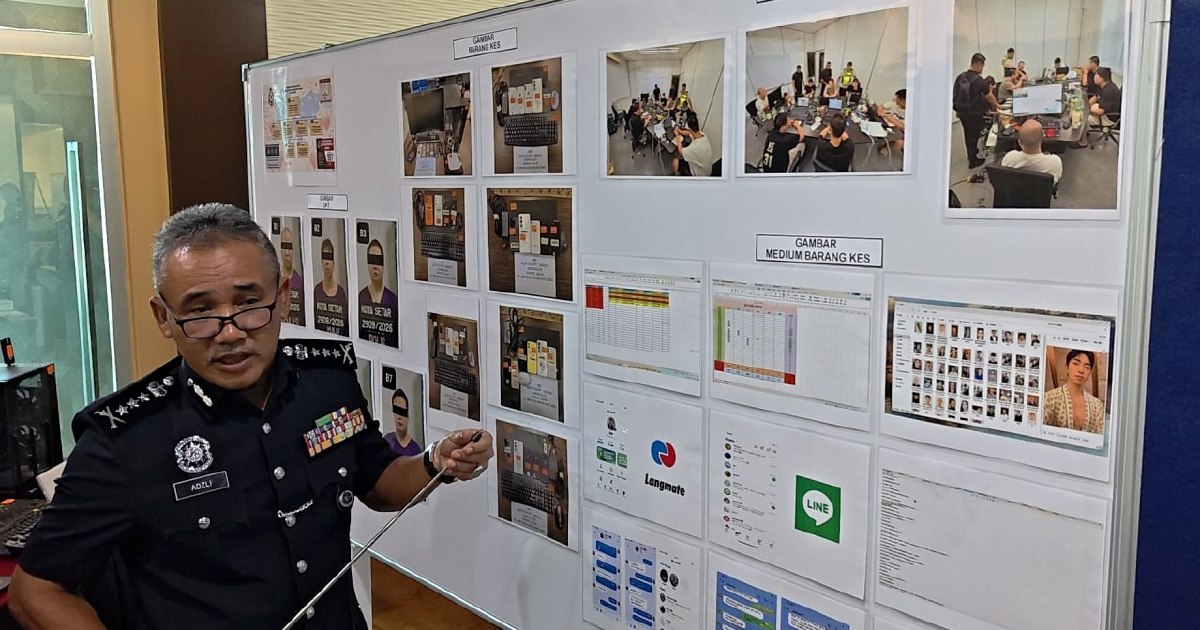
Authorities in Kedah have successfully disrupted a sophisticated online romance fraud network that had been systematically defrauding Japanese nationals. The breakthrough came following an operation conducted on Sunday in Alor Star's Kristal Light Industrial Park, which culminated in the arrest of seven individuals of Chinese nationality. The action represents a significant victory in the ongoing battle against transnational cybercrime syndicates that exploit emotional vulnerabilities to extort money from unsuspecting victims across Asia.
Romance scams have become an increasingly prevalent threat throughout the region, with organised criminal networks leveraging social media platforms and dating applications to establish fake relationships with targets in affluent countries. These operations typically employ sophisticated psychological manipulation techniques, with perpetrators posing as attractive individuals seeking genuine connections while gradually building trust over weeks or months. Once sufficient rapport has been established, fraudsters introduce fictional emergencies—medical crises, business difficulties, or travel complications—designed to pressure victims into transferring substantial sums of money through various payment channels.
The Japanese market has emerged as a particularly lucrative target for such syndicates, given the population's cultural preference for online relationship formation and the relative wealth of the nation's middle class. Scammers operating within these networks typically gather extensive personal information about victims through extended conversations, creating elaborate biographical narratives that match victims' stated preferences and aspirations. This meticulous groundwork substantially increases the likelihood of victims complying with financial requests, as the emotional investment in the relationship grows proportionally with communication duration.
Malaysia has become a regional hub for such criminal activities, with the country's infrastructure, internet connectivity, and relative ease of establishing small operational bases making it an attractive location for international fraud rings. The industrial park setting utilised by this particular syndicate provided anonymity while maintaining professional operational standards. Perpetrators working from such locations typically manage multiple victim accounts simultaneously, rotating through dozens of conversations daily whilst maintaining consistent character narratives across different platforms and communication channels.
The operational structure of these syndicates typically involves clear hierarchical divisions, with senior organisers managing overall strategy whilst lower-level operatives conduct direct victim engagement. Compensation arrangements vary based on performance metrics, with individuals evaluated according to funds successfully extracted from their assigned targets. This commission-based structure creates powerful incentives for increasingly aggressive exploitation tactics, with operatives pursuing victims even after initial resistance to requests for money.
Law enforcement agencies throughout Southeast Asia have intensified their focus on romance fraud networks in recent years, recognising the scale of financial losses and psychological trauma experienced by victims. Malaysian authorities have made particular progress through intelligence sharing with counterparts in Japan and other nations, creating a more comprehensive understanding of syndicate operational patterns and communication methods. Digital forensics capabilities have improved substantially, enabling investigators to trace financial flows through complex networks of bank accounts and money transfer services.
The investigation preceding Sunday's raid likely involved months of surveillance and intelligence gathering, with authorities working to identify operational bases whilst simultaneously gathering evidence sufficient to secure prosecutions. Contemporary romance scam operations maintain sophisticated operational security protocols, including regular changes of accommodation, rotation of personnel, and compartmentalised knowledge of overall network structure. This complexity means that dismantling even relatively modest operations requires substantial investigative resources and coordination across multiple agencies.
Victims of romance fraud frequently experience profound psychological consequences extending far beyond their financial losses. Many victims report severe shame and reluctance to report their experiences to authorities, fearing judgment and social stigma. This reporting reticence means actual victimisation numbers substantially exceed officially recorded incidents, making aggregate loss estimates difficult to quantify accurately. Some victims experience relationship trust issues for years following their experiences, whilst others suffer significant depression and anxiety disorders.
The arrest of these seven individuals should encourage additional victims to come forward with information about their experiences, potentially revealing connections to other syndicate cells operating throughout Malaysia and neighbouring countries. Police appeals for witnesses and victims typically generate substantial information, particularly as the initial arrests become public knowledge and other syndicate members recognise their operational security has been compromised. Intelligence gathered from victim testimonies frequently helps authorities identify additional members, financial infrastructure, and potential target lists.
Presecutorial authorities in Malaysia will now proceed with investigations aimed at determining individual roles within the syndicate and building cases that establish clear liability for specific victim fraud incidents. Successful prosecutions depend upon establishing knowledge and intent, meaning prosecutors must demonstrate that individuals knowingly participated in fraudulent schemes rather than simply being present during operations. The presence of multiple victims from a foreign jurisdiction may also trigger consideration of transnational cooperation agreements, potentially enabling coordinated proceedings and asset seizures across borders.
The broader implications of this operation extend beyond the immediate prosecutions, signalling to potential operators considering Malaysian bases that law enforcement capabilities have substantially improved. However, security experts acknowledge that disrupting one syndicate cell rarely eliminates the underlying criminal market, with displaced operatives frequently regrouping under new management or relocating to alternative jurisdictions. Sustainable progress against romance fraud requires sustained investment in investigative capacity, public awareness campaigns, and international cooperation mechanisms that enable rapid information sharing and coordinated enforcement actions.
Malaysian authorities have reinforced their commitment to combating transnational cybercrime, particularly operations that target citizens of neighbouring countries and undermine regional security cooperation. The success of this operation demonstrates sophisticated investigative capabilities whilst highlighting the continuing threat posed by international criminal networks exploiting digital communication platforms. Ongoing vigilance and sustained international collaboration will remain essential as these syndicates continuously evolve their methods in response to enforcement pressures.

