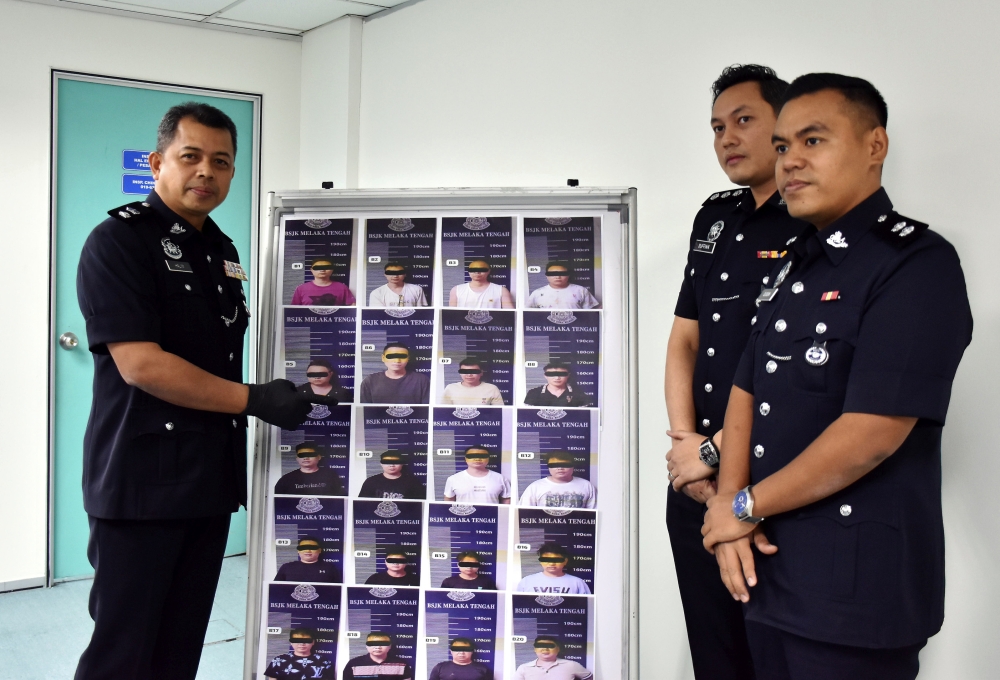
Police in Melaka have dismantled a major investment fraud operation and arrested 21 Chinese nationals for their alleged involvement in running a fake investment scheme that targeted victims across the region. The multi-agency operation represents an escalating crackdown on transnational financial crime networks that have increasingly used Malaysian territory as a operational hub, exploiting the country's geographic position and digital infrastructure to perpetrate elaborate scams.
The syndicate members were believed to be orchestrating their fraudulent activities from undisclosed locations within Melaka state, leveraging sophisticated digital platforms and falsified documentation to present non-existent investment opportunities to potential victims. Authorities described the operation as highly organized, with clear hierarchical divisions of labour suggesting this was not an opportunistic venture but a well-planned criminal enterprise designed to systematically extract funds from multiple victims.
Investigation revealed that the suspects utilized various tactics to gain victim trust, including the creation of convincing websites, impersonation of legitimate financial institutions, and deployment of professional-sounding marketing materials. Victims reported being promised unusually high returns on investments in purported cryptocurrency platforms, forex trading schemes, and mineral extraction ventures — all hallmarks of classical financial fraud that continue to ensnare credulous investors despite widespread public awareness campaigns.
The scale of the operation suggests potential losses running into the millions of ringgit, though authorities have not yet disclosed precise figures pending completion of forensic accounting and victim interviews. International cooperation between Malaysian authorities and their Chinese counterparts appears to have been critical in identifying and locating the suspects, underscoring the transnational nature of modern investment scams that require coordinated enforcement responses.
This development reflects a troubling trend in Southeast Asia, where criminal syndicates exploit weak regulatory oversight and corruption vulnerabilities to establish regional hubs for financial crimes. Malaysia, with its developed financial infrastructure, English-language proficiency among criminals, and strategic location as a transport and communications nexus, has become an increasingly attractive base for organized fraud operations targeting victims throughout the region and beyond.
Authorities have signalled that the investigation extends beyond the arrested individuals, with focus now shifting to identifying victims, tracing the flow of illicit funds, and uncovering the broader international network supporting these operations. Preliminary findings suggest the suspects may have been operating in Malaysia on questionable visa statuses or with fraudulently obtained documentation, raising questions about border security and immigration enforcement capabilities.
The discovery also highlights the vulnerability of digital payment systems and international money transfer mechanisms to exploitation by criminal actors. The syndicate's ability to move funds rapidly across borders through multiple intermediaries and cryptocurrency channels illustrates how technological advancement has simultaneously enabled criminals to operate at unprecedented scale while making law enforcement investigation and fund recovery exponentially more challenging.
For Malaysian investors and the general public, the case serves as a stark reminder that investment fraud remains rampant despite the existence of regulatory bodies like the Securities Commission Malaysia and Bank Negara Malaysia. The sophistication of modern scams — complete with professional branding, fabricated testimonials, and leveraging of cutting-edge technology — means that caution and skepticism remain essential even when opportunities appear legitimate or are promoted through seemingly credible channels.
Police have urged victims and potential victims to come forward with information, assuring confidentiality and protection through relevant legislation. Authorities have also recommended that the public verify investment opportunities directly through official registers maintained by regulatory authorities before committing funds, and to be particularly wary of unsolicited investment proposals offering guaranteed or exceptionally high returns.
The arrests underscore the Malaysian police's commitment to tackling organized crime, though observers have noted that successful prosecution will ultimately depend on robust evidence, comprehensive documentation of victim losses, and cooperation from international authorities in establishing the full scope of the criminal enterprise. The outcome of this case may influence how regional law enforcement agencies coordinate responses to future cross-border financial crime operations.
Larger systemic questions persist regarding Malaysia's role in hosting foreign criminal networks and whether current enforcement resources are proportionate to the scale of the problem. Industry experts suggest that stronger coordination between financial institutions, immigration authorities, and law enforcement agencies — supported by enhanced digital forensics capabilities and international intelligence-sharing protocols — will be necessary to prevent similar operations from establishing themselves in Malaysian jurisdiction.

