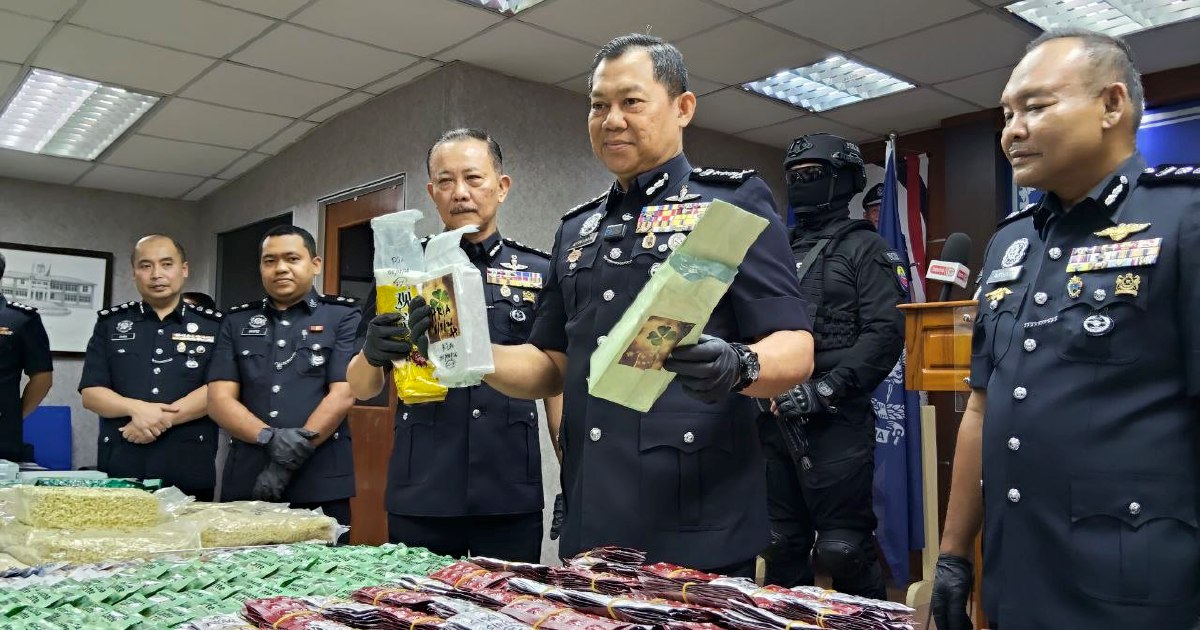
Law enforcement authorities in Johor Baru have successfully broken up a significant drug distribution operation following a comprehensive raid on a residential unit in the Masai area. During the operation, police recovered approximately 96.76 kilograms of various controlled substances from an apartment located along Persiaran Senibong, with the seized drugs valued at RM8.49 million. The bust represents a substantial victory in the ongoing battle against organised narcotics trafficking in the state.
The apartment had been deliberately rented and converted into a storage depot for the distribution network, indicating a level of planning and coordination typical of established drug trafficking organisations operating within Peninsular Malaysia. Such operations often employ multiple rented spaces across different localities to minimise detection risks and compartmentalise their supply chains. This particular facility served as a central hub for the syndicate's activities, making its discovery a critical disruption to their operational infrastructure.
Two individuals were apprehended during the enforcement action, though initial reports have not yet disclosed their full identities or details regarding their roles within the organisation. Police investigations will likely determine whether these suspects held leadership positions within the syndicate or operated in more peripheral capacities as handlers and logistics coordinators. The recovery of such a substantial quantity of drugs suggests this operation may have been supplying dealers and retailers across a wide geographical area, potentially extending beyond Johor into neighbouring states.
The diversity of drug types recovered during the operation indicates that this was not a single-commodity trafficking network but rather a multi-product distribution enterprise. Modern drug syndicates frequently diversify their inventories to maximise profitability and respond to varying regional market demands. The ability to source, transport, and distribute multiple categories of controlled substances requires established connections with larger wholesale suppliers, likely indicating links to international trafficking routes that funnel narcotics into Malaysia through traditional entry points.
This seizure underscores the persistent challenge Malaysia faces in combating organised drug trafficking, particularly in border regions like Johor where porous boundaries and extensive coastlines provide smugglers with multiple infiltration corridors. The southern state has long been identified as a critical transit zone for drugs destined for domestic consumption and onwards distribution to Singapore and other neighbouring jurisdictions. Law enforcement agencies have escalated operations in recent years, but the continued recovery of multi-kilogramme quantities suggests supply networks remain resilient and capable of rebuilding inventory rapidly.
The valuation of RM8.49 million attached to the seizure reflects street-level retail pricing rather than wholesale costs, meaning the actual replacement cost for the syndicate is likely considerably lower. This distinction is important when assessing the financial impact on trafficking networks, as street-level values are inflated by distribution margins and retail markups. Nevertheless, the loss of nearly 100 kilograms of assorted drugs represents a meaningful depletion of supply that will ripple through local distribution channels, potentially causing temporary shortages and price increases for end users.
The enforcement success highlights the importance of intelligence-led policing operations that target wholesale and mid-level trafficking infrastructure rather than focusing exclusively on street-level retail transactions. By identifying and dismantling storage facilities and distribution hubs, authorities can disrupt the efficiency of criminal enterprises and force them to rebuild their supply chains. Such operations typically generate intelligence about upstream suppliers and downstream customers, potentially opening new investigative pathways for follow-up enforcement actions.
For Malaysian readers, the continued prevalence of large-scale drug trafficking operations serves as a sobering reminder of the nation's vulnerability to international narcotics flows. The drug trade remains one of the most significant security challenges facing the country, affecting public health, family stability, and community safety across all demographic groups. The Dangerous Drugs Act and associated legislative frameworks provide severe penalties for trafficking offences, with convicted smugglers potentially facing capital punishment, yet supply continues to flow into the market.
The timing and execution of this particular operation suggest sustained police focus on dismantling traffickers' operational networks. Authorities have gradually improved their capacity for detecting and interdicting drug shipments, partly through enhanced technological capabilities, international cooperation, and intelligence sharing with regional partners. However, the scale of the Masai seizure also indicates that substantial criminal enterprises continue operating with relative impunity, possessing the resources and organisational sophistication to maintain large-scale distribution operations despite active law enforcement pressure.
Looking ahead, the investigation into this syndicate may yield intelligence that helps authorities trace the sources of supply and the extent of the distribution network. Interrogation of the arrested suspects, coupled with forensic analysis of mobile devices and financial records, typically reveals links to other operations and accomplices. Such investigations often lead to secondary enforcement actions weeks or months after the initial bust, as police systematically dismantle associated cells and neutralise distribution chains.
The broader implications of this bust extend beyond immediate law enforcement metrics. It demonstrates that Johor remains a critical battleground in Malaysia's war against drugs, requiring sustained investment in enforcement capacity, intelligence gathering, and border security measures. As regional drug trafficking patterns evolve and criminal networks adapt their tactics, Malaysian authorities must continue adapting their strategies to maintain effectiveness. Cooperation with regional bodies and international agencies remains essential to addressing the transnational dimensions of drug trafficking that continue to fuel domestic narcotics markets.

