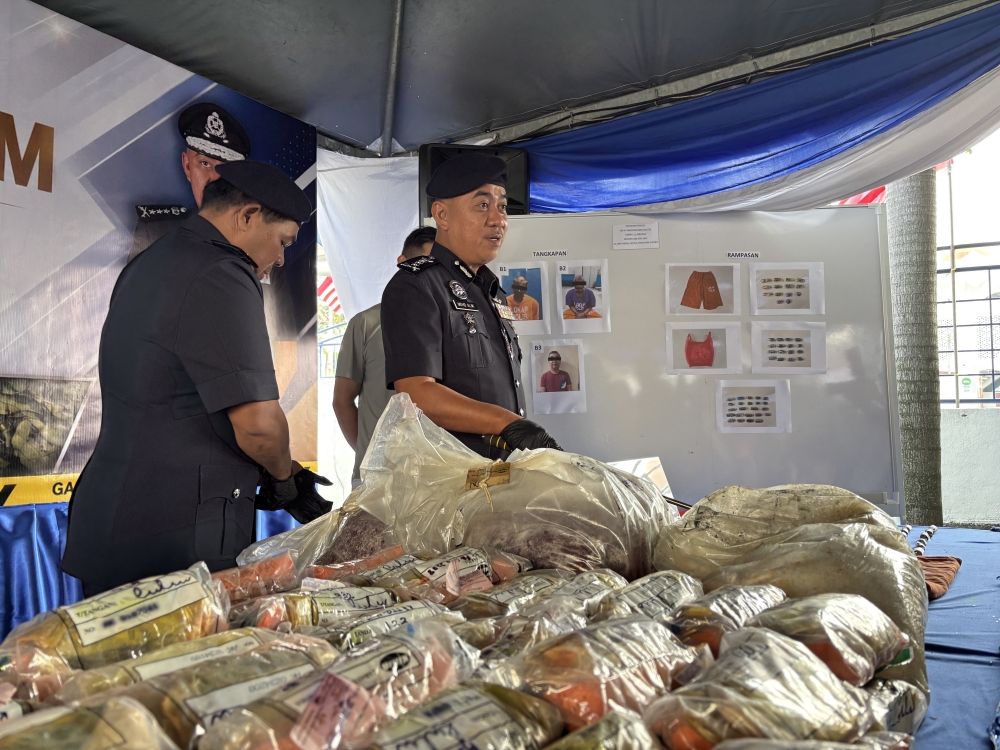
Authorities in Perak have arrested three individuals, including an active member of the police force, after a substantial drug haul was uncovered at the Lumut police station. The seizure has once again raised uncomfortable questions about security lapses within law enforcement facilities and the vulnerability of custody areas to contraband smuggling. The discovery of illicit substances hidden within a police cell — the very space designed to detain suspects — represents a significant breach of institutional protocols that has triggered investigations at multiple levels.
The drugs recovered during the operation consisted of methamphetamine, heroin and cannabis with a combined street value of RM18,534, according to authorities in Ipoh. The seizure marks yet another incident highlighting how organised networks continue to penetrate police custody facilities across Malaysia, exploiting weaknesses in cell surveillance and visitor screening procedures. Police have intensified their scrutiny of how contraband entered the Lumut station, with preliminary investigations suggesting possible involvement from someone with routine access to detention areas.
The arrest of a police constable as part of the investigation signals that internal complicity may have played a crucial role in this breach. The involvement of an officer raises troubling implications for police leadership, which has repeatedly faced criticism over corruption within the ranks. This incident provides ammunition to those who argue that institutional safeguards against drug trafficking have failed to keep pace with the sophistication of organised crime networks seeking to maintain supply chains within the custody system.
The circumstances surrounding how these narcotics reached the cell remain under investigation, though police have indicated that multiple approaches are being examined. Whether the drugs were smuggled during visiting hours, concealed by a detained individual upon arrest, or delivered through collusion with officers requires thorough examination. Each possibility points to different systemic vulnerabilities — inadequate visitor screening, insufficient body searches, or corruption among personnel — that demand comprehensive remedial action across all police stations in the region.
For Malaysian law enforcement, incidents of this nature represent a recurring institutional challenge that has not been adequately resolved despite previous commitments to reform. The Royal Malaysia Police has implemented various security upgrades in detention facilities, yet breaches continue to occur with uncomfortable regularity. This pattern suggests that technological solutions alone prove insufficient without corresponding improvements in operational discipline, accountability mechanisms, and anti-corruption measures. Senior leadership faces mounting pressure to demonstrate that they can establish a genuinely secure custody environment.
The timing of this discovery intersects with broader concerns about drug trafficking across Malaysia and Southeast Asia. Regional crime syndicates have demonstrated remarkable adaptability in circumventing law enforcement barriers, and prison and police custody facilities have become contested spaces in this struggle. The ability to maintain drug supply networks within detention facilities serves multiple criminal purposes — sustaining habits among incarcerated individuals, demonstrating organisational reach to imprisoned members, and generating revenue through internal sales. Breaking this dynamic requires security approaches that go beyond standard protocols.
Pearak has experienced sustained drug trafficking challenges, with both domestic consumption and transshipment through the state creating significant enforcement burdens. The state's geographic position and its proximity to major urban centres and international entry points make it particularly vulnerable to organised drug operations. Law enforcement agencies operating in Perak must contend with entrenched criminal networks that have developed sophisticated understanding of police procedures and institutional vulnerabilities. This incident demonstrates how quickly these networks identify and exploit new opportunities for maintaining operations.
The police constable's involvement raises questions about recruitment screening and ongoing monitoring of officer fitness for duty. While individual acts of corruption cannot be entirely eliminated through any selection process, institutional mechanisms for identifying at-risk personnel and preventing conflict of interest situations deserve examination. Staff rotation policies, financial surveillance of officer spending patterns, and whistleblower protection schemes represent tools that could strengthen internal integrity if properly resourced and implemented with genuine leadership commitment.
Public confidence in law enforcement is substantially eroded by incidents suggesting that the police cannot maintain secure custody even within their own facilities. Malaysian citizens expect that detention areas operate under rigorous security protocols, and any suggestion that contraband moves freely within police stations undermines trust in the entire criminal justice system. This confidence is particularly crucial in regional security cooperation, where neighbouring countries assess Malaysian police capabilities when considering joint operations and intelligence sharing related to transnational crime.
The investigation into this seizure must establish clear accountability for every procedural failure that enabled the drugs to enter the police station. Whether the breach represents systemic negligence, individual corruption, or a combination of factors will determine the appropriate response. Police leadership has indicated that disciplinary action will follow the conclusion of investigations, but observers have noted that previous promises of accountability in similar cases have not always translated into visible consequences for senior officers responsible for facility management. This incident will test whether institutional reforms announced in recent years possess sufficient force to drive genuine change.
Moving forward, authorities must consider whether current inspection and audit procedures for police custody facilities operate with sufficient independence and frequency. External oversight mechanisms, including surprise inspections by anti-corruption agencies, could supplement internal monitoring. Furthermore, detailed mapping of how contraband enters custody facilities — through which entry points, during which shifts, with which types of visitors — would enable targeted security improvements rather than blanket facility upgrades that may miss key vulnerabilities.

