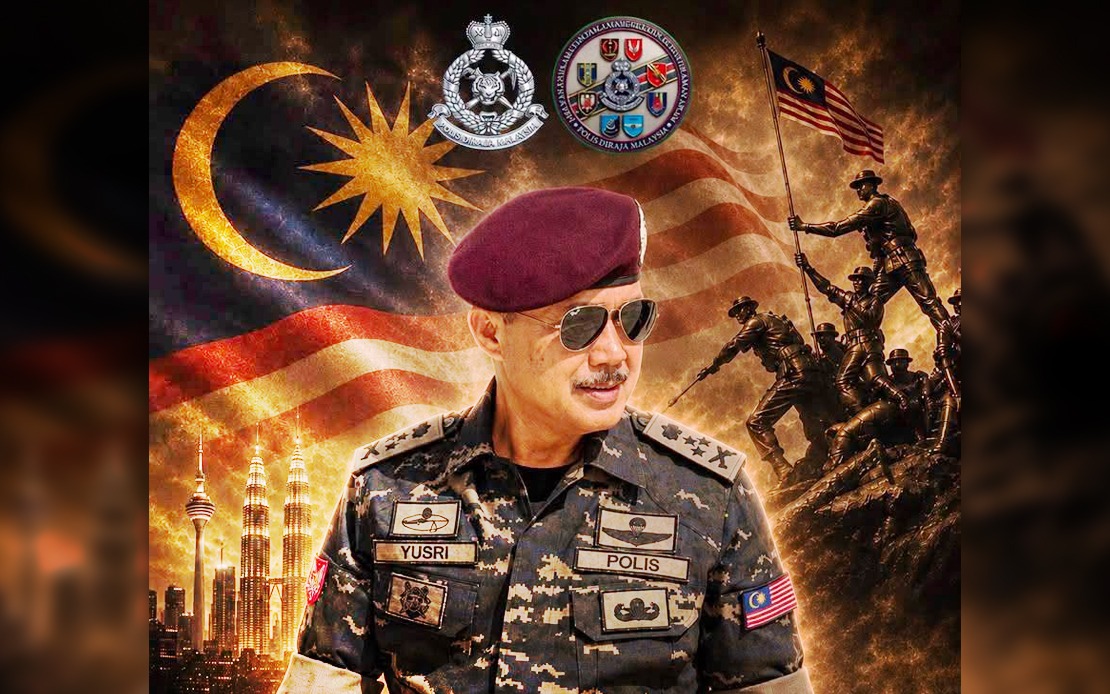
Datuk Seri Mohd Yusri Hassan Basri is exchanging the thunderous roar of a high-powered motorcycle for the measured clip-clop of hooves at Malaysia's upcoming National Day celebration. The director of the Department of Internal Security and Public Order (KDNKA) will command a 595-strong Royal Malaysia Police (PDRM) contingent from atop a white horse named Al-Sakb during the 69th National Day Parade at Dataran Putrajaya on August 31, a striking symbolic departure from his leadership style of the previous year when he rode a BMW R 1250 RT motorcycle at the helm of a traffic department unit.
This transition represents more than a mere aesthetic choice. The Mounted Unit of the Federal Reserve Unit, comprising 20 officers and 20 horses, will form the vanguard of the PDRM's display, setting a stately tempo for the entire police procession. For Mohd Yusri, who previously directed the Traffic Investigation and Enforcement Department (JSPT) before ascending to his current position overseeing internal security and public order, the shift underscores the evolving nature of police leadership and operational representation at Malaysia's most significant civic ceremony.
The challenge of mastering horsemanship for parade purposes proved sufficiently demanding that Mohd Yusri committed more than a month to intensive training. This preparation was essential not merely for his own confidence and safety, but to guarantee that the synchronised movements of the Mounted Unit and the broader contingent would reflect the discipline and cohesion that the public expects from the nation's premier law enforcement agency. During a full rehearsal in Putrajaya, he explained that the transition from motorcycling to mounted leadership presented him with a meaningful personal test, one that demanded new skills and tactical awareness despite his decades of police service.
Beyond the symbolic leadership role, the KDNKA's participation in this year's parade demonstrates the remarkable breadth of PDRM's modern capabilities. The contingent will showcase not only the traditional pageantry of mounted police but also cutting-edge operational assets that define contemporary law enforcement across the region. The General Operations Force (GOF) and Air Operations Force will present various formations, illustrating how PDRM has evolved to meet 21st-century security challenges while maintaining the institutional gravitas demanded by a major national celebration.
Among the technological highlights are ten All Terrain Tactical Assault E-Bikes (ATEB), electric motorcycles recently acquired for the GOF to execute border patrol missions, high-risk special operations, and conflict management scenarios. These vehicles represent PDRM's investment in sustainable yet capable security infrastructure—a practical acknowledgement that modern policing must balance operational effectiveness with environmental responsibility. The machines' presence in the parade sends a message to regional observers that Malaysian police are embracing innovation without abandoning proven methods.
The air component will include a flypast by an AW139 helicopter, extending PDRM's demonstration of capability from terrestrial to aerial domains. This addition transforms the parade from a ground-based spectacle into a three-dimensional showcase of police reach and sophistication. For Malaysian spectators, particularly younger citizens and families attending for the first time, the combination of traditional horsemanship and modern aviation creates a powerful narrative about institutional continuity and progress.
The parade will also feature the skills of 16 K9 Unit dogs working alongside elite tactical personnel. This integration of canine officers with human specialists illustrates how PDRM has professionalised its approach to security operations. The dogs represent not merely enforcement tools but highly trained partners in maintaining public safety, reflecting international standards in police training and capability development that resonate across Southeast Asia.
Mohd Yusri's emphasis on meticulous preparation reflects a broader institutional ethos within PDRM. His repeated assurances that the KDNKA contingent would perform flawlessly, thereby upholding both departmental and force-wide image, underscore how much Malaysia's police leadership invests in public perception and symbolic representation. For a nation where police-community relations have undergone significant scrutiny and reform discussions, such carefully orchestrated displays of professionalism and diverse capability serve important confidence-building functions.
The choice to prominently feature the Mounted Unit also carries cultural and historical resonance within Malaysia. Mounted police have deep roots in the nation's colonial and post-colonial law enforcement traditions. By restoring them to a position of ceremonial prominence—with the KDNKA director personally leading the contingent—there is a deliberate reconnection to heritage even as modern technologies surround that traditional element. This juxtaposition reflects Malaysia's approach to national identity, where respect for historical institutions coexists with enthusiastic adoption of contemporary tools.
Weather remains a potential complication, as Mohd Yusri acknowledged in his call for public attendance on August 31. The monsoon season can be unpredictable, and managing a large contingent of mounted officers in adverse conditions requires not only the technical horsemanship skills he has acquired but also logistical flexibility and contingency planning. His request for public understanding regarding weather challenges reflects the practical realities of staging such events in tropical Southeast Asia, where climatic unpredictability is an ever-present consideration.
The director's personal appeal for families to attend and embrace the independence spirit demonstrates how institutional leadership attempts to transform ceremonial events into moments of genuine national connection. By inviting Malaysians to experience the parade atmosphere collectively, Mohd Yusri positions the event beyond mere police showcase, framing it instead as a shared national experience that transcends bureaucratic boundaries.
For Southeast Asian observers monitoring PDRM's evolution, this parade reveals an institution consciously balancing tradition with modernity. The seamless integration of mounted officers with electric motorcycles, K9 units, tactical teams, and aerial assets suggests a police force aware of how to present itself as both rooted in established practice and forward-looking in capability. As Malaysia navigates increasingly complex security environments, the ability of PDRM to demonstrate such versatility and sophistication carries implications beyond national borders, signalling to regional partners and potential adversaries alike the depth of Malaysian law enforcement resources and professionalism.

