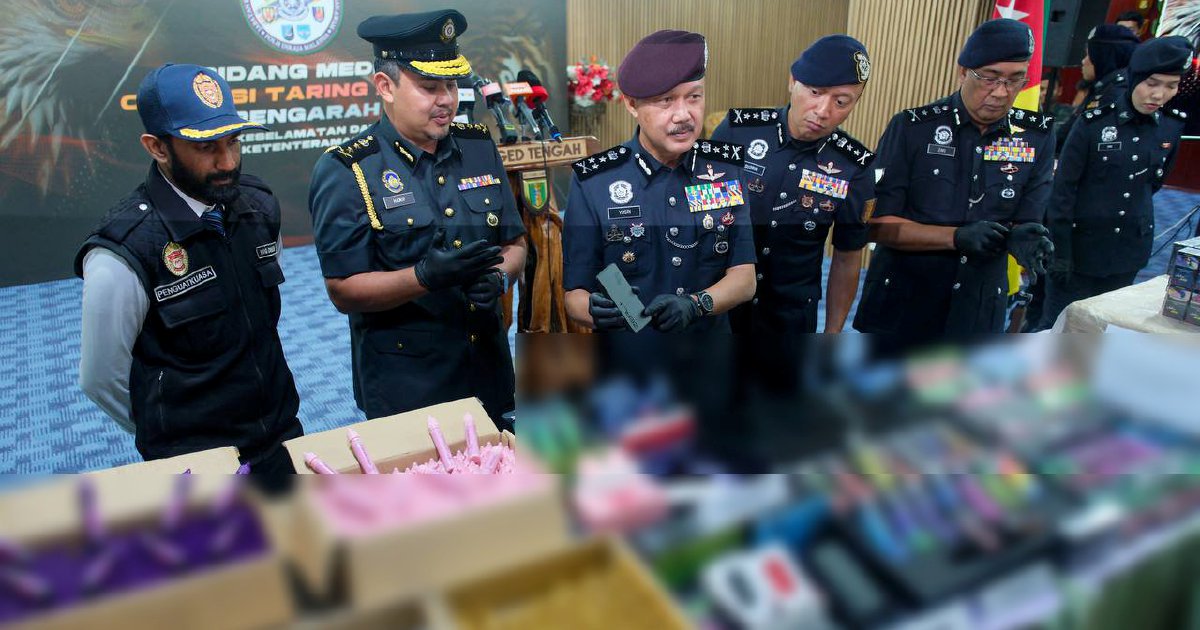
Malaysian law enforcement authorities have delivered a decisive blow against illicit tobacco and vaping product trafficking networks, recovering contraband valued at more than RM15.5 million during a series of coordinated police operations across Selangor late last month. The crackdown underscores intensifying efforts by authorities to combat the underground trade in illegal nicotine products, which has emerged as a significant revenue leakage for the government and a public health concern across the region.
The scale of the seizure reflects the scope and sophistication of smuggling syndicates now operating within Malaysia's borders. With vape products and contraband cigarettes commanding substantial profit margins in the black market, criminal networks have increasingly viewed these commodities as lucrative trafficking opportunities. The Selangor operations, which targeted multiple locations associated with suspected smuggling operations, yielded quantities substantial enough to suggest these were not small-scale individual retailers but rather organized distribution nodes serving a wider market.
Authorities in Malaysia have confronted a growing challenge in curtailing the smuggling of nicotine products, particularly as demand for vapes and illicit cigarettes continues to expand among Malaysian consumers seeking to circumvent taxes and regulations. The duty imposed on tobacco products in Malaysia represents one of the highest in Southeast Asia, creating price disparities that incentivize smuggling from lower-tax jurisdictions. Vape products, meanwhile, occupy an evolving regulatory landscape that smugglers have exploited, particularly given inconsistent enforcement across different states and the porous nature of certain border crossings.
The timing of these Selangor operations suggests a deliberate enforcement strategy to disrupt supply chains heading into high-consumption periods. Police coordination across multiple locations simultaneously indicates intelligence-led policing that has matured beyond random searches toward identifying key trafficking nodes and distribution hubs. This methodological shift represents a more sophisticated approach to combating organized smuggling compared to earlier enforcement efforts that often focused on street-level retailers.
For Malaysian policymakers, the persistent success of smuggling syndicates in moving such large quantities of contraband through the supply chain poses uncomfortable questions about enforcement capacity and border controls. Selangor, as the most economically dynamic and populous state in Malaysia, serves as both a major consumption hub and a critical distribution point for contraband reaching other parts of the peninsula. The recovery of RM15.5 million in goods represents only what was intercepted; the actual market value of smuggled products reaching consumers likely far exceeds official seizure figures.
The operation carries implications beyond immediate law enforcement success. The vaping market in Malaysia has become increasingly contested terrain between public health advocates, tobacco companies, retail interests, and illicit traders. While authorities have focused on seizing contraband products, the underlying market dynamics that make smuggling profitable remain largely unaddressed. The tax differential between legal and smuggled products, combined with regulatory inconsistencies, will continue to fuel trafficking unless accompanied by broader policy interventions.
International dimensions complicate Malaysia's enforcement efforts further. Contraband cigarettes frequently originate from regional producers in countries with less stringent manufacturing controls or tax regimes, while certain vape products enter through transnational supply chains exploiting gaps in customs documentation and labelling requirements. Southeast Asia's relatively open trade environment and porous land borders facilitate movement of these products across jurisdictions, requiring regional cooperation mechanisms that remain underdeveloped.
The seized goods—once destroyed—represent not only lost potential revenue for traffickers but also prevented entry into circulation among Malaysian consumers. Public health advocates note that contraband cigarettes typically contain significantly higher tar and nicotine content than regulated products, presenting greater health risks to users. Similarly, unregulated vape products lacking quality controls pose unknown chemical exposures. From this perspective, the police operations carry genuine public health benefit beyond mere law enforcement metrics.
Looking forward, the success of these Selangor operations may embolden authorities to escalate enforcement against trafficking networks, yet the fundamental economic incentives driving smuggling will persist absent complementary policy measures. Malaysia's government faces a policy dilemma: further raising tobacco taxes risks expanding the smuggling market, while maintaining current rates continues to fuel illicit trade. Several Southeast Asian jurisdictions have grappled with comparable challenges, with mixed results from different policy approaches.
The operations also illustrate the evolving nature of contraband markets within Malaysia. Vape products, relatively novel to enforcement frameworks compared to traditional cigarette smuggling, now represent significant seizure volumes alongside conventional tobacco. This suggests the market for alternative nicotine delivery systems in Malaysia has matured substantially, creating new opportunities for criminal networks but also expanding the scope of enforcement concerns that authorities must manage simultaneously.
For Malaysian consumers, continued police operations against smuggling networks may gradually pressure contraband availability, though substantial underground markets likely persist. Legitimate retailers, meanwhile, benefit from enforcement actions that reduce illegal competition, though industry groups have historically advocated for broader policy changes rather than relying primarily on enforcement solutions. The current trajectory suggests law enforcement will remain central to anti-smuggling efforts while deeper policy questions about taxation, regulation, and public health remain contested.
The Selangor raids represent a tactical victory in an ongoing campaign against organized smuggling, yet systemic vulnerabilities enabling these operations continue functioning. Sustained enforcement coupled with strategic policy adjustments addressing root causes of smuggling—particularly tax differentials and regulatory gaps—would likely prove more effective than enforcement alone in reducing the appeal of illegal nicotine products to both traffickers and consumers seeking cheaper alternatives to regulated options.

