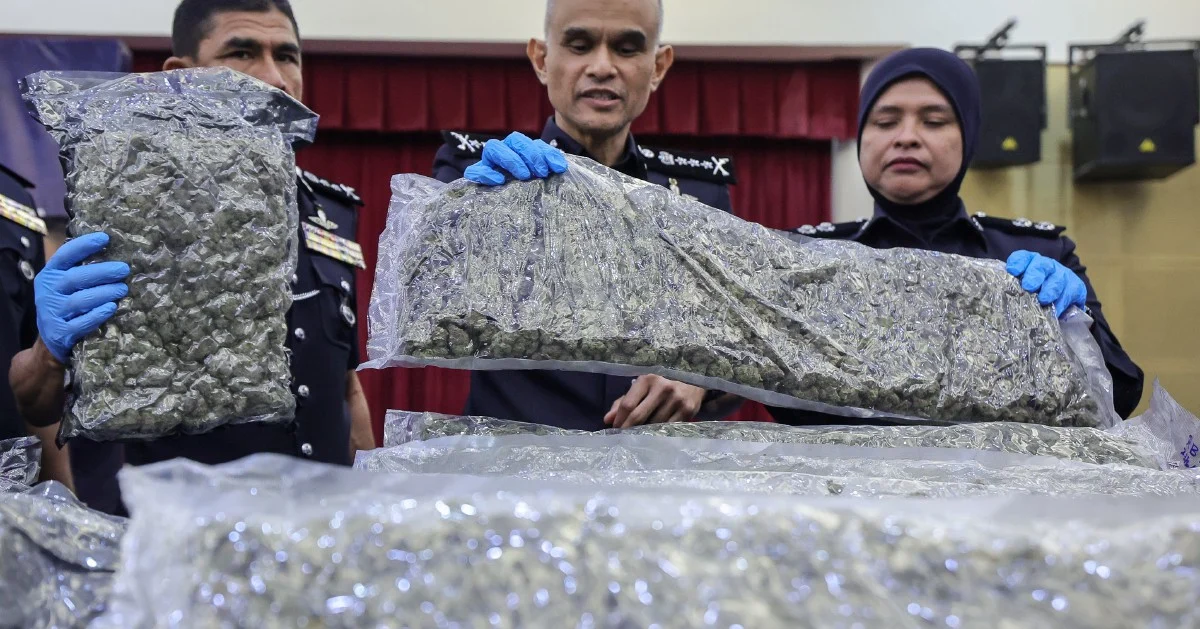
Malaysian police have dismantled a major cannabis trafficking operation centred on Kuala Lumpur International Airport, resulting in the seizure of more than half a tonne of cannabis buds and the arrest of 38 individuals. The scale of the contraband—650 kilogrammes of processed cannabis—underscores the sophistication of drug smuggling operations targeting the country's busiest aviation hub, one of Southeast Asia's key transit points for illicit narcotics moving between production centres in the region and distant markets overseas.
The enforcement action, which began in January and continues as part of an active investigation, has exposed the breadth of the criminal network involved. Among those detained are both Malaysian nationals and foreign suspects, indicating that the trafficking ring operated across international borders and leveraged the airport's high passenger volume and cargo throughput as cover for their illegal activities. The involvement of overseas players in the operation reflects a broader pattern whereby Malaysian ports and airports serve as critical nodes in transnational drug smuggling chains.
KLIA's prominence as a target for drug traffickers is not incidental. With approximately 60 million passengers annually and extensive cargo facilities, the airport presents both opportunity and risk. The volume of baggage, parcels, and freight processed daily makes comprehensive screening challenging, even as authorities deploy advanced detection technology and canine units. Smugglers exploit these operational realities, often employing couriers with seemingly legitimate travel histories or concealing contraband in seemingly ordinary shipments to evade detection.
The seizure of cannabis specifically highlights a shift in the regional drug trade. Historically, Malaysia has confronted heroin and methamphetamine as the predominant smuggled substances, but cannabis—long associated with distant markets and perceived as lower priority—has gained commercial prominence. This reflects changing global demand patterns and the proliferation of production capacity in neighbouring jurisdictions, making Southeast Asia an increasingly active transit zone for cannabis destined for markets in Europe, Australia, and East Asia where legal reforms and recreational use have expanded demand.
The arrest tally of 38 individuals likely represents multiple tiers within the trafficking hierarchy. Investigation files typically reveal roles ranging from low-level couriers and airport workers facilitating movement of contraband, to mid-level coordinators managing logistics and payments, to senior organisers controlling distribution networks. Dismantling the entire operation requires authorities to follow the chain upstream and downstream, identifying financiers and end-market distributors who remain beyond immediate apprehension.
From a law enforcement perspective, this operation demonstrates the importance of sustained intelligence work at transportation hubs. The fact that the seizure and arrests span several months suggests systematic interdiction based on careful monitoring rather than random discovery. Airport security personnel, immigration officers, and narcotics specialists must coordinate effectively to identify suspicious patterns in passenger behaviour, luggage characteristics, and cargo documentation. The success here reflects investment in that intelligence infrastructure.
For Malaysian authorities, the challenge now extends beyond the immediate case. The quantities involved—enough cannabis to serve significant markets—raise questions about distribution networks within Malaysia itself and the role domestic demand plays in motivating international trafficking. If the contraband was primarily transit cargo, the case illustrates Malaysia's vulnerability as a staging point. If domestic consumption was a component, it suggests enforcement gaps in street-level detection and prevention.
The international dimension carries diplomatic and operational implications. Cooperation with foreign law enforcement agencies, particularly those in countries where the contraband originated or was destined, becomes essential for disrupting the broader networks. Intelligence sharing, mutual legal assistance treaties, and coordinated prosecution efforts amplify the impact of isolated seizures and elevate them from localized successes to contributions toward regional dismantling of trafficking infrastructure.
Sentencing outcomes in these cases will influence deterrence calculus. Malaysia maintains strict anti-drug laws, with trafficking convictions carrying severe penalties including lengthy imprisonment. The messaging effect—that moving substantial quantities through KLIA entails severe consequences—matters for would-be smugglers evaluating risk. Conversely, the continued influx of drugs despite existing penalties suggests that financial incentives sometimes override deterrence, particularly when desperate individuals in source countries are recruited by wealthier organisers operating from safer distance.
Looking forward, the investigation may yield broader insights into how trafficking networks operate within Malaysia's transportation infrastructure. Relationships between airport employees, customs officers, or ground handlers and criminal groups sometimes emerge during extended inquiries. These insider threats represent perhaps the most challenging aspect of airport security, requiring internal affairs oversight alongside external interdiction efforts.
The case also reflects Malaysia's responsibilities as a signatory to international drug control conventions and a member of cooperative frameworks like ASEAN. Regional bodies increasingly coordinate on drug trafficking, recognising that unilateral enforcement cannot succeed when smugglers operate across multiple jurisdictions. The KLIA bust contributes to demonstrating Malaysian commitment to these obligations, even as the persistence of large-scale operations indicates that the challenge remains formidable and requires sustained, resourced effort across the entire region.