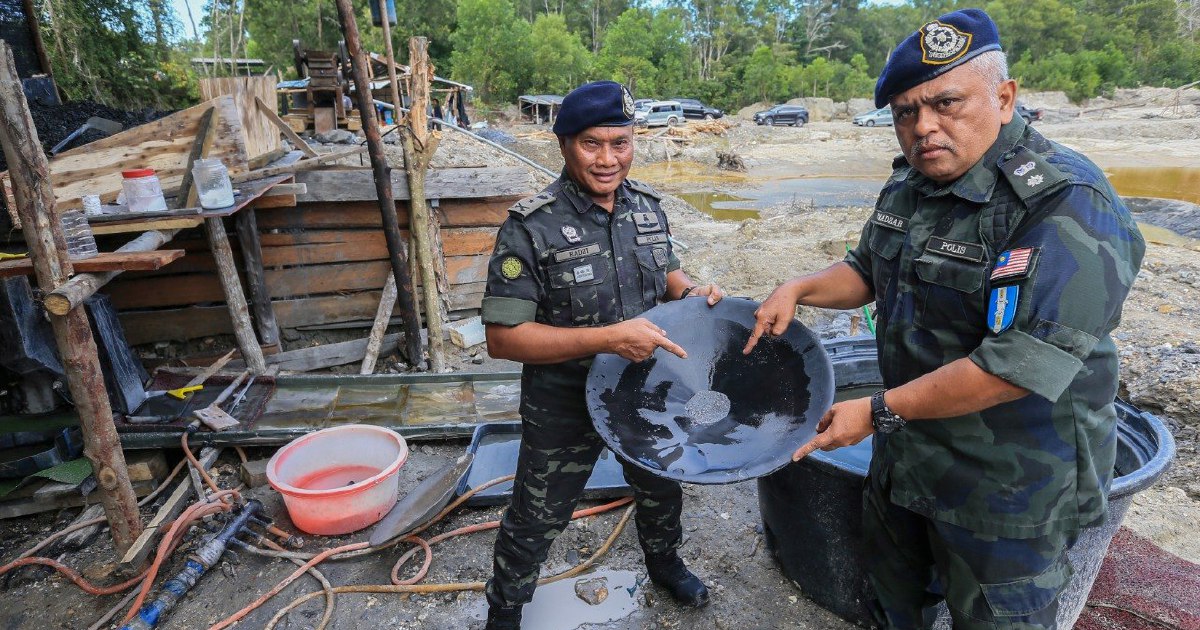
Police have successfully dismantled a sophisticated illegal gold mining operation that was generating significant profits in the Marang district of Terengganu. The enforcement action, conducted at Bukit Kor, resulted in the detention of 15 individuals suspected of involvement in the unlicensed extraction and processing of precious metals. Investigators estimate the syndicate, known locally as 'Mak Siti', was generating approximately RM13,000 in daily revenue before its shutdown, underscoring the considerable financial incentives driving such underground mining activities across Malaysia.
The Bukit Kor site represents one of numerous illegal mining operations that have proliferated across Peninsular Malaysia in recent years, particularly in rural and forested areas where enforcement presence remains limited. These operations exploit accessible mineral deposits while circumventing the licensing requirements imposed by regulatory authorities. The sheer profitability of the 'Mak Siti' syndicate—generating nearly RM400,000 monthly—illustrates why criminal networks continue to invest resources in maintaining such illegal ventures despite the regulatory risks involved.
Illegal gold mining has emerged as a persistent problem across Southeast Asia, with operations ranging from small-scale artisanal extraction to organised criminal enterprises. Malaysia's mineral-rich geology and extensive forested terrain create particular vulnerability to such activities. These operations typically operate with minimal oversight, employing workers under hazardous conditions while extracting value from the nation's natural resources without contributing to government revenue or adhering to environmental protection standards.
The environmental consequences of illegal mining operations extend beyond immediate extraction sites. Heavy machinery deployment, chemical processing, and water contamination from mining activities degrade forest ecosystems and contaminate freshwater sources that local communities depend upon. In Terengganu, where tourism and agriculture remain significant economic sectors, such environmental degradation poses longer-term threats to sustainable development in the region.
The operational sophistication of the 'Mak Siti' syndicate suggests a level of coordination that extends beyond individual prospectors or small groups. The scale of daily revenue generation indicates established supply chains for equipment, distribution networks for processed materials, and likely connections to buyers in regional markets. This structural complexity suggests that dismantling individual operations, while operationally successful, represents only a temporary disruption rather than elimination of underlying demand for illicit gold.
Worker exploitation constitutes another dimension of concern regarding these illegal operations. Individuals engaged in unregulated mining typically lack employment protections, safety standards, and access to workers' compensation. Exposure to toxic chemicals during processing, inadequate ventilation, unstable excavation structures, and absence of emergency medical facilities create hazardous working conditions that would be unacceptable in licensed operations.
The financial motivation underlying illegal mining extends throughout Southeast Asia, where gold commands consistent international market demand. Regional organised crime networks have increasingly recognised the profitability of precious metal extraction and trafficking. The RM13,000 daily figure from the 'Mak Siti' operation demonstrates why expanding criminal enterprises target mining as a reliable revenue source, particularly in jurisdictions where enforcement resources remain stretched across multiple competing priorities.
Authorised precious metals extraction in Malaysia operates under licensing frameworks administered by relevant state authorities and the federal government. These regulatory requirements mandate environmental impact assessments, safety protocols, and taxation obligations that licensed operators must satisfy. However, the substantial differential between regulated operational costs and the unencumbered profits available through illegal extraction creates persistent economic incentives for circumventing these systems.
The Terengganu enforcement action reflects ongoing police efforts to combat resource crimes in the state. However, successfully disrupting these operations requires sustained intelligence gathering, coordination across jurisdictions, and adequate resource allocation to enforcement agencies. Given the geographic dispersion of potential mining sites across Peninsular Malaysia's forested regions, comprehensive coverage remains logistically challenging and resource-intensive.
International cooperation becomes increasingly relevant as precious metals extracted from illegal Malaysian operations potentially enter regional trafficking networks extending through Thailand, Cambodia, and Vietnam before reaching international markets. Disrupting these supply chains requires coordination between Malaysian authorities and neighbouring enforcement agencies to address the transnational dimensions of organised mining crime.
The arrest of 15 suspects provides opportunities for investigators to map network structures, identify leadership hierarchies, and trace connections to downstream buyers. Such intelligence gathering can inform broader enforcement strategies targeting not merely individual operations but the organised networks sustaining them. Successful prosecutions establishing custodial sentences and substantial financial penalties may gradually increase the operational risks and costs associated with illegal mining ventures.
Moving forward, addressing illegal mining sustainably requires combining targeted enforcement with supply-side interventions addressing market demand for illicit precious metals. Enhanced border monitoring, certification schemes for legally sourced gold, and international coordination on precious metals trafficking would complement domestic law enforcement efforts. For Terengganu specifically, the success of this operation demonstrates police capability, yet the underlying factors driving illegal mining—accessible deposits, significant profit margins, and limited alternatives for rural workers—suggest similar operations will continue emerging unless addressed through integrated approaches combining enforcement, regulation, and development strategies.

