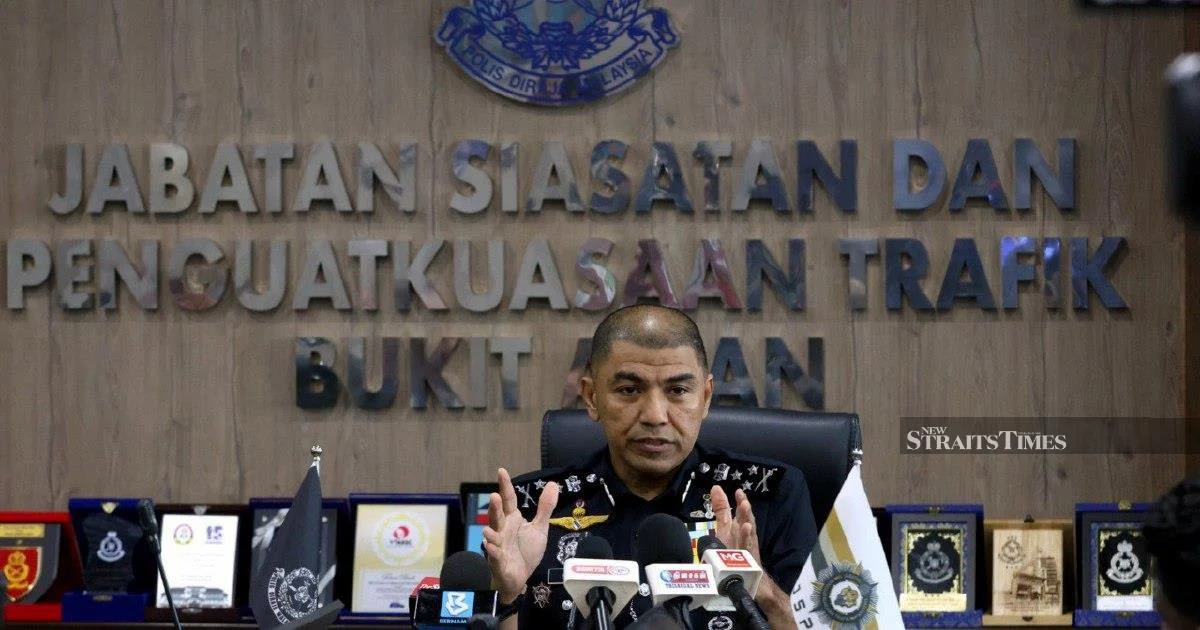
Malaysian police have arrested 121 commercial vehicle operators accused of driving while under the influence of drugs, the result of an intensive three-month nationwide enforcement campaign that has exposed troubling patterns of substance abuse among those responsible for heavy vehicles on Malaysia's roads. The coordinated operation, which spanned multiple states and involved integrated enforcement teams, reflects law enforcement's heightened focus on drug-related impaired driving as a critical public safety threat in the commercial transport sector.
The scale of arrests points to a significant and persistent problem within an industry essential to Malaysia's economic functioning. Commercial vehicle drivers—including long-haul truck operators and intercity bus drivers—form the backbone of the nation's logistics and passenger transport networks. When operators operate vehicles while impaired by controlled substances, they endanger not only themselves but also other road users, making this an issue that extends far beyond individual culpability to affect national transport safety and the broader travelling public.
The enforcement operation's three-month duration suggests authorities deployed substantial resources to identify and apprehend offenders. Rather than relying on reactive responses to accidents or incidents, the integrated approach indicates a proactive strategy designed to intercept impaired drivers before they cause harm. Roadside checkpoints, chemical testing protocols, and coordination between multiple law enforcement agencies likely formed the backbone of this operation, demonstrating a recognition that curbing drug-related driving requires sustained, systematic effort rather than sporadic crackdowns.
The motivation behind intensifying focus on this particular driver cohort reflects data and incident patterns that have likely troubled traffic and road safety authorities. Commercial vehicle operators often work long hours to meet delivery schedules and passenger service demands, creating conditions where driver fatigue becomes a concern. The parallel issue of substance use—whether stimulants to combat fatigue or other drugs—compounds the danger considerably. A driver operating a 20-tonne truck or a 50-passenger bus while impaired presents exponentially greater risk than a private vehicle operator, given the mass and momentum involved and the potential consequences of impaired judgment or delayed reaction times.
For Malaysia's transport and logistics sector, such enforcement actions carry significant implications. Reputable companies operating commercial fleets face increased regulatory scrutiny and reputational risk when their drivers are apprehended. However, such operations also theoretically create competitive advantages for operators who maintain rigorous internal safety protocols and invest in driver welfare programmes that address fatigue and substance abuse prevention. The 121 arrests may represent only the portion detected during this particular campaign, raising questions about the true prevalence of impaired driving among commercial operators and whether current deterrents are sufficiently robust.
The integration of enforcement efforts across jurisdictions highlights the nationwide scope of the problem. Malaysian roads span peninsular and East Malaysian territory, with varying enforcement capacity and driver populations across states. A coordinated campaign involving multiple agencies suggests recognition that drug-related impaired driving is not localised but represents a systemic challenge requiring comprehensive response. Road traffic fatalities involving commercial vehicles have been documented as a significant contributor to Malaysia's overall road fatality rates, and impaired driving significantly elevates these risks.
From a regional perspective, Malaysia's experience reflects challenges facing other Southeast Asian nations where commercial transport sectors operate under pressure to deliver goods and services efficiently across vast distances. Road safety concerns related to driver impairment are documented problems in the region, and coordinated enforcement responses like Malaysia's operation may offer models for neighbouring countries grappling with similar issues. The visibility of such crackdowns also serves a deterrent function, signalling to drivers that authorities are actively monitoring and enforcing drug and impaired-driving laws.
The investigation and arrest process itself involves technical challenges. Detecting drug impairment requires trained officers, reliable testing equipment, and protocols that can withstand legal scrutiny. The chemical testing standards and evidence collection procedures must meet evidential thresholds for prosecution, meaning that behind each of the 121 arrests lies substantial procedural work by traffic police, forensic specialists, and prosecutors. This operational complexity underscores why sustained, well-resourced enforcement campaigns are necessary to address the problem effectively.
Moving forward, the data gathered from this operation may inform policy development. Authorities could analyse patterns regarding which drugs are most prevalent, at what times impaired driving is most common, and whether certain routes or transport categories show higher offence rates. Such intelligence could guide targeted prevention strategies, including enhanced screening at specific checkpoints, partnerships with transport operators on driver wellness programmes, and public awareness campaigns warning of the dangers commercial drivers pose when impaired. The 121 arrests provide both deterrence and intelligence that extends beyond immediate law enforcement outcomes.
For the broader motoring public and transport industry stakeholders, these enforcement results underscore that authorities are treating drug-impaired commercial driving as a serious matter warranting significant resources and commitment. Whether through advocacy for stricter licensing requirements, support for industry-led safety initiatives, or public awareness of the risks posed by impaired commercial drivers, various actors can contribute to reducing this hazard. The effectiveness of this campaign will ultimately be measured not merely in arrest numbers but in whether detection and prosecution prevent future incidents and save lives on Malaysian roads.

