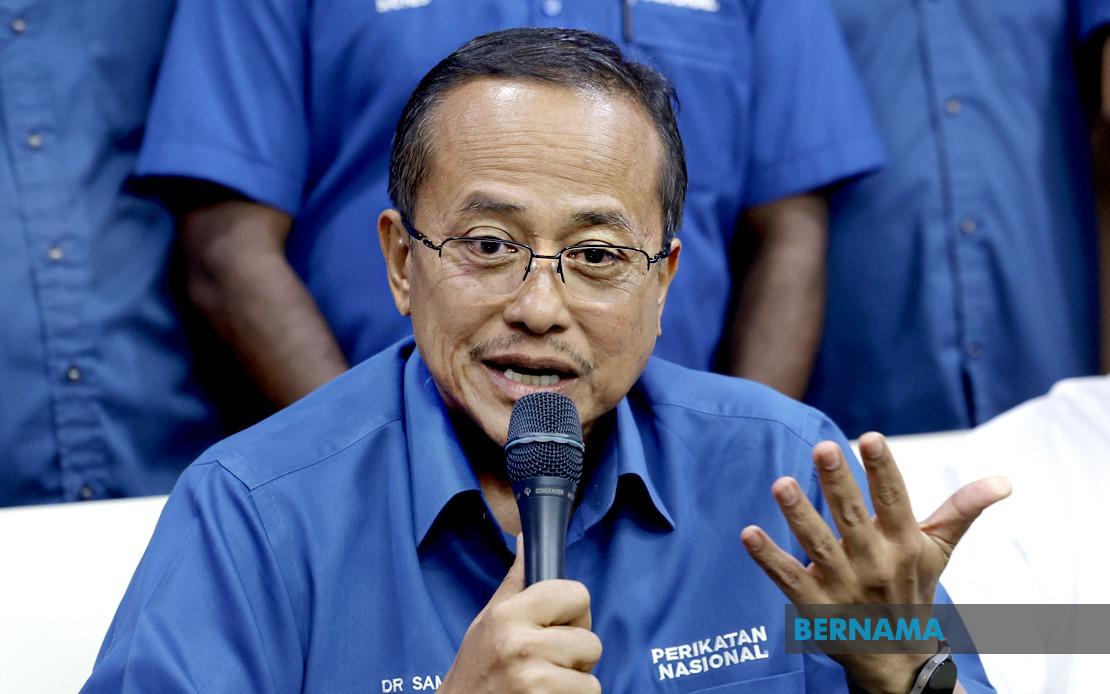
Perikatan Nasional has signalled its readiness to enter into negotiations with Barisan Nasional regarding the forthcoming Melaka state election, according to PN chairman Datuk Seri Dr Ahmad Samsuri Mokhtar. Speaking at the 23rd Perak PAS Convention in Taiping, Ahmad Samsuri indicated that the coalition would welcome discussions with its traditional rival should the opportunity arise, emphasizing that timing remained favourable given the assembly dissolution date had not yet been set.
While formal talks between the two major coalitions have yet to commence, Ahmad Samsuri underscored that substantial window for negotiation still exists. He stressed that ideally such discussions would occur before the Melaka State Legislative Assembly is formally dissolved, suggesting that premature dissolution would narrow the window for productive dialogue. This positioning reflects PN's calculated approach to maximizing leverage in potential coalition arrangements, a strategy increasingly common in Malaysian state politics where no single bloc consistently commands a clear majority.
In his convention address, Ahmad Samsuri presented a detailed political calculus that framed cooperation between PN and BN as potentially transformative. He suggested that joint coordination could deliver approximately a 75 per cent probability of securing government formation in the state, a figure that underscores the mathematical realities of Melaka's electoral arithmetic. This statistical projection appears designed to demonstrate to both PN's grassroots members and potential BN negotiators that such cooperation represents a rational strategic choice rather than merely opportunistic alliance-building.
The PN chairman's comments acquire additional significance within Malaysia's contemporary political context, where coalition flexibility has become increasingly normalized. The suggestion that PN could transition from opposition status to government formation through BN cooperation reflects the fluid nature of Malaysian coalitional politics, particularly at state level where local political dynamics often override national coalition boundaries. Such flexibility has become evident across multiple states, from Perak to Pahang, where pragmatic arrangements have superseded rigid ideological positioning.
However, Ahmad Samsuri's cautionary remarks about the journey towards potential government formation reveal important underlying tensions. His characterization of the path ahead as lacking a highway or rest stops, instead presenting numerous challenges requiring prudence and patience, suggests awareness that such negotiations would encounter substantial obstacles. These comments hint at potential complications regarding ministerial positions, policy alignment, and managing the sensitivities of respective party bases who may harbour longstanding grievances against their potential partners.
The timing of these statements carries particular weight given ongoing developments in Malaysian politics. Melaka's political trajectory has proven notably volatile in recent years, with the state witnessing multiple transitions in government control. This instability has created space for unconventional coalition arrangements, as both PN and BN recognize that rigid adherence to national coalition structures may prove counterproductive at the state level. Ahmad Samsuri's public signalling therefore represents a calculated attempt to establish negotiating positions while maintaining flexibility.
For Malaysian voters and political observers, this development suggests that upcoming Melaka elections may not follow predictable patterns established by national coalition boundaries. The suggestion that PN and BN might coordinate represents a dramatic departure from their positioning in recent national elections, where they competed directly for similar constituencies. Such realignment raises questions about underlying voter preferences and whether state-level concerns genuinely drive electoral outcomes differently than national considerations.
The involvement of Datuk Idris Ahmad, the Perak PAS Commissioner and PAS vice-president, in this announcement underscores that such strategic discussions enjoy approval within party hierarchies. PAS, as a significant PN component, wields considerable influence over coalition decision-making, and its presence at these announcements signals internal alignment on exploring negotiation options. This buy-in proves essential for credible negotiation with BN, as any subsequent discussions would require firm backing from major coalition constituent parties.
From a regional Southeast Asian perspective, Malaysia's demonstrated ability to construct and reconstruct coalitions even within relatively short timeframes reflects institutional flexibility that extends beyond simple partisan competition. Unlike systems with more rigid coalition structures, Malaysian politics permits negotiated outcomes that respond to local electoral realities. This adaptability can produce responsive governance but also creates uncertainty regarding consistent policy implementation across electoral cycles.
For Melaka specifically, the prospect of PN-BN cooperation introduces both opportunities and risks. Cooperation could potentially deliver more stable governance arrangements than single-coalition administration, but could equally produce tensions regarding decision-making authority and resource allocation. Smaller political parties and independent candidates in Melaka may find their bargaining positions significantly altered depending on whether PN-BN cooperation crystallizes.
The absence of prior formal negotiations, despite Ahmad Samsuri's public openness, suggests that both coalitions are currently engaged in preliminary positioning rather than substantive discussions. This calculated public signalling appears designed to prepare respective constituencies for potential cooperation while simultaneously testing initial receptiveness from BN leadership. The emphasis on timing—that such talks should occur before assembly dissolution—establishes parameters for meaningful negotiation.
Moving forward, the extent to which these expressed openings translate into actual negotiation frameworks remains unclear. Political circumstances, including national developments and leadership changes within either coalition, could substantially alter calculation regarding cooperation desirability. Nevertheless, Ahmad Samsuri's remarks have established that at least from PN's perspective, electoral pragmatism rather than rigid coalitional loyalty will guide decisions regarding Melaka's political future.

