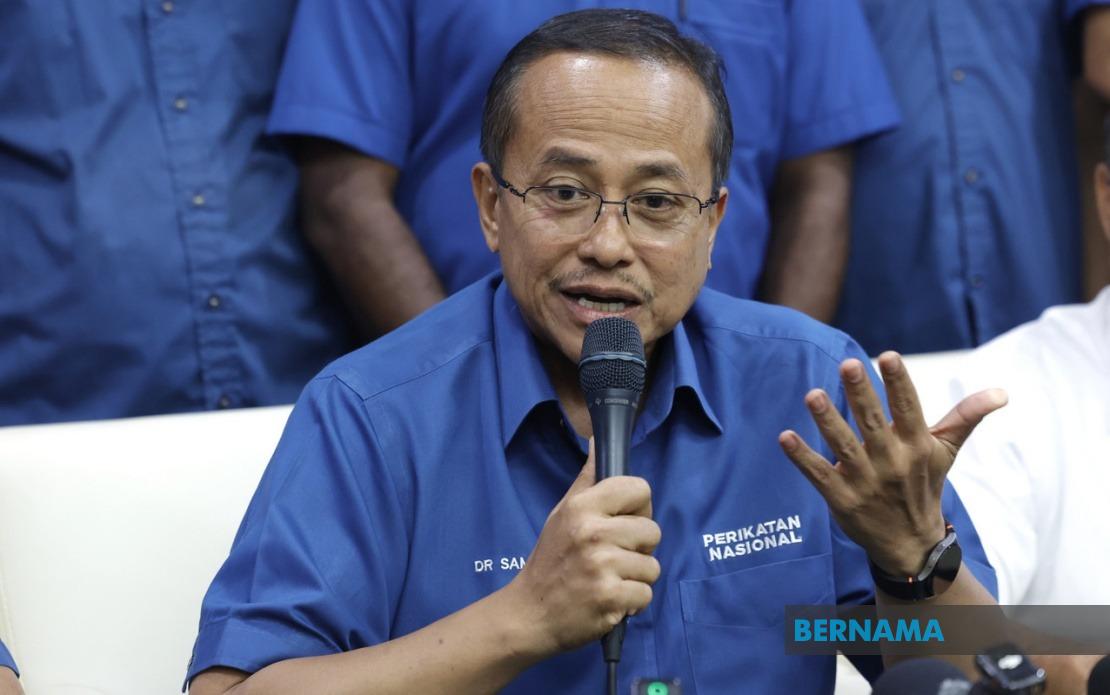
The Perikatan Nasional coalition has moved ahead with its electoral strategy for the 16th Negeri Sembilan state election, securing approval from its Supreme Council for a unified candidacy framework that will see representatives from multiple parties contest under a single coalition banner. The decision, announced by PN chairman Datuk Seri Dr Ahmad Samsuri Mokhtar following an emergency council session in Seremban, represents an attempt to present a consolidated front in the crucial state election, where competition for seats and influence remains fierce.
The seat allocation plan encompasses representatives from four component parties within the coalition structure: the Pan-Malaysian Islamic Party (PAS), Gerakan, Wawasan, and the Malaysian Indian People's Party (MIPP). By centralising candidate selection and branding under the PN logo rather than allowing individual parties to campaign with their own symbols, the coalition aims to streamline its messaging and consolidate voter support behind a single identity. This approach reflects broader trends in Malaysian electoral politics, where multi-party coalitions increasingly emphasise unified branding to counter fragmentation and maximise competitiveness.
Dr Ahmad Samsuri characterised the strategic direction as fundamentally about advancing tangible outcomes for state residents rather than narrow partisan interests. He emphasised that the coalition's electoral participation would focus on elevating living standards, accelerating development projects across Negeri Sembilan, and sustaining the delicate communal equilibrium that defines the state's diverse population. These stated priorities—prosperity, infrastructure, and social cohesion—represent standard appeals in Malaysian state elections, though their implementation often becomes contested between incoming and incumbent administrations.
The PN chairman's statement also served to address mounting internal tensions within the broader coalition ecosystem. He underscored his personal oversight of preliminary negotiations with other political organisations, a clarification that effectively countered emerging suggestions that significant coalition decisions were proceeding without full consultation or transparency. By invoking his explicit knowledge and formal approval of inter-party discussions, Dr Ahmad Samsuri sought to establish authoritative control over coalition decision-making and preempt further accusations of backroom maneuvering.
However, the coalition's unified front immediately fractured with Bersatu's defection from the collaborative framework. Bersatu president Tan Sri Muhyiddin Yassin announced that his party had not participated in discussions regarding seat distribution and cooperation terms with Bersatu Nasional component parties, let alone with Barisan Nasional. Rather than acquiesce to an arrangement he deemed exclusionary, Muhyiddin declared that Bersatu would independently contest the election under its own party symbol. This rupture underscores persistent fault lines within the PN structure, where larger parties like Bersatu periodically chafe at collective decision-making that they perceive as diluting their individual leverage.
The Bersatu withdrawal carries significant implications for Negeri Sembilan's electoral landscape. With Bersatu candidates now operating outside the PN framework, voters will encounter a more fragmented opposition landscape, potentially fracturing anti-incumbent sentiment across multiple competing banners. For Barisan Nasional's state administration, the division within the broader opposition coalition presents both opportunity and complexity—while disunity might benefit the ruling coalition in specific constituencies, it also complicates post-election alliance negotiations should any faction gain significant representation.
For Malaysian political observers, the PN-Bersatu split exemplifies enduring structural challenges within opposition coalition-building. Unlike formal merger arrangements, coalition frameworks depend substantially on sustained consensus among partners with divergent organisational interests and leadership hierarchies. Bersatu's decision to contest independently reflects its continued struggle to balance the strategic benefits of collaborative electoral campaigns against the party's institutional imperatives to maintain autonomous decision-making authority and project independent electoral legitimacy to its base constituencies.
The timing of these developments also matters considerably within the broader Malaysian political context. Coalition cohesion and electoral performance in state elections frequently influence national political trajectories, particularly regarding ministerial posts, parliamentary support arrangements, and leadership contests within larger parties. A weak PN showing in Negeri Sembilan, potentially exacerbated by Bersatu's separate campaign, could reverberate across federal political equations and embolden alternative coalition configurations seeking to reshape the opposition landscape.
For Negeri Sembilan voters, the electoral contest will present stark choices across an increasingly fragmented political spectrum. Rather than a binary opposition-incumbent dynamic, the state election has evolved into a multi-cornered competition involving PN-affiliated candidates, independent Bersatu candidates, and the ruling Barisan Nasional coalition. This complexity creates both opportunities for voter choice and potential confusion regarding which opposition faction genuinely represents coherent alternatives to incumbent governance. Candidate quality, local development track records, and community engagement will likely determine outcomes more decisively than national coalition dynamics.
The coalition's emphasis on the upcoming PN candidate announcement suggests that despite internal turbulence, the core PN structure intends to proceed with substantial electoral mobilisation. The coordination across PAS, Gerakan, Wawasan, and MIPP demonstrates that the coalition framework retains operational capacity even amid component-party defections. However, the Bersatu departure signals that PN cohesion cannot be assumed permanent, and future electoral cycles may witness further restructuring as component parties reassess alignment costs and benefits.
Ultimately, the Negeri Sembilan election has become a consequential test case for opposing coalition viability in Malaysian state politics. Whether PN can effectively govern as a diverse multi-party alliance, and whether Bersatu's independent strategy generates electoral returns justifying its coalition departure, will inform calculations by other parties contemplating similar decisions. The state election results may thus ripple well beyond Negeri Sembilan's borders, shaping opposition coalition architecture across Malaysia's remaining competitive states and influencing the broader trajectory of Malaysian electoral competition.

