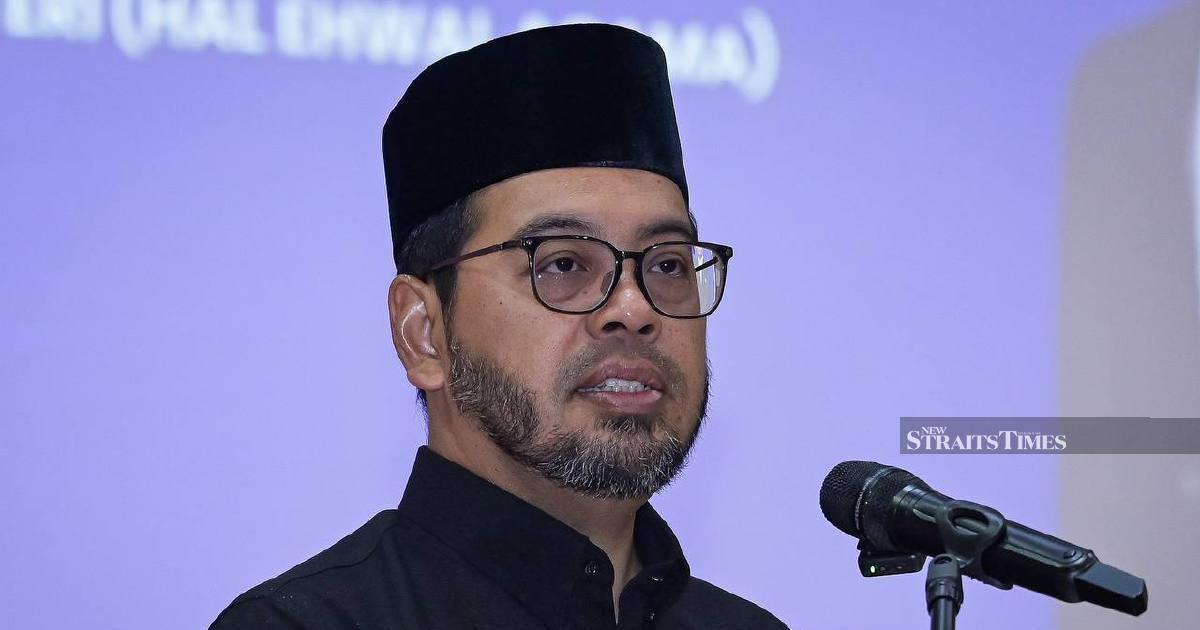
The Prime Minister's Department (Religious Affairs) has publicly endorsed His Majesty Sultan Ibrahim, King of Malaysia's directive that all inquiries stemming from the Royal Commission of Inquiry (RCI) into Lembaga Tabung Haji must be pursued with absolute rigour, complete transparency, and unwavering integrity. The endorsement signals a unified front from the highest levels of government in response to the findings of the landmark commission examining the management and operations of Malaysia's premier Islamic pilgrimage fund.
Lembaga Tabung Haji, which administers savings and investments for Muslim pilgrims preparing for the Hajj, has faced intense scrutiny over recent years regarding its financial stewardship and governance structures. The RCI was established to investigate alleged irregularities and determine accountability for any lapses in institutional oversight. With millions of Malaysian Muslims relying on the organisation to safeguard their pilgrimage savings, the stakes remain extraordinarily high for both individual devotees and the nation's Islamic financial credibility.
The royal decree underscores the King's personal commitment to ensuring that no stone remains unturned in examining the RCI's conclusions. As the constitutional head of state and supreme arbiter in matters affecting national institutions, Sultan Ibrahim's intervention carries profound symbolic weight. His insistence on thoroughness and transparency reflects broader public expectations that governance failures, particularly those affecting vulnerable populations entrusting their religious obligations to state-backed organisations, must be addressed with complete honesty.
The Prime Minister's Department's explicit backing of this directive demonstrates that the executive branch recognises the critical importance of credibility in investigating its own institutions. By aligning itself with the monarch's stance, the government signals that it will not obstruct, minimise, or selectively pursue accountability measures. This alignment between the crown and the executive represents a reassuring message to concerned citizens and international observers monitoring Malaysia's governance standards.
For Malaysian Muslims contemplating the Hajj pilgrimage, the commitment to rigorous investigation offers potential reassurance that their financial interests will be safeguarded through proper accountability mechanisms. However, the RCI process also highlights persistent questions about how such significant governance gaps emerged in an institution created specifically to serve their needs. Understanding how oversight failures occurred remains essential for rebuilding public confidence in Tabung Haji's future operations and management structure.
The investigation into RCI findings will likely encompass examination of investment decisions, administrative expenditures, board governance, and internal control mechanisms. The transparency requirement becomes particularly important given that Tabung Haji operates partially as a religious institution and partially as a financial entity, serving millions of depositors whose faith in its stewardship forms the foundation of its operational legitimacy. Any perception that investigations were compromised or incomplete could inflict lasting damage on institutional trust.
From a broader Southeast Asian perspective, Malaysia's handling of this matter carries implications for Islamic finance credibility across the region. As one of the world's most significant Islamic financial centres, Malaysia's institutions serve as benchmarks for governance standards throughout the Muslim-majority world. How authorities respond to the RCI findings will influence investor confidence not only in Tabung Haji but potentially across the wider Malaysian Islamic banking and investment ecosystem.
The department's endorsement also reflects evolving standards of institutional accountability in Malaysia's public sector. Religious affairs organisations have historically operated with less public scrutiny than secular counterparts, partly due to their cultural sensitivity and religious significance. However, the RCI approach signals a shift toward treating religious institutions with the same demanding standards of transparency and accountability applied to other government bodies. This development may establish important precedents for governance reform beyond Tabung Haji.
Implementing the directive for thorough investigation will require coordination across multiple government agencies and potentially involve independent investigators to ensure credibility and impartiality. The process will demand balancing the need for swift action with proper due diligence, ensuring that anyone found culpable faces appropriate consequences while protecting individuals against unfounded accusations. The complexity of reconstructing events and establishing accountability chains in large institutions demands careful, methodical work.
Public communication about investigation progress will prove essential for maintaining confidence during what may become an extended process. Stakeholders including Tabung Haji depositors, the broader Muslim community, parliament, and international observers will expect regular, honest updates on findings and actions taken. Transparency in the investigative process itself, not merely its conclusions, will determine whether public trust can ultimately be restored.
Moving forward, the government faces the challenge of translating the commitment to thorough investigation into concrete structural reforms ensuring such governance failures cannot recur. This may necessitate revising Tabung Haji's governance framework, enhancing board independence, strengthening internal audit mechanisms, and clarifying lines of accountability. The RCI findings should catalyse institutional transformation, not merely historical reckoning.
The unified stance of the Prime Minister's Department and the monarchy demonstrates that Malaysia's leadership recognises the stakes involved in addressing governance failures affecting millions of citizens. Whether this commitment translates into substantive reform and meaningful accountability for any wrongdoing will ultimately determine the success of the investigative process and the restoration of public confidence in one of Malaysia's most important Islamic institutions.

