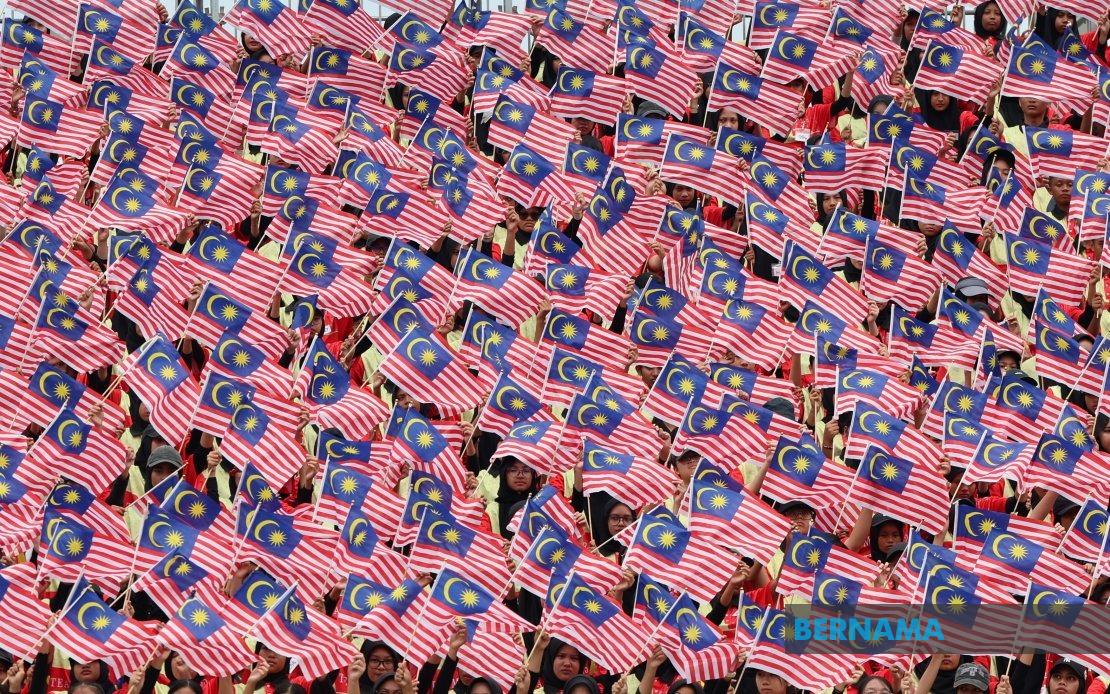
Prime Minister Datuk Seri Anwar Ibrahim will officiate the launch of the 2026 National Month and Fly the Jalur Gemilang Campaign on July 19 at the Sultan Azlan Shah Institute of Health Training in Tanjung Rambutan, Ipoh. The event is expected to draw approximately 3,000 participants, including members of the MADANI Community, trainees, and staff from the institute, marking an important milestone in the countdown to Malaysia's national celebrations later this year.
The campaign represents a concerted effort by the federal government to galvanise public participation in the National Day and Malaysia Day 2026 festivities, framed under the unifying theme of "Malaysia MADANI: Kesejahteraan Dinikmati" (Malaysia MADANI: Shared Prosperity). Rather than confining the event to those physically present at the venue, the government has ensured broad accessibility by broadcasting the proceedings live through Radio Televisyen Malaysia (RTM) and the Malaysian National News Agency (Bernama) channels, alongside official Facebook pages maintained by the Ministry of Communications and the Department of Information Malaysia (JAPEN). This multi-platform approach reflects an understanding that inclusive civic engagement requires meeting citizens where they are, whether at formal government events or engaging from their homes and workplaces.
Central to the 2026 celebrations is the "1 Rumah 1 Jalur Gemilang" initiative, which encourages every household to proudly display the national flag. Perak State Government Corporate Division Principal Assistant Secretary Anita Amri has emphasised that purchasing and flying the Jalur Gemilang serves as a tangible expression of national pride and patriotism. However, the campaign goes beyond mere symbolic gestures, advocating for citizens to maintain their flags in pristine condition. Anita specifically cautioned the public against displaying worn, faded, or torn flags, arguing that the manner in which the national symbol is presented reflects broader attitudes towards the nation itself.
The emphasis on flag maintenance carries deeper significance within Malaysian political culture. The Jalur Gemilang, with its distinctive design of 14 equal stripes representing the 13 states and federal territories plus the federation itself, along with the yellow crescent and star on a blue canton, commands respect as a constitutional symbol. By insisting on proper presentation standards, government officials are effectively raising awareness about treating national symbols with the dignity they deserve. This approach educates Malaysians that patriotism is not merely an emotional impulse but involves concrete, everyday practices that reinforce national identity.
Anita's message extends beyond individual households to encompass broader community mobilisation. She called on families to encourage relatives, friends, and neighbours to participate in the flag-flying campaign, recognising that social cohesion amplifies the impact of patriotic initiatives. The strategy leverages informal networks and personal relationships to spread the message organically, potentially reaching demographics that formal government announcements might not effectively engage. By framing patriotism as a communal activity that strengthens social bonds, the campaign positions national celebration as inseparable from community wellbeing.
Social media has been identified as a crucial tool for amplifying the campaign's reach. Officials have explicitly invited Malaysians to utilise platforms such as Facebook, Instagram, and TikTok to document and share their participation in the flag-flying initiative. This digital strategy recognises that contemporary patriotism increasingly finds expression through online channels, where visual narratives of national pride can circulate rapidly and inspire broader participation. The approach also democratises the narrative around national celebrations, allowing ordinary citizens to become storytellers rather than passive consumers of government messaging.
Communications Minister Datuk Seri Fahmi Fadzil announced that the 2026 National Day celebrations proper will be conducted at Dataran Putrajaya on August 31, deliberately adopting a modest scale while maintaining an energetic and celebratory atmosphere. This decision reflects pragmatic governance, acknowledging budget constraints or environmental considerations whilst refusing to diminish the significance of the occasion. The emphasis on maintaining liveliness despite scaled-back logistics suggests that national commemoration's true value lies not in grandiose displays but in authentic public participation and genuine expressions of national sentiment.
The Malaysia MADANI logo will continue as the official emblem for celebrations through 2026, providing visual continuity and reinforcing the government's broader policy framework. This consistency in branding helps embed the MADANI concept—which emphasises shared prosperity, inclusivity, and sustainable development—into public consciousness around national identity. By linking patriotic displays with specific developmental values, the government attempts to move beyond abstract nationalism towards a more purposeful articulation of what Malaysian identity means in contemporary contexts.
The launch of the Merdeka360 Portal represents a technological dimension to the campaign's infrastructure. Designed by JAPEN to serve as a centralised repository for official, accurate, and timely information regarding National Day and Malaysia Day celebrations, the portal addresses public demand for reliable information sources. In an era marked by rapid misinformation circulation, the government's initiative to provide an authoritative platform reflects recognition that controlling information quality is essential to maintaining public confidence in official narratives and ensuring coordinated participation across the nation.
For Malaysian audiences in Perak and beyond, the Ipoh launch carries particular resonance. Hosting the campaign launch at a health training institute underscores the intersection between national identity and institutional purpose—suggesting that patriotism is cultivated through educational and professional development. This venue selection implicitly acknowledges that healthcare workers are not merely technical professionals but custodians of national welfare, making their participation in patriotic campaigns symbolically significant.
The timing of the campaign launch, occurring several months before the August 31 National Day and September 16 Malaysia Day celebrations, permits adequate preparation time for public mobilisation. The protracted campaign period allows grassroots enthusiasm to build organically whilst providing government institutions sufficient runway to coordinate messaging across federal, state, and local levels. This extended timeline reflects lessons learned from previous campaigns regarding the necessity of sustained engagement rather than concentrated bursts of activity.
Ultimately, the 2026 National Month and Fly the Jalur Gemilang Campaign represents the government's attempt to reinvigorate civic participation in national commemoration during a period when social fragmentation and competing priorities threaten to diminish public engagement. By scaling the formal launch event whilst maximising broadcast reach, emphasising practical flag maintenance standards, leveraging digital platforms, and creating dedicated information infrastructure, authorities have constructed a multi-layered engagement strategy. Whether this approach succeeds in meaningfully deepening patriotic sentiment or merely generates surface-level compliance remains a question that will become apparent through the coming months.

