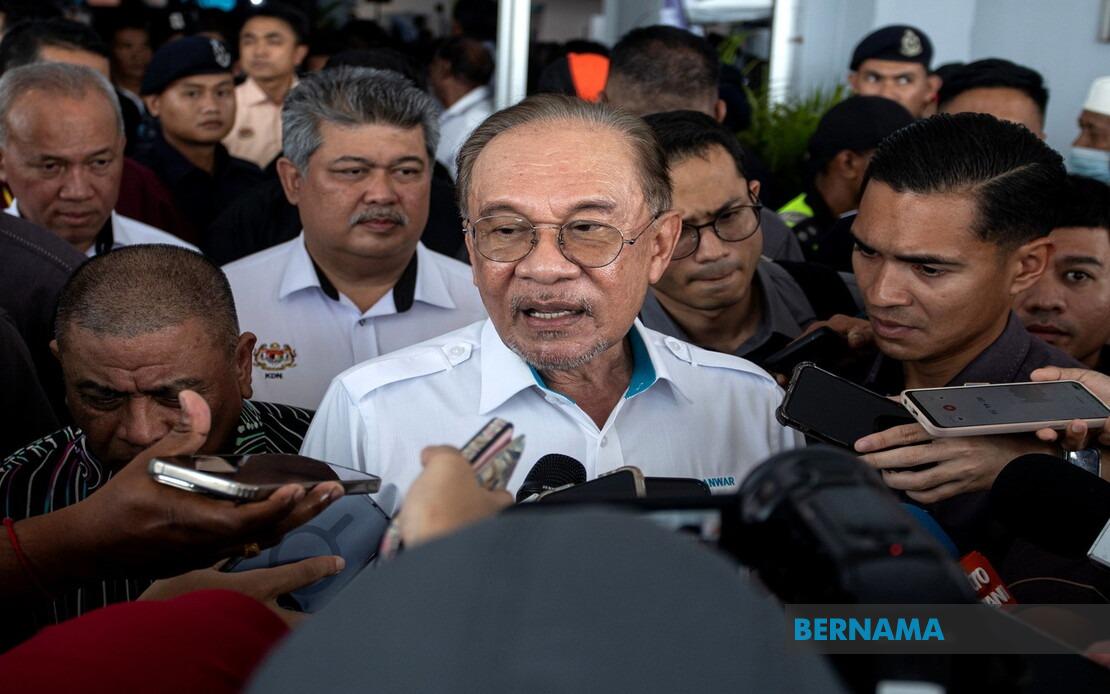
Prime Minister Datuk Seri Anwar Ibrahim has issued a stern reminder to all government officials to exercise restraint and discipline during state election campaigns, particularly warning against public attacks on the Federal Government that could undermine the administration's credibility and effectiveness. Speaking in Ipoh following a community engagement programme on July 19, the Premier underscored that those holding ministerial or agency positions operate under strict codes of conduct that supersede their right to campaign freely, and breach of these standards should result in immediate resignation from office.
The Prime Minister's statement reflects growing concerns about potential friction within the Unity Government coalition as multiple states prepare for electoral contests. While the Malaysian political framework permits coalition partners to compete against one another at the state level, a practice commonplace in federal systems worldwide, the tension arises when those simultaneous competitions spill into attacks on the collective federal administration. Anwar framed this as a fundamental democratic principle that must be balanced against institutional integrity and coherent governance.
The specific constraint Anwar articulated targets a particular category of campaigners: government servants in senior positions including ministers, deputy ministers, and leaders of federal agencies. These individuals occupy a unique position where they simultaneously represent the administration's interests while participating in partisan electoral competition. The Prime Minister contended that their elevated status demands heightened responsibility, and the privilege of campaigning must not be weaponised against the very government they serve. This distinction suggests that ordinary party members and candidates without official portfolios retain greater latitude to pursue aggressive campaigning strategies.
Anwar's clarification that coalition partners "are the same at the federal level but are competing against each other in the state elections" acknowledges a structural reality of Malaysian politics that has become more pronounced in recent years. The Unity Government comprises Pakatan Harapan, Barisan Nasional, and other parties that cooperate on national policy while maintaining separate state-level organisations competing for electoral advantage. This arrangement, while theoretically workable, creates genuine tensions when state-level competition escalates beyond policy differences into accusations that undermine federal credibility or question the integrity of the national administration.
The Prime Minister, who also chairs Pakatan Harapan, indicated he had already engaged his two deputies, Datuk Seri Dr Ahmad Zahid Hamidi and Datuk Seri Fadillah Yusof, regarding the matter, suggesting this is not merely a rhetorical position but reflects active discussions within the highest echelons of government. This engagement with deputy prime ministers indicates the seriousness with which the administration views potential disciplinary breaches and the need for unified messaging across the cabinet hierarchy.
The broader context for Anwar's warning concerns the imperative to maintain effective service delivery to the public despite electoral competitions. The Prime Minister emphasised that the federal and state governments must preserve functional working relationships to ensure continuity of public services, infrastructure projects, and administrative programmes that transcend electoral cycles. When government officials attack their own administration's federal policies during campaigns, they risk creating confusion about the government's direction and undermining public confidence in its competence and coherence.
For Malaysian voters and political observers, this intervention highlights the delicate equilibrium required in coalition governance. Unlike single-party dominant systems where internal competition remains confined to party structures, Malaysia's multi-party coalitions must manage simultaneous cooperation and competition across multiple levels of government. This creates incentive structures where ambitious politicians might use state campaigns to distance themselves from unpopular federal policies or position themselves as challengers to the current administration, potentially destabilising the coalition's unity.
The disciplinary mechanism Anwar proposed—requiring resignation from office for those who breach conduct standards—carries significant weight. Federal appointments in Malaysia, particularly ministerial positions, confer substantial prestige, resources, and political influence. By clearly linking continued tenure to adherence to specific conduct rules, the Prime Minister has created concrete consequences rather than merely issuing advisory guidance. This approach distinguishes his position from simple exhortations to behave responsibly, instead establishing a formal condition for continued government service.
The timing of this statement reflects the cyclical nature of Malaysian politics, where state elections periodically create pressure points within coalitions. As different states prepare for electoral contests over the coming months, political entrepreneurs within coalition parties will be tempted to use these contests to stake claims for greater influence within the broader partnership. Anwar's intervention attempts to establish guardrails before such tensions escalate into public controversies that damage the administration's standing.
From a regional perspective, Malaysia's experience managing coalition governance has relevance for other Southeast Asian democracies navigating similar terrain. Thailand, Indonesia, and the Philippines have all grappled with the challenges of multi-party coalitions, and the mechanisms developed in Malaysia—including explicit conduct rules and disciplinary frameworks—offer instructive models for managing inherent tensions. Anwar's approach suggests that coalition stability requires clear rules of engagement and credible enforcement mechanisms rather than reliance on gentlemen's agreements or appeals to party loyalty.
The Unity Government's effectiveness over the coming years will partly depend on its capacity to manage these competing demands. The administration must simultaneously maintain federal coherence, deliver on policy objectives, and permit legitimate democratic competition among coalition partners. Anwar's statement indicates he recognises this balance cannot be achieved through voluntary cooperation alone but requires explicit governance structures that align incentives toward coalition stability while preserving democratic competition. Whether these mechanisms prove sufficient to contain tension as state elections approach will significantly shape perceptions of the government's durability and competence.

