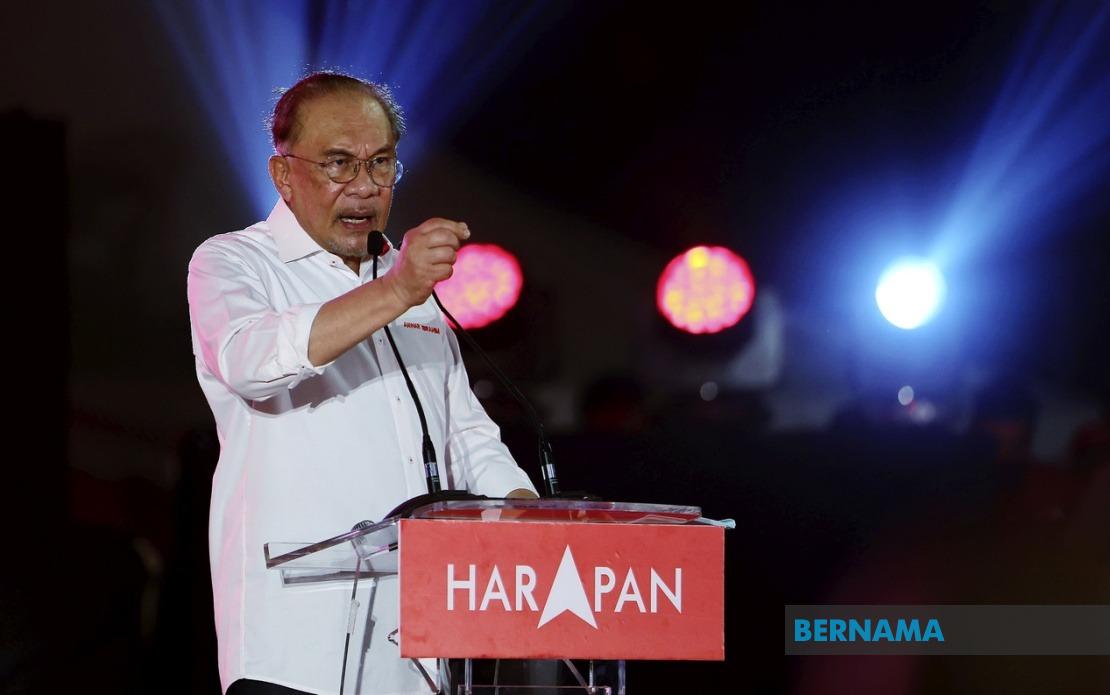
Prime Minister Anwar Ibrahim has issued a pointed reminder to political contestants in the forthcoming Negeri Sembilan state election to steer clear of weaponizing sensitive constitutional and royal matters for electoral gain. Speaking at the Pakatan Harapan candidate announcement ceremony in Kuala Pilah on July 14, the PH chairman stressed that while competitive politics is inherent to democratic systems, such contests must be conducted with integrity and restraint. His intervention signals growing concern within the ruling coalition about campaign rhetoric that could strain institutional relationships or undermine national cohesion during the 16th state election.
Anwar's caution reflects a delicate political balance in Malaysia, where constitutional provisions protect the monarchy and traditional institutions occupy constitutional primacy. The Prime Minister's explicit call for boundaries around these topics underscores how state elections can sometimes become flashpoints for broader constitutional debates, particularly when opposition parties seek to mobilise voter sentiment on sensitive matters. By framing such restraint as fundamental to democratic practice rather than censorship, Anwar attempted to reposition PH as the guardian of institutional stability—a messaging strategy that carries particular weight given recent years of political turbulence and institutional tensions at the federal level.
The distinction Anwar drew between vigorous political contestation and reckless messaging proves instructive for Malaysian electoral culture. He acknowledged that different political perspectives are legitimate and that competing visions are central to democracy, but insisted that parties must not cross into slander or community division. This formulation seeks to carve out protected space for genuine policy disagreement while establishing red lines around character assassination or institutional delegitimisation. For Negeri Sembilan voters, this positioning presents PH as a coalition willing to compete aggressively on governance and development records while respecting foundational institutions.
Anwar's emphasis on "clean leadership" and integrity directly targets a persistent vulnerability for PH coalition partners, who have faced multiple scandals and corruption allegations over the past decade. By pivoting the Negeri Sembilan contest toward these governance metrics rather than allowing it to become a free-for-all on constitutional matters, the Prime Minister steers the campaign toward territory where Pakatan Harapan can more credibly position itself. Negeri Sembilan voters, who have demonstrated sophistication in evaluating state-level performance, are being invited to assess governance capacity and development track records as primary voting considerations.
The ceremony also reflected PH's confidence in its position heading into the state election, with the coalition fielding a slate of 36 candidates that balances fresh recruits against seasoned politicians from component parties PKR, DAP, and Amanah. The strategic deployment of party leaders—with DAP secretary-general Anthony Loke contesting the Chennah seat and Menteri Besar Aminuddin Harun defending Linggi—signals PH's determination to maintain state control and expand its parliamentary footprint. This candidate configuration suggests the coalition views Negeri Sembilan as a winnable state where component party coordination remains functional, contrasting with more fractious coalition dynamics elsewhere.
Anwar's public expression of confidence in Menteri Besar Aminuddin Harun carries territorial significance. By praising Aminuddin as cooperative and development-oriented, Anwar implicitly frames the incumbent state leadership as aligned with federal priorities and committed to preventing Negeri Sembilan from lagging economically or administratively. This messaging is designed to convert state-level performance into federal political capital, strengthening the narrative that PH governance delivers tangible benefits to voters at both tiers. For Malaysian federalism, such integration of state and federal messaging becomes increasingly important as coalition governments must demonstrate coherent governance across multiple levels.
The presence of senior PH figures—including Communications Director Fahmi Fadzil and Election Director Amirudin Shari—underscores how centrally the party hierarchy regards the Negeri Sembilan contest. State elections in Malaysia increasingly serve as referendums on federal performance, with voters using local ballots to signal approval or dissatisfaction with national leadership. Negeri Sembilan's voting patterns thus carry significance beyond the state itself, potentially indicating whether the federal government retains sufficient voter confidence to sustain its policy agenda and legislative agenda.
Anwar's call for development-focused competition rather than institutional contestation also reflects pragmatic calculations about electoral vulnerability. Opposition parties in Negeri Sembilan may attempt to mobilise voter segments through appeals on constitutional or religious grounds, viewing such messaging as capable of transcending normal partisan divides. By establishing normalcy around institutional respect, Anwar attempts to preempt this strategy while positioning PH as the responsible custodian of Malaysia's constitutional framework. This rhetorical positioning becomes particularly important if opposition parties consider exploiting any perceived tensions between state and federal authorities.
The economic dimensions of Anwar's remarks warrant attention. His explicit statement that "Negeri Sembilan must not be left behind" reflects recognition that state-level development outcomes increasingly determine voter allegiance. Malaysian voters have become more instrumental in their electoral calculations, rewarding administrations that demonstrably improve infrastructure, employment, and services while punishing those perceived as neglectful or corrupt. Negeri Sembilan's relative prosperity means voters there can credibly evaluate developmental performance against neighbouring states and federal benchmarks.
Looking forward, the state election will test whether PH's coalition architecture can sustain coordination on messaging and strategy in increasingly competitive environments. If component parties respect Anwar's guidance on institutional boundaries, the coalition presents a unified front capable of defending state control. Conversely, if internal PH tensions translate into campaign messaging that strays into sensitive territory, the Prime Minister's call for restraint will appear rhetorical rather than substantive. The election thus functions as a barometer of coalition cohesion and of PH's capacity to maintain discipline around contested political messaging.
For Southeast Asian observers, Anwar's intervention highlights how even established democracies grapple with calibrating campaign competition against institutional protection. The Malaysian experience demonstrates that constitutional democracies require active leadership to establish and maintain norms around political discourse, particularly when electoral competition intersects with matters of state legitimacy and institutional authority. The Negeri Sembilan election will reveal whether such norms remain operative or whether Malaysian electoral culture is shifting toward more aggressive institutional contestation.

