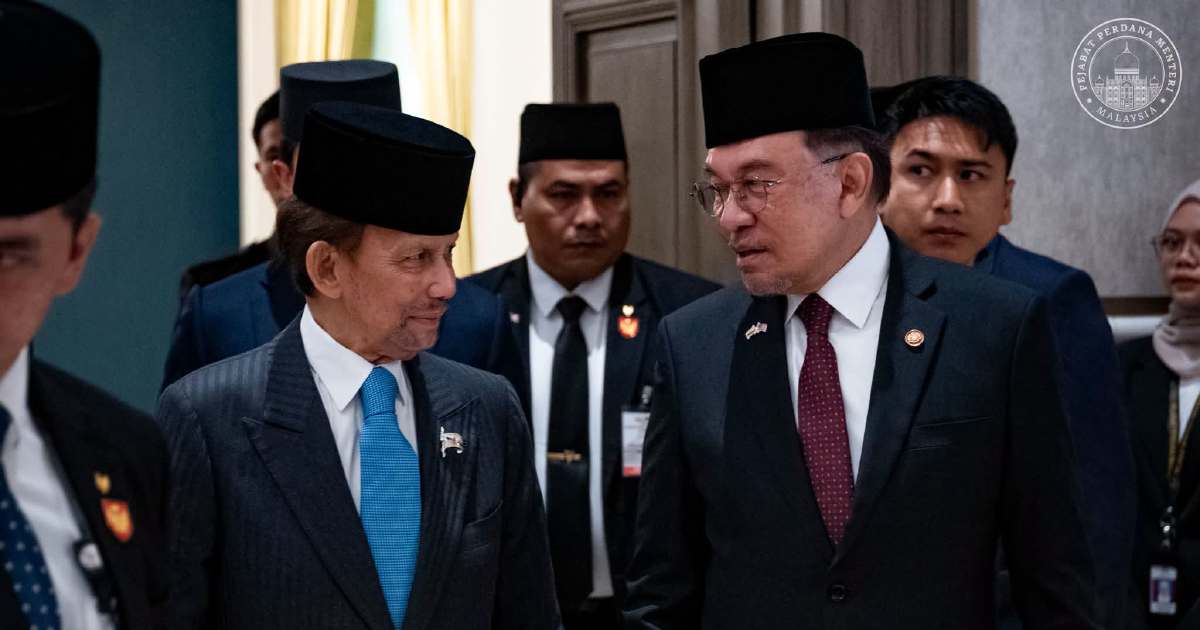
Prime Minister Datuk Seri Anwar Ibrahim is set to visit Brunei Darussalam next week to meet with Sultan Hassanal Bolkiah for the 27th Annual Leaders' Consultation, marking another chapter in the sustained bilateral dialogue between the two neighbouring nations.
The scheduled meeting in Bandar Seri Begawan represents a continuation of the institutionalised engagement framework that has characterised Malaysia-Brunei relations for over two decades. Annual leaders' consultations serve as the apex platform for resolving outstanding issues and charting the strategic direction of bilateral cooperation across multiple sectors, from economic ties to security matters and cultural exchanges.
For Malaysia, these regular consultations with Brunei hold particular significance given the geographic proximity of the two nations and their shared membership in regional organisations including ASEAN. The bilateral relationship encompasses not only traditional diplomatic channels but also tangible people-to-people connections spanning business, education, and social networks that bind the two societies together.
The 27th edition of these consultations arrives at a moment when Southeast Asia faces evolving geopolitical dynamics and economic pressures. Malaysia and Brunei, both ASEAN member states with complementary economic interests and shared security concerns, frequently use such high-level forums to synchronise positions on regional issues and explore expanded cooperation in emerging areas such as digital transformation and green energy transition.
Historically, the annual leaders' consultations have produced substantive outcomes including bilateral agreements on trade facilitation, border management, investment promotion, and defence cooperation. The consistent scheduling of these meetings demonstrates both nations' commitment to maintaining robust diplomatic channels despite the compressed timeframes and competing demands on respective leadership schedules.
Brunei, as Malaysia's eastern neighbour on the island of Borneo, shares significant cross-border interests particularly in areas like maritime boundary demarcation, transnational law enforcement, and regional stability. The sultanate's oil and gas-based economy and Malaysia's more diversified economic structure create opportunities for complementary trade and investment partnerships that benefit both sides.
The timing of Prime Minister Anwar's visit to Bandar Seri Begawan also coincides with a period of renewed attention to ASEAN centrality and unity, particularly as the regional bloc navigates complex relationships with major powers and grapples with challenges ranging from maritime security to climate change adaptation. Malaysia's periodic high-level engagement with Brunei reinforces ASEAN solidarity and underscores the bloc's internal cohesion.
Previous consultations between Malaysian and Brunei leaders have typically addressed issues such as labour cooperation, tourism promotion, cultural heritage preservation, and educational scholarships. These consultations frequently provide a platform for unveiling new initiatives that expand the scope of bilateral engagement beyond traditional diplomatic and security matters into areas that directly affect the daily lives of citizens in both countries.
The consistency with which Malaysia and Brunei maintain their annual leaders' consultation demonstrates a diplomatic discipline that stands in contrast to some bilateral relationships in the region, which experience cyclical patterns of engagement and dormancy. This sustained institutional framework provides both governments with predictable channels for communication, reducing the risk of misunderstandings and creating structured opportunities for conflict prevention and cooperation enhancement.
For Malaysian observers and policymakers, such visits also represent occasions to assess regional diplomatic trends and Malaysia's standing among ASEAN partners. The quality and breadth of discussions during these consultations often signal the health and trajectory of Malaysia's broader regional diplomatic posture and its capacity to maintain productive relationships with neighbouring states.
The visit to Brunei will likely see discussions extending beyond bilateral matters to encompass regional issues of mutual concern, including regional security architecture, the implementation of the ASEAN Comprehensive Investment Agreement, and coordinated responses to transnational challenges. Both nations' positions on major regional questions—from maritime security in the South China Sea to pandemic preparedness—frequently inform the substance of these annual consultations.
As Malaysia continues to navigate its strategic positioning in a region characterised by great power competition and evolving geopolitical alignments, the maintenance of strong bilateral relationships with fellow ASEAN members like Brunei remains a cornerstone of the country's foreign policy. The 27th Annual Leaders' Consultation will thus serve as both a practical mechanism for resolving specific bilateral issues and a symbolic reaffirmation of the enduring importance Malaysia places on its relationship with its closest eastern neighbour.

