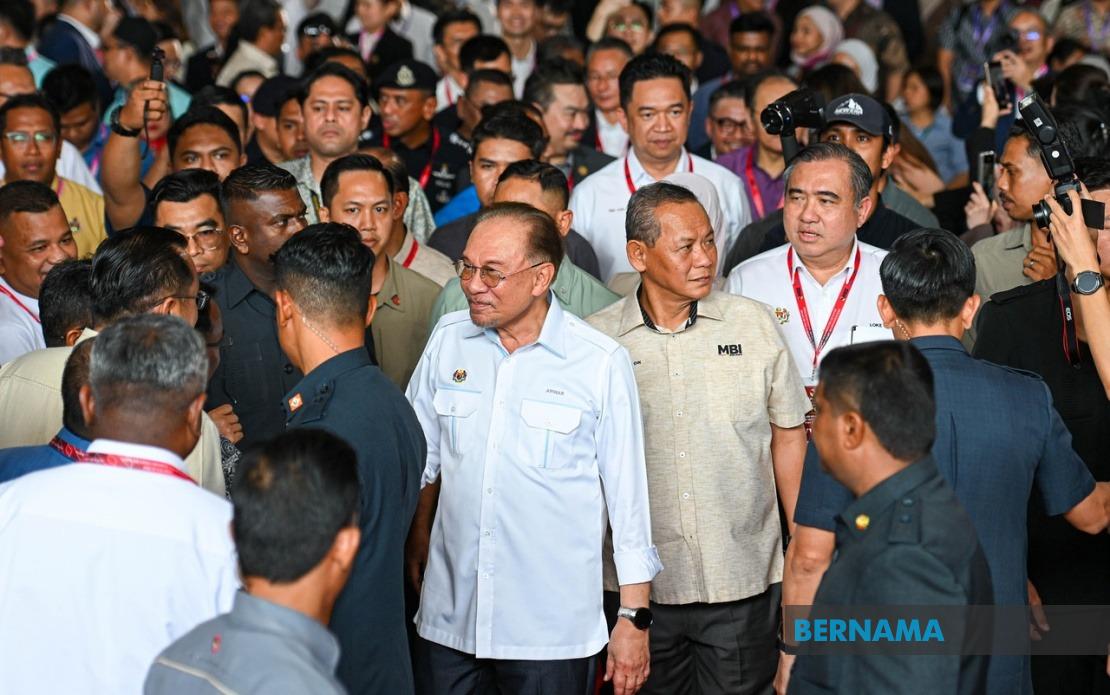
Prime Minister Datuk Seri Anwar Ibrahim has made a direct appeal to Melaka DAP to reconsider its decision to quit the state government, arguing that maintaining coalition stability and development momentum should take precedence over internal political disagreements. Speaking at Port Dickson on July 14 after inaugurating the AI-powered Midport Smart Container Terminal, Anwar cast the party's planned withdrawal as a departure from the broader objective of advancing the people's interests during a critical period before state elections.
The Pakatan Harapan chairman indicated that he had already engaged personally with DAP secretary-general Anthony Loke and Melaka Chief Minister Datuk Seri Ab Rauf Yusoh to explore alternative solutions. His intervention reflects the delicate balance required within Malaysia's multiparty coalitions, where component parties must accommodate diverse ideological positions while maintaining functional governance at state level. Anwar's approach signals that the federal government views the Melaka situation as manageable through dialogue rather than confrontation, though his comments also acknowledge the genuine nature of the underlying dispute.
Melaka DAP's withdrawal threat stems from the state legislative assembly's passage of constitutional amendments permitting the appointment of nominated assemblymen—a move the party views as fundamentally undemocratic. Party chairman Khoo Poay Tiong characterised the decision to exit immediately as a principled stance rooted in the party's core commitment to electoral integrity and democratic governance. This positions the conflict not merely as procedural disagreement but as a clash of political philosophy within the coalition, complicating Anwar's conciliatory efforts.
The Prime Minister's framing of the dispute as routine coalition friction deserves scrutiny. He acknowledged that ruling partners often hold differing viewpoints on specific issues but suggested such disagreements should not undermine shared economic and welfare objectives. This distinction between policy differences and foundational principles becomes crucial in Melaka's case, where DAP views the constitutional amendments as violating democratic norms rather than representing a conventional policy variance.
Anwar's public call for postponement rather than outright reversal of the withdrawal decision reflects pragmatic political management. By seeking a delay, he potentially buys time for behind-the-scenes negotiations while avoiding the appearance of overriding DAP's autonomy within the coalition framework. For Melaka's governance, continued DAP participation—even under strained circumstances—maintains the ruling coalition's legislative capacity and prevents the administrative disruption that would follow the party's departure.
The timing of this confrontation carries wider implications for Pakatan Harapan's cohesion ahead of electoral cycles. Melaka DAP's exit would signal that component parties view certain constitutional manoeuvres as crossing red lines, potentially emboldening similar confrontations in other states where PH governs. Conversely, if the party's concerns are addressed through negotiation, it could establish a precedent for resolving coalition disputes through dialogue rather than withdrawal, strengthening PH's institutional resilience.
Anwar's emphasis on economic growth and public welfare as unifying themes reflects the government's priority to demonstrate tangible benefits to voters. The inauguration of the Midport Smart Container Terminal itself served as a backdrop to this messaging, symbolising development continuity. The Prime Minister's implicit argument is that the coalition's capacity to deliver infrastructure and economic improvements depends on maintaining internal stability, making DAP's continued participation essential to this agenda.
For Malaysian observers, this episode illustrates how federal-level coalition politics directly influence state governance. While DAP's democratic principles represent legitimate concerns about constitutional amendment procedures, the practical challenges of maintaining coalition functionality in states where no single party commands majority legislative support create countervailing pressures. Anwar's intervention reflects his role as coalition arbiter, tasked with balancing ideological consistency against operational necessity.
The Melaka situation also resonates across Southeast Asia's broader democratic context, where dominant parties sometimes employ constitutional amendments to strengthen their position. DAP's public objection provides a check against such tendencies, though internal coalition pressure to moderate such objections complicates the party's advocacy. This tension between democratic principle and coalition loyalty remains unresolved, suggesting that negotiated compromises may ultimately satisfy neither party completely.
Looking forward, the outcome of these discussions will carry significance beyond Melaka itself. If Anwar successfully persuades DAP to postpone withdrawal, it may establish him as a coalition manager capable of defusing internal conflicts through personal intervention. Should DAP proceed with its exit despite his appeal, it would signal that certain parties within Pakatan Harapan prioritise ideological consistency over coalition maintenance, potentially reshaping intra-coalition dynamics before the next election cycle. Either path will influence how future disagreements within the ruling coalition are negotiated and resolved.

