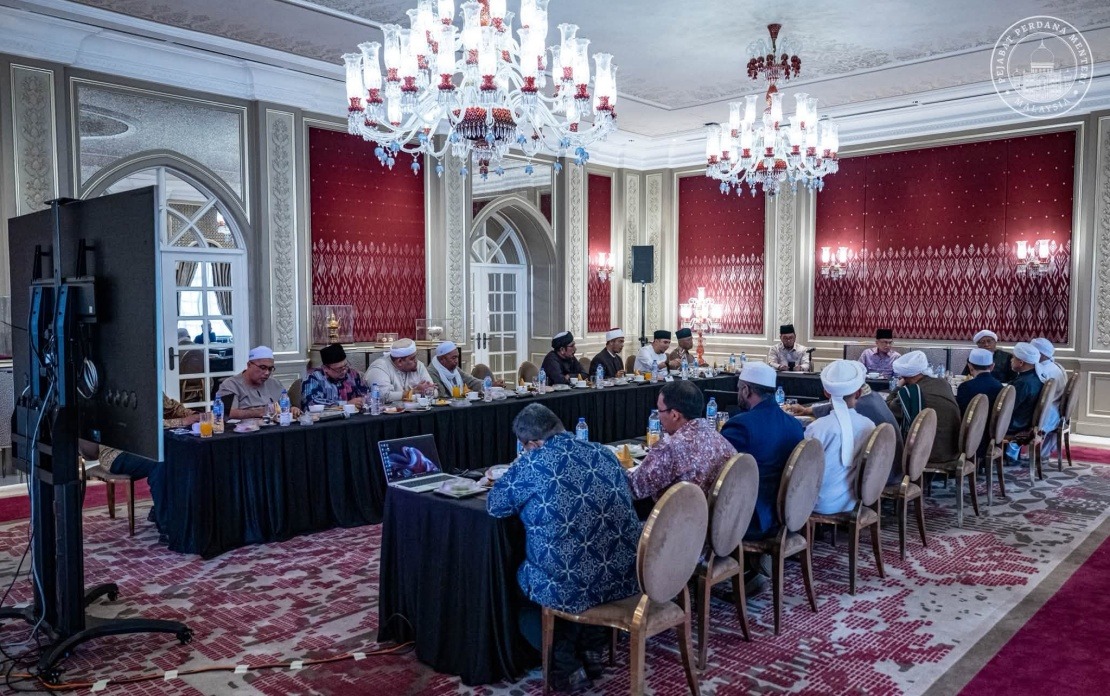
Prime Minister Datuk Seri Anwar Ibrahim has underscored the critical importance of maintaining structured dialogue with Islamic scholars as a mechanism for ensuring that government initiatives remain rooted in sound religious knowledge while remaining sensitive to the practical needs of Malaysia's Muslim population. Speaking through a social media statement on Wednesday, Anwar framed such consultations not as perfunctory administrative exercises but as substantive reflection sessions that allow policymakers to calibrate their decisions in light of Islamic scholarly wisdom and contemporary social realities.
The Prime Minister's remarks came during a series of muzakarah, or religious discussions, held in conjunction with Maulidur Rasul celebrations. These sessions represent part of a broader engagement strategy between the federal government and Malaysia's religious establishment, reflecting an approach that positions Islamic learning as foundational to policy formulation rather than merely ornamental or ceremonial. Such consultation mechanisms have long featured in Malaysian governance, but Anwar's emphasis on their substantive value signals a deliberate commitment to institutionalizing religious counsel in executive decision-making.
During the afternoon sessions, Anwar met with Sheikh Dr Muhyiddin Awwamah, a representative of Darul Hadis al-Awwamiyyah, one of Southeast Asia's prominent centres for hadith scholarship and Islamic jurisprudence. The choice of interlocutor carries symbolic weight in Malaysian religious circles, as Al-Awwamiyyah commands significant influence within both local and regional Islamic academic networks. This level of engagement suggests that the government is actively seeking perspectives from institutions with deep scholarly credentials rather than relying solely on state-appointed religious advisors.
Sheikh Dr Muhyiddin represents a significant scholarly lineage, being the son of the widely respected Al-'Allamah Sheikh Muhammad bin Awwamah, who has earned recognition across the Islamic world as a preeminent hadith expert and jurisprudential authority. The intergenerational transmission of Islamic scholarship that such family connections represent has historically been crucial to maintaining continuity and depth within Islamic intellectual traditions. By engaging with such figures, the government positions itself within this scholarly continuum rather than outside it.
Anwar's appreciation for the scholarly works of Sheikh Muhammad bin Awwamah, which he characterized as intellectual inheritances linking successive generations of Muslim thinkers, reflects a broader philosophical position about the role of Islamic learning in contemporary governance. His characterization of these books as more than merely bound pages but as repositories of intellectual tradition underscores a vision where Islamic governance draws legitimacy and guidance from centuries of accumulated scholarly interpretation and jurisprudential refinement.
The broader context of these consultations relates to Malaysia's complex religious landscape, where the federal government shares authority over Islamic affairs with state governments and where multiple schools of Islamic jurisprudence coexist. Regular dialogue with recognized scholars from different traditions and institutions helps ensure that federal policy initiatives achieve broad acceptance across Malaysia's religiously diverse Muslim community. This consensus-building function is particularly important when government initiatives potentially touch on sensitive religious matters or require community cooperation for successful implementation.
From a governance perspective, such engagement serves multiple functions simultaneously. It provides the administration with access to deep expertise on Islamic jurisprudence and contemporary Islamic thought, helps identify potential religious community concerns with proposed policies before they escalate into public controversy, and demonstrates governmental respect for Islamic scholarship in a nation where Islam holds constitutional significance. For religious scholars, these platforms offer opportunities to influence policy directions toward outcomes they believe better serve both religious and societal interests.
Anwar's articulation that "religion continues to flourish when those in power are willing to listen to the voice of knowledge" presents a particular vision of Islamic governance and state responsibility. This framing positions receptiveness to scholarly advice not as weakness or uncertainty but as a mark of sophisticated governance that recognizes the limitations of executive authority and the necessity of broader intellectual resources. It also implicitly argues against approaches that would marginalize religious scholars from policy discussions or treat Islamic learning as peripheral to state functioning.
The emphasis on ensuring government efforts are "refined according to the needs of the Muslim community and the demands of the times" acknowledges the inherent tension in Islamic governance between maintaining fidelity to foundational principles and adapting to contemporary circumstances. This articulation suggests that the government sees religious scholars as essential partners in navigating this balance, capable of identifying how traditional jurisprudential frameworks can address modern challenges. For Malaysian Muslims navigating rapid social and technological change, such consultation mechanisms potentially offer assurance that religious considerations remain integral to policy development rather than added retroactively.
These dialogues also carry significance for Malaysia's position within regional Islamic discourse. As Southeast Asia's largest Muslim-majority democracy, Malaysia's approaches to Islamic governance and the integration of religious scholarship into state functions attract attention from policymakers and religious leaders across the region. Demonstrating that a modern state can maintain serious engagement with Islamic scholarship while pursuing contemporary development goals presents a model relevant to other Muslim-majority nations grappling with similar questions about governance, modernization, and religious authority.
Looking forward, the systematic nature of these muzakarah sessions suggests an intention to embed religious consultation into regular governance rhythms rather than treating it as occasional. For Malaysian civil society and the broader Muslim community, such regularized engagement offers both promise and questions about whether consultation translates into meaningful policy adjustment or remains largely symbolic. The practical outcomes of these discussions—whether they generate observable policy modifications or specific government initiatives informed by scholarly input—will ultimately determine whether such dialogues represent substantive governance evolution or refined performative engagement with religious institutions.

