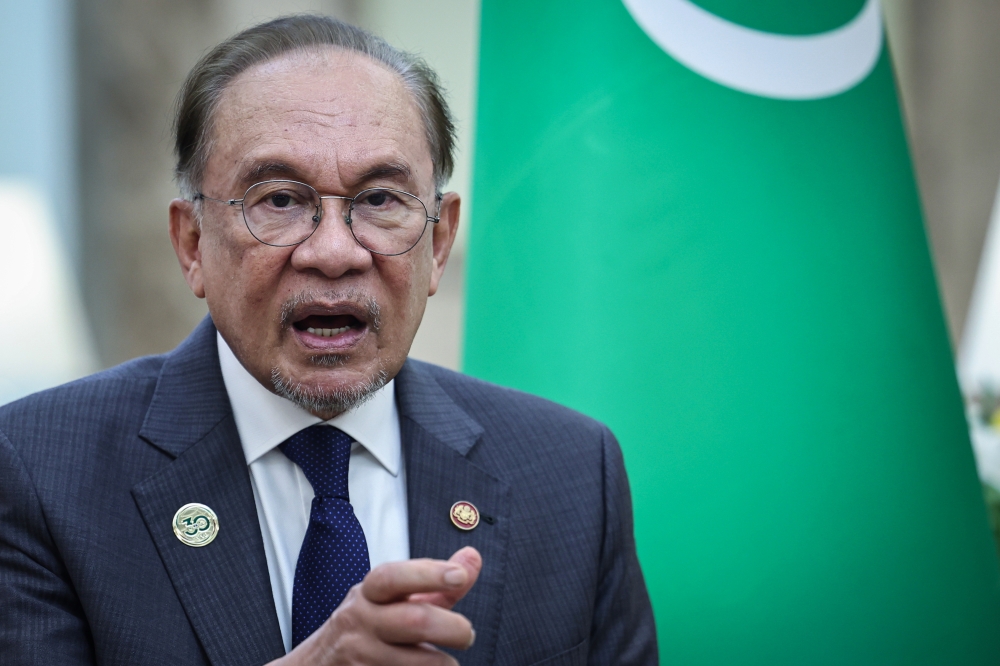
Prime Minister Datuk Seri Anwar Ibrahim marked the death of distinguished Islamic scholar John L. Esposito by releasing a formal statement of condolences, underscoring the intellectual contributions the American academic made to fostering dialogue between Islam and the Western world. The Malaysian leader's public mourning reflects the significance Esposito held in circles of Islamic advocacy and interfaith relations across Asia and the Middle East, particularly among those championing a nuanced understanding of Muslim societies beyond orientalist stereotypes.
Esposito's scholarly legacy rested on decades of work examining Islam's political dimensions, religious practice, and integration within modern nation-states. His appointment at Georgetown University's Center for Muslim-Christian Understanding positioned him as a leading institutional voice in American academia on matters relating to Islamic law, governance, and contemporary religious movements. His prolific publishing record and frequent public commentary made him a reference point for policymakers and intellectuals seeking to understand Muslim-majority societies without recourse to reductive framings.
For Malaysia's government under Anwar, who has long positioned himself as a champion of interfaith harmony and moderate Islam, Esposito's work held particular resonance. The Prime Minister's statement emphasized how the scholar had consistently defended Muslim societies against prejudicial generalizations and advocated for dialogue rooted in genuine understanding rather than civilizational conflict. This alignment with Malaysia's diplomatic messaging regarding Islam's compatibility with democratic governance and pluralism underscores why his passing warranted a formal expression of national mourning.
Anwar's characterization of Esposito as a "true friend to the Muslim world" reflects appreciation for the scholar's intellectual integrity in navigating a fraught terrain. Throughout his career, Esposito maintained credibility among both Western and Muslim audiences by avoiding the polemicism that has increasingly defined academic discourse on Islam and the Middle East since the early 2000s. His willingness to engage critically yet sympathetically with Islamic movements and political ideologies earned him respect in unlikely quarters while also drawing criticism from those who viewed his scholarship as insufficiently adversarial toward Islamist organizations.
The death also arrives at a moment when Malaysia and other Muslim-majority nations have sought to recalibrate their diplomatic positioning on the world stage. With rising tensions between the Global North and Global South, and intensifying debates about religious identity in secular democracies, the loss of a scholar who spent five decades building bridges between civilizations carries symbolic weight. Esposito's ability to communicate Islamic history and contemporary developments to American and European audiences in accessible yet sophisticated terms made him an invaluable cultural intermediary during periods of heightened misunderstanding.
Within Malaysian intellectual circles, Esposito's work on Islam and democracy held particular currency. His writings and public positions consistently challenged the Western notion that Islamic governance inherently opposed democratic principles or minority rights protections. For a government that has invested significantly in positioning Malaysia as a model of Islamic moderation and democratic pluralism, especially under Anwar's leadership, such scholarship provided both intellectual validation and international credibility. His passing leaves a conspicuous absence in the broader landscape of informed commentary on Islam in the modern world.
Esposito's Georgetown platform enabled him to influence a generation of American policymakers, journalists, and academics who encountered Islam primarily through his frameworks and analytical categories. By humanizing Muslim societies and insisting on their internal diversity and complexity, he performed crucial work in countering oversimplifications that had gained traction in American foreign policy circles, particularly following the attacks of September 11, 2001. His persistence in advocating for nuanced understanding, even when doing so attracted accusations from hardline critics across the ideological spectrum, demonstrated a commitment to scholarship over polemics.
The scope of Esposito's influence extended beyond academia into public diplomacy. His participation in interfaith dialogues, consultation with international organizations, and willingness to engage media platforms amplified his message beyond university walls. For countries like Malaysia seeking greater recognition as voices of moderation within the Islamic world, scholars of Esposito's stature and accessibility served as crucial allies in reshaping international narratives.
Anwar's public mourning also reflects recognition that the field of Islamic studies in Western institutions has been contested terrain, with scholars of various persuasions competing to shape how Islam is understood in policy and public discourse. Esposito's evident commitment to balanced analysis, tempered by recognition of Islam's genuine diversity, positioned him as a counterweight to more sensationalized or ideologically driven scholarship. His loss deprives the academic world and broader international conversation of a voice that consistently advocated for intellectual honesty and mutual respect in cross-cultural understanding.
The timing of Esposito's passing comes as Muslim-majority nations, including Malaysia, continue navigating complex relationships with Western powers on issues spanning religious minorities, counterterrorism, and governance models. The disappearance from the scholarly landscape of someone who dedicated his career to demonstrating that Islamic societies and Western democracies need not exist in perpetual opposition leaves a gap that will not easily be filled. Anwar's tributes acknowledge both the personal loss to those who knew Esposito and the broader intellectual void his death creates.

