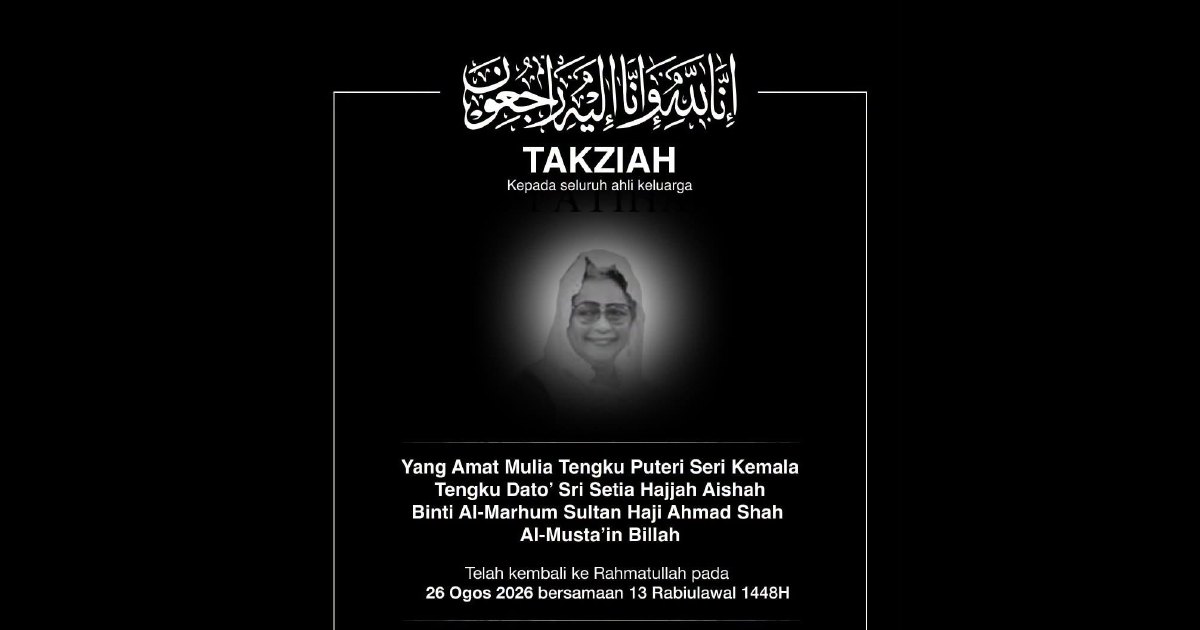
Prime Minister Datuk Seri Anwar Ibrahim has conveyed condolences to Al-Sultan Abdullah Ri'ayatuddin Al-Mustafa Billah Shah and members of the Pahang Royal Family following the passing of the Sultan's elder sister, Tengku Puteri Seri Kemala Tengku Datuk Seri Aishah Almarhum Sultan Ahmad Shah, on Tuesday.
The gesture reflects the customary protocols observed within Malaysia's federal system whenever members of state royal households pass away, underscoring the strong constitutional ties between the federal government and the sultanates that form part of the nation's institutional framework. Such expressions of sympathy from the Prime Minister represent formal recognition of loss within the royal institution and affirm the bonds that connect the federal administration to Malaysia's constitutional monarchy.
Tengku Puteri Seri Kemala's death marks a significant moment for Pahang, one of Malaysia's most historically prominent states. Her passing removes another link to the reign of Sultan Ahmad Shah, who served as Pahang's ruler for many years and left an enduring impact on the state's development and character. The late Tengku Puteri maintained connections to this important chapter of Pahang's history, representing continuity within the royal lineage.
The Pahang Royal Family occupies a distinctive position within Malaysia's traditional monarchical structure. As one of the nine states with reigning sultans, Pahang has long played a central role in shaping both state-level governance and the broader institution of constitutional monarchy in Malaysia. The family's prominence extends across multiple generations and remains woven into the cultural and political fabric of the state and the nation.
Al-Sultan Abdullah, who has led Pahang's monarchy during recent years marked by significant national developments, now faces this personal loss during his tenure. The Sultan's relationship with the federal government, and by extension with the Prime Minister's office, remains an essential dimension of Malaysia's constitutional architecture. Formal condolences from the Prime Minister acknowledge both the Sultan's individual loss and the institutional significance of the occasion.
The timing of this bereavement comes as Malaysia continues to navigate complex political and economic challenges that require sustained cooperation between federal and state authorities. The Pahang sultanate's engagement with federal policymaking across areas ranging from economic development to constitutional matters underscores why losses within the royal household carry implications extending beyond family concerns into broader governance considerations.
Within Malaysian cultural traditions, the expression of condolences by senior government figures holds genuine significance beyond mere ceremonial obligation. Such gestures affirm shared values regarding respect for royal institutions and demonstrate the government's acknowledgement of the human dimensions underlying formal hierarchies. The Prime Minister's message thus operates simultaneously as both constitutional propriety and authentic recognition of grief.
For residents of Pahang and those with ties to the state, the passing of Tengku Puteri Seri Kemala represents a personal loss for a widely respected member of the royal household. Her life spanned significant periods of Pahang's modern history, providing connection to earlier eras that remain important to the state's collective memory and identity. The succession of generations within royal families carries meaning for communities that maintain strong attachments to traditional institutions.
The protocols surrounding royal deaths in Malaysia reflect the distinctive constitutional position occupied by the sultanates within the federation. Unlike purely ceremonial monarchies in other nations, Malaysia's sultans retain active constitutional roles and exercise genuine authority in state affairs, making transitions and losses within their families matters of substantive governance significance. This distinction explains why federal authorities routinely acknowledge developments within state royal households through formal diplomatic channels.
The Pahang Royal Family's historical trajectory includes numerous contributions to the state's educational, cultural, and charitable endeavours. Members of the household have championed various causes aligned with the state's development priorities and broader national objectives. The loss of Tengku Puteri Seri Kemala therefore represents not merely a family matter but also the diminishment of institutional memory and personal advocacy for causes she supported throughout her life.
Moving forward, the Royal Family's capacity to maintain continuity while processing this bereavement will likely remain a focal point for observers of Pahang's governance and institutional life. The expression of federal solidarity through the Prime Minister's condolences provides supportive messaging at a moment when such gestures carry particular weight. The incident also reinforces the enduring importance of respectful engagement between Malaysia's various constitutional institutions, a principle that transcends party politics and generational changes in leadership.

