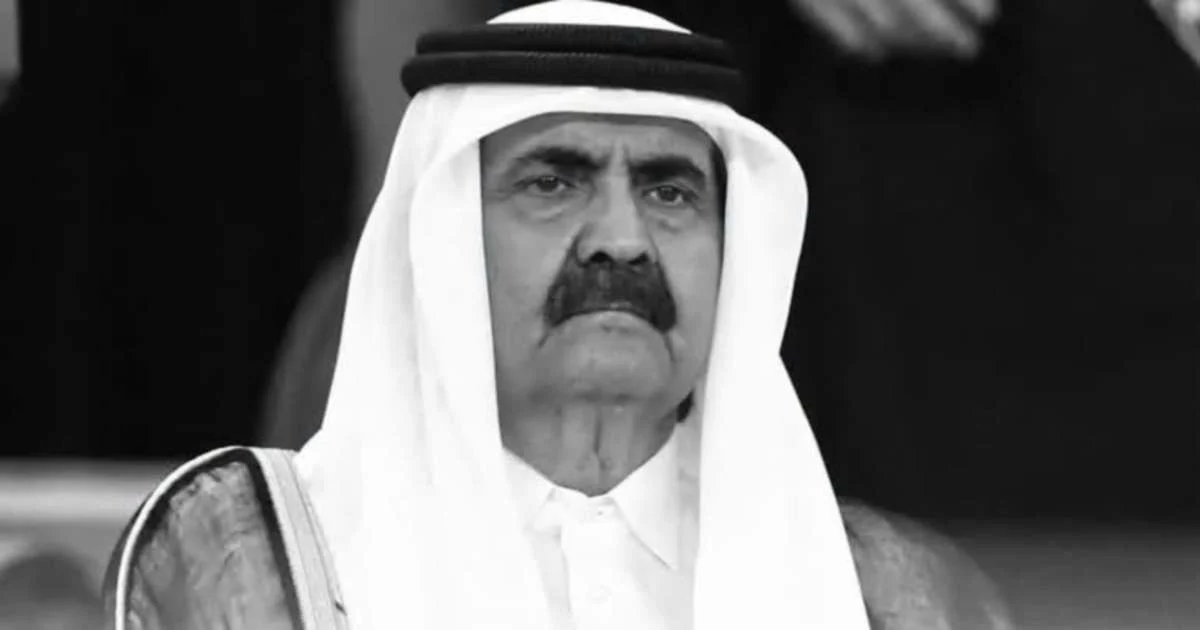
Prime Minister Datuk Seri Anwar Ibrahim has expressed Malaysia's formal condolences to the government and people of Qatar following the death of Sheikh Hamad bin Khalifa Al Thani, the Gulf state's former leader, who passed away at 74 years old. The expression of sympathy represents Malaysia's commitment to maintaining warm bilateral relations with one of the region's most influential nations.
Sheikh Hamad bin Khalifa Al Thani served as Qatar's emir from 1995 to 2013, a transformative period during which he modernised the kingdom's economy and elevated its regional standing. His tenure coincided with Qatar's emergence as a major global player, particularly following the discovery and development of vast liquefied natural gas reserves that fundamentally reshaped the nation's prosperity and geopolitical influence across the Middle East.
During his 18-year rule, Sheikh Hamad implemented sweeping economic reforms that diversified Qatar's revenue streams beyond hydrocarbon exports. He established the Qatar Investment Authority and championed infrastructure megaprojects including the construction of the Doha skyline, which transformed the capital into a gleaming cosmopolitan hub. These initiatives positioned Qatar as an economic powerhouse and created a model for Gulf development that influenced neighbouring states throughout the Arabian Peninsula.
The former emir's political legacy extends beyond domestic policy. His diplomatic initiatives helped mediate regional conflicts and elevated Qatar's voice in international affairs significantly. He was instrumental in establishing relationships with major world powers and positioned Qatar as a bridge between Western nations and Muslim-majority countries, a role that continues to define the nation's foreign policy approach under his successors.
Sheikh Hamad stepped down in 2013, handing authority to his son, Sheikh Tamim bin Hamad Al Thani, who has continued many of his father's strategic initiatives whilst navigating more challenging regional circumstances. The transition represented a succession model that maintained governmental continuity while refreshing Qatar's leadership with a younger generation equipped for contemporary geopolitical challenges.
Malaysia and Qatar share substantial economic and cultural connections that have deepened over recent decades. Both nations maintain significant diplomatic missions and engage in regular high-level exchanges. Malaysian companies operate extensively within Qatar's economy, whilst Qatari investors hold considerable interests in Malaysian financial markets and real estate. These commercial ties underscore the practical importance of diplomatic courtesies during moments of national significance.
The Gulf Cooperation Council states, including Qatar, have become increasingly important partners for Malaysia as it navigates multipolar regional dynamics in the Indo-Pacific. Trade between Malaysia and Qatar reached notable volumes in recent years, encompassing petrochemicals, construction services, and financial sector collaboration. The relationship also extends to academic exchanges, with numerous Malaysian students pursuing higher education in Qatari institutions.
Qatar's soft power influence has grown substantially, particularly through cultural exports such as international media networks and prestigious sporting events. The nation hosted the FIFA World Cup in 2022, a landmark achievement that demonstrated its capacity to organise complex global events despite regional geopolitical tensions. These developments have kept Qatar prominently positioned within international consciousness and Malaysian public awareness.
The death of Sheikh Hamad comes as Qatar continues to navigate complex regional circumstances following a blockade imposed by neighbouring nations between 2017 and 2021. During that crisis, Malaysia maintained a measured diplomatic position whilst supporting dialogue mechanisms. The restoration of normal relations with Saudi Arabia in early 2021, following the Al-Ula Declaration, represented a significant diplomatic victory that positioned Qatar more stably within the Gulf regional order.
For Malaysia, the passing of prominent international figures like Sheikh Hamad presents opportunities to reaffirm commitment to existing bilateral relationships whilst signalling respect for Qatar's institutional continuity. Prime ministerial condolences serve both symbolic and practical functions, reinforcing diplomatic channels that facilitate ongoing collaboration across multiple sectors.
Sheikh Hamad's death marks the end of an era in Gulf politics. His tenure witnessed transformative change that extended far beyond Qatar's borders, influencing broader Middle Eastern development patterns and international relations frameworks. The former emir's legacy endures through the institutions he established and the diplomatic traditions he cultivated, which will continue shaping Qatar's trajectory for generations to come.

