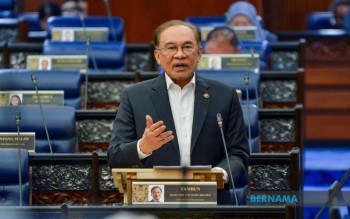
Prime Minister Datuk Seri Anwar Ibrahim has drawn a firm line against any potential corruption or fraud connected to the Retirement Fund (Incorporated) – known as KWAP – in its substantial investment stake in eFishery, an aquaculture technology startup. Speaking during parliamentary proceedings in Kuala Lumpur, Anwar made clear that Malaysian policymakers will not tolerate financial misconduct of any kind, even as preliminary assessments suggest no irregularities have occurred in the transaction.
The eFishery investment has attracted scrutiny as part of broader questions about how Malaysia's major pension funds deploy retirement savings in emerging sectors. KWAP, which manages contributions from millions of Malaysian workers, holds significant responsibility in stewarding long-term financial security for retirees across the country. Anwar's forthright position reflects the sensitivity surrounding public pension fund allocations, particularly when directed towards technology startups rather than traditional, lower-risk investment vehicles.
Anwar, who holds the dual portfolio of Prime Minister and Finance Minister, indicated he has personally engaged with KWAP leadership to underscore the necessity of complete transparency and cooperation with investigators. He stressed that management must provide unfettered access to all documentation and decision-making records related to the eFishery transaction. This hands-on approach suggests the government is treating the matter with appropriate seriousness given the scale of public funds at stake.
While the Prime Minister acknowledged that initial examination of the investment has not uncovered evidence of wrongdoing, he emphasised that a more comprehensive audit must proceed regardless. This measured stance – neither dismissing concerns nor prematurely declaring the investment sound – reflects responsible governance. The Malaysian Anti-Corruption Commission (MACC) will now scrutinise not only the final investment decision but the entire evaluation and approval pathway that led to KWAP's commitment of capital to the aquaculture company.
The scope of the investigation extends beyond simple financial accounting to encompass the deliberative process itself. Anwar specifically identified the investment committee's assessments and the board's ultimate ratification as areas requiring examination. This depth of inquiry acknowledges that corruption can manifest through procedural failures, conflicts of interest, or inadequate due diligence rather than through obvious embezzlement alone. By directing the MACC to examine decision-making frameworks, authorities signal commitment to systemic integrity rather than merely surface-level compliance.
Senator Mohd Hasbie Muda's original parliamentary question had sought clarification on how Malaysia's major retirement funds – including both KWAP and the larger Employees Provident Fund (KWSP) – can deliver competitive returns to members while navigating a complex global environment marked by geopolitical tensions and economic uncertainty. The eFishery matter represents a concrete example of this broader challenge. Pension funds require investment returns sufficient to meet future obligations, which often necessitates exposure to emerging sectors and higher-risk opportunities beyond conventional bonds and blue-chip equities.
A supplementary inquiry from Senator Wan Martina Wan Yusoff raised related concerns about government mechanisms for evaluating investment destinations and safeguards protecting ordinary Malaysians' accumulated retirement savings. This line of questioning reflects legitimate public anxiety about whether institutional investors adequately vet opportunities or succumb to pressures to demonstrate innovation and market engagement. The eFishery situation has apparently catalysed renewed parliamentary focus on these governance structures.
The aquaculture technology sector represents Malaysia's attempt to modernise traditional fishing and farming industries through digital solutions and smart farming techniques. eFishery, specifically, has positioned itself as a provider of end-to-end technology services for aquaculture producers. From a policy perspective, supporting such companies aligns with broader economic diversification goals and sustainability objectives. However, investment must remain subject to rigorous commercial evaluation rather than strategic industrial policy considerations alone.
Anwar's unequivocal statement that corruption and fraud are non-negotiable issues carries particular weight given Malaysia's recent history of major financial scandals involving mismanagement of public funds. The 1Malaysia Development Berhad (1MDB) episode, which preceded the current administration, demonstrated the catastrophic consequences when institutional oversight fails and political pressure overrides fiduciary responsibility. Contemporary Malaysian policymakers operate under heightened scrutiny from both domestic and international observers.
The decision to involve the MACC reflects appropriate institutional separation between political leadership and corruption investigation, though Anwar's visible personal engagement also signals executive commitment to accountability. This dual approach – combining ministerial pressure for swift resolution with independent investigative authority – represents contemporary best practice in managing sensitive institutional matters. The Prime Minister's willingness to publicly commit to zero tolerance limits political wiggle room and provides reassurance to concerned citizens and investors.
For Malaysian savers and future retirees, the outcome of this investigation carries genuine significance. KWAP and KWSP collectively manage hundreds of billions of ringgit on behalf of millions of Malaysians. Ensuring that investment decisions reflect sound commercial judgment, appropriate risk assessment, and absence of corrupt influence directly affects whether retirement funds will adequately support pensioners in future decades. The transparency Anwar has demanded serves both accountability and confidence-building functions.
The broader implications extend to Malaysia's investment ecosystem and international reputation. A thorough, impartial investigation followed by public disclosure of findings – whether exonerating or critical – would reinforce confidence in Malaysian institutional governance. Conversely, any perception of inadequate scrutiny or political protection of connected parties would undermine both domestic pension fund credibility and foreign investor confidence in Malaysian financial institutions.
As the MACC proceeds with its examination, the precedent being set matters considerably for future major pension fund investments and government spending decisions. The unambiguous messaging from the Prime Minister's office suggests that no political connection or strategic importance will shield transactions from rigorous financial and ethical scrutiny. This commitment, if consistently applied across government operations, could help rebuild institutional trust that remains fragile following earlier scandals.

