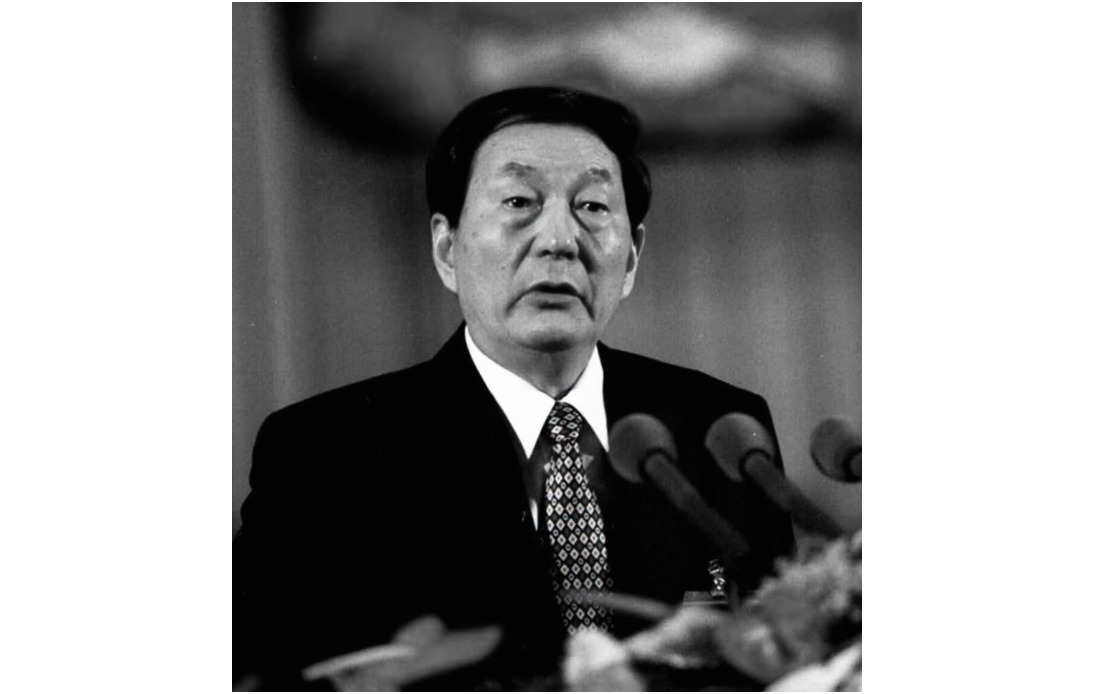
Prime Minister Datuk Seri Anwar Ibrahim has expressed his condolences following the death of Zhu Rongji, the former Premier of the People's Republic of China, who passed away at the age of 97. In a statement released on August 12, Anwar characterised Zhu as one of China's most influential figures in modern economic history and reflected on their personal relationship spanning decades of diplomatic engagement between Malaysia and China.
Anwar's tribute underscores the significance of Zhu's legacy not merely within China's borders but across the Asian region. The former Premier served as a pivotal figure in reshaping China's economic architecture during a transformative period when the nation was transitioning from a centrally planned system towards market mechanisms. Anwar's recognition of Zhu's contribution acknowledges that this transition fundamentally altered the trajectory of global economics and established the foundations for China's emergence as a dominant economic force in subsequent decades.
During his tenure as China's Premier from 1998 to 2003, Zhu Rongji spearheaded sweeping structural reforms that reshaped the Chinese economy. His tenure was marked by the comprehensive restructuring of state-owned enterprises, a process that modernised vast swathes of Chinese industry and significantly improved operational efficiency. Perhaps most consequentially, Zhu orchestrated China's accession to the World Trade Organisation, a development that integrated the Chinese economy into global trading systems and opened unprecedented avenues for international commerce. These achievements established the institutional and regulatory frameworks that would enable China's sustained economic expansion into the twenty-first century.
The Malaysian Prime Minister's reminiscence about their working relationship during the 1990s offers insight into the bilateral foundation that continues to define Malaysia-China engagement. During this critical decade, Anwar and Zhu collaborated to strengthen economic and financial linkages between their nations. The mechanisms and partnerships established during that era have demonstrated remarkable durability, continuing to anchor bilateral relations and providing the structural basis for ongoing cooperation across multiple sectors. This longevity testifies to the depth and sophistication of the frameworks they helped construct.
Beyond formal diplomacy, Anwar's recollection of personal encounters reveals the interpersonal dimensions of statecraft at the highest levels. The Prime Minister recalled visits to culturally significant locations, including Confucius' ancestral village and Tai Shan, as well as expeditions tracing the historical routes of Admiral Zheng He, the renowned maritime explorer. These shared experiences transcended conventional state visits, suggesting a relationship rooted in mutual respect and intellectual engagement. Particularly poignant was Zhu's gesture of presenting Anwar with hand-selected Chinese classics from his personal library, an act reflecting both scholarly appreciation and personal warmth between the two leaders.
The loss of Zhu Rongji represents a milestone moment for China and the broader Asian region. As a principal architect of the economic policies that transformed China from a developing nation into a global economic power, his passing marks the conclusion of an era dominated by the generation of leaders who engineered that transition. This generation, which includes figures like Deng Xiaoping, shaped not only China's destiny but influenced the geopolitical and economic landscape across Asia, with implications that extend globally.
For Malaysia specifically, Zhu's death carries particular resonance given the intimate historical connection between the two nations' leaders. Anwar's characterisation of Zhu as a statesman of exceptional calibre and character emphasises qualities that transcend mere economic management. In describing Zhu as driven by an unwavering sense of duty to his nation, Anwar highlights the ideological commitment that distinguished Zhu from purely technocratic administrators. This commitment manifested in willingness to undertake reforms that disrupted existing power structures and created short-term social displacement, yet were deemed necessary for long-term national prosperity.
The timing of Zhu's departure is significant as China navigates new economic challenges and as Malaysia seeks to recalibrate its strategic positioning within regional geopolitical currents. Zhu's era was characterised by optimism regarding market mechanisms and international integration, philosophical positions that contrasted sharply with more state-centric and nationalist impulses that have gained prominence in recent years across various governments. His legacy thus represents a particular approach to economic governance that remains contested and relevant to contemporary policy debates.
Anwar's public mourning also signals continuity in Malaysia's diplomatic approach towards China despite shifting regional dynamics. Malaysia maintains strategic interests in deepening economic engagement with China whilst preserving balanced relationships with other powers, a position that depends significantly on personal relationships and historical goodwill between leadership echelons. The Prime Minister's tribute serves to reinforce these connections and acknowledge the shared history that provides foundation for ongoing bilateral cooperation.
The former Premier's passing will likely prompt reflection across Asian capitals regarding the legacies of key figures from the post-Cold War era. Zhu Rongji's reforms generated extraordinary wealth creation and lifted hundreds of millions from poverty, yet simultaneously produced significant inequality and environmental costs. Understanding his complex legacy becomes increasingly important as developing economies contemplate their own paths to prosperity and as China itself reassesses aspects of the economic model he helped establish.
Anwar's condolences, extended to Zhu's family and the Chinese people more broadly, reflect the reciprocal nature of diplomatic relationships and the genuine personal dimensions that often underpin state-to-state engagement. The Prime Minister's acknowledgment of their friendship and shared work testifies to bonds forged during pivotal moments in both nations' histories. As Malaysia continues engaging with China across economic, educational, and cultural domains, the institutional structures and goodwill nurtured by figures like Zhu and Anwar remain foundational to these relationships.

