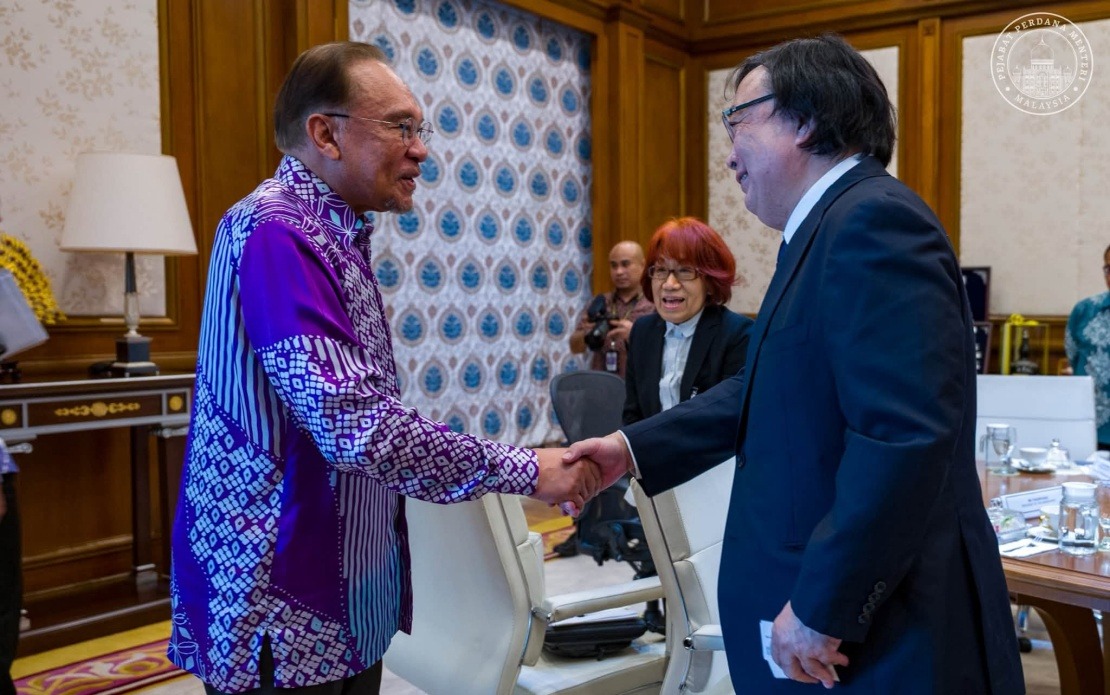
Prime Minister Datuk Seri Anwar Ibrahim hosted The Genron NPO President Yasushi Kudo on July 23 for discussions centred on expanding the Asia Leaders Roundtable as a platform for addressing pressing regional and international challenges through high-level strategic dialogue. The meeting underscored Malaysia's commitment to deepening bilateral relations with Japan, one of the nation's most consequential strategic and economic partners in the Asia-Pacific region.
The Genron NPO, headquartered in Japan, operates as an independent non-profit think tank with considerable influence over policy discussions across Asia. Its Asia Leaders Roundtable has emerged as an important forum for senior political figures and thought leaders to examine transnational issues affecting the region. By engaging with the organisation's leadership, Anwar signalled Malaysia's intention to remain an active participant in shaping regional discourse on matters ranging from security and economic integration to climate change and technological governance.
During the courtesy call, Anwar took the opportunity to express gratitude to the Japanese government for the reception and hospitality extended during his official visit to Japan in June. Such diplomatic courtesy reflects the importance both nations place on their bilateral relationship and the personal rapport between their leaders. The timing of Kudo's visit to Kuala Lumpur suggests ongoing momentum in high-level engagement between Malaysia and Japan following the Prime Minister's recent travel to Tokyo.
Malaysia's Comprehensive Strategic Partnership with Japan represents one of the cornerstones of the country's external relations architecture in East Asia. The partnership encompasses cooperation across defence, trade, infrastructure development, and technological innovation. Both nations have invested significantly in building institutional frameworks that facilitate regular dialogue and coordinated responses to regional developments. Anwar's emphasis on the importance of this partnership reflects a broader Malaysian foreign policy orientation that prioritises deepening ties with developed economies capable of supporting the nation's economic ambitions and technological upgrading.
The discussion also touched on Malaysia's participation in upcoming forums convened by The Genron NPO. Kudo extended an invitation for Anwar to attend the Tokyo Conference 2027, while Anwar acknowledged his previous opportunity to deliver a video message at the 2026 conference. This sequential engagement demonstrates the think tank's strategy of maintaining consistent high-level representation from major Asian nations in its flagship annual gathering. For Malaysia, such invitations afford the Prime Minister a platform to articulate the country's perspectives on regional challenges and position Malaysia as a consequential voice in Asian affairs.
The Asia Leaders Roundtable functions as a quasi-formal mechanism through which influential figures from across the region convene outside traditional government-to-government channels. This format allows for candid exchanges on sensitive topics and facilitates the development of informal networks among decision-makers. By strengthening Malaysia's connection to this roundtable, Anwar is ensuring that Malaysian perspectives inform discussions that may subsequently influence policy approaches across Asia. The platform also provides intelligence-gathering opportunities and exposure to thinking from allied and partner nations.
From Japan's perspective, deepening engagement with Malaysia serves multiple interests. Japan views Southeast Asia as vital to its economic security and strategic influence in the Indo-Pacific. Malaysia, as the largest economy in ASEAN after Indonesia, occupies a strategically important position along major maritime trade routes and serves as a potential balancing force in regional geopolitics. Japanese investment in Malaysia spans manufacturing, automotive production, and increasingly, semiconductor and renewable energy sectors. Strengthening political ties through forums like The Genron NPO supports these economic interests by ensuring stable bilateral relations.
The emphasis on shared aspirations for peace, stability, and prosperity reflects a shared concern among major Asian nations regarding growing geopolitical tensions in the region. Both Malaysia and Japan have interests in maintaining freedom of navigation, preventing military escalation, and ensuring that regional disputes are resolved through dialogue rather than coercion. Cooperation on these fronts through intellectual platforms like The Genron NPO allows leaders to explore common ground and develop coordinated approaches to emerging threats.
For Malaysian readers, this engagement illustrates how high-level diplomatic interactions extend beyond ceremonial visits and formal state occasions. Think tanks and dialogue forums operated by respected organisations play an increasingly significant role in shaping regional security discourse and economic cooperation. Malaysia's active participation in such mechanisms enhances the country's ability to influence regional outcomes and ensure that Malaysian interests are considered in discussions that affect the broader Indo-Pacific.
The meeting also signals continuity in Malaysia's foreign policy approach under the current administration. Despite domestic political challenges, the government has prioritised maintaining strong relations with key partners like Japan whilst simultaneously positioning Malaysia as an engaged participant in multilateral forums addressing transnational challenges. This balancing act—maintaining bilateral relationships whilst engaging in plurilateral and regional mechanisms—remains central to Malaysian diplomatic strategy in an increasingly complex geopolitical environment.

