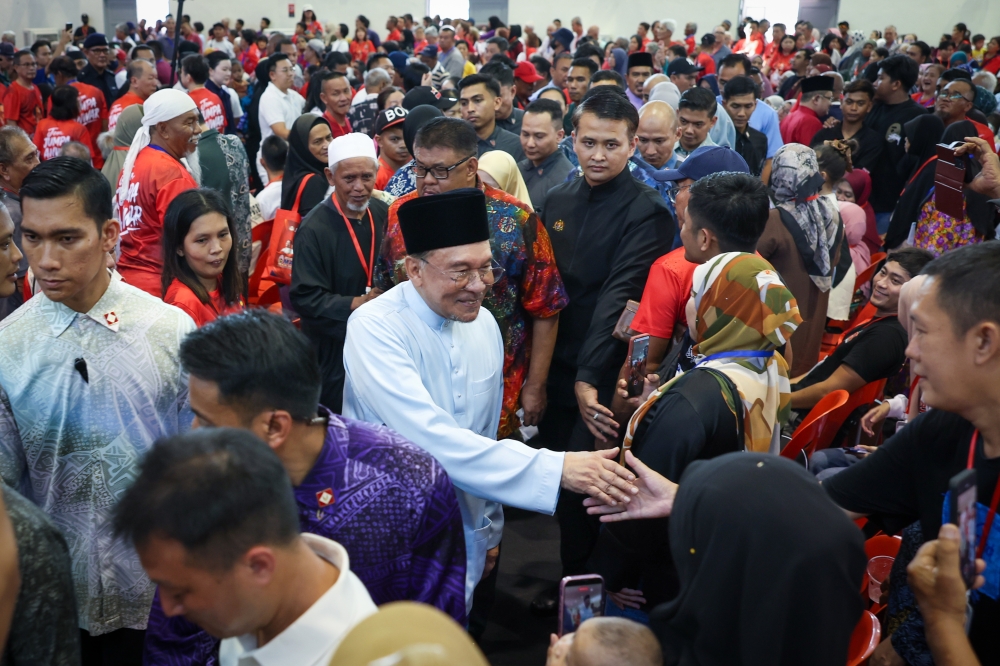
Prime Minister Datuk Seri Anwar Ibrahim has commenced a scheduled two-day period of medical observation with specialist oversight, according to an official statement released by the Prime Minister's Office. The announcement came as the nation's chief executive submitted himself for comprehensive clinical examinations and associated procedures at a designated medical facility.
The PMO characterised the assessment as part of routine healthcare protocols, emphasising that such periodic evaluations are standard practice for individuals in high-level government positions. No indication of acute health concerns or emergency medical issues prompted the undertaking, the office clarified, suggesting the checks align with preventive and maintenance-oriented medical frameworks rather than responsive treatment measures.
The disclosure of Anwar's medical engagement carries particular significance within the Malaysian political landscape, where leadership transitions and questions about continuity of governance often surface in public consciousness when senior government figures undergo clinical procedures. The transparency of the PMO in communicating the development represents an attempt to address potential speculation while maintaining appropriate confidentiality regarding specific medical details and diagnoses.
In the context of Malaysia's political environment, where prime ministers oversee complex domestic and international agendas, the availability and operational capacity of the head of government remain matters of public interest. The two-day timeframe allocated for this specialist observation suggests procedures of a scheduled rather than emergency nature, allowing for structured assessment under controlled conditions with expert medical supervision.
The confirmation mechanism itself—through official PMO channels rather than through the Prime Minister's personal statement or leaked information—reflects institutional protocols surrounding leadership health disclosures. This approach balances the public's legitimate interest in knowing their Prime Minister maintains robust health against privacy considerations and the avoidance of unnecessary political distraction from policy implementation and legislative priorities.
For Malaysia's government machinery, the predictability of the timeline provides operational clarity. The duration of the observation period has been explicitly defined, enabling the administration's supporting structure to coordinate scheduling, delegation of responsibilities, and communication strategies with reasonable certainty. This contrasts sharply with scenarios where medical contingencies emerge unexpectedly, potentially creating uncertainty within the bureaucratic apparatus.
From a regional perspective, Malaysia's political stability depends significantly on the consistent functionality of its executive leadership. Neighbouring Southeast Asian nations and international partners monitor the health and capacity of Malaysian leadership, as these factors influence bilateral relations, ASEAN coordination mechanisms, and broader geopolitical positioning within the Indo-Pacific framework. The measured communication of routine health assessments helps reassure both domestic and international stakeholders that governance continuity remains assured.
The medical observation period also occurs within a broader context of Malaysian political development. As Anwar consolidates his tenure following the coalitional arrangements that enabled his ascendancy to the Prime Minister's office, visible commitment to maintaining personal health and fitness carries implicit political messaging regarding his capacity to lead the nation through complex policy challenges and navigate the country's evolving political dynamics.
The specialist observation process itself reflects contemporary medical practice, wherein comprehensive assessment of senior executives often involves multidisciplinary teams addressing cardiovascular health, metabolic function, cognitive performance, and other parameters relevant to sustained executive capacity. Such protocols have become standard within developed administrative systems worldwide, serving both individual health interests and institutional risk management purposes.
Public confidence in governmental leadership frequently incorporates implicit assumptions about the physical and mental well-being of senior officials. By proactively communicating health assessments, the PMO contributes to maintaining public trust through transparency, whilst simultaneously demonstrating that the Prime Minister takes his personal health responsibilities seriously—a message resonating with citizens who increasingly prioritise wellness across Malaysian society.
The timing and communication of such medical procedures also reflect broader strategic considerations about information management and news cycles in contemporary Malaysian politics. By announcing the observation period upfront rather than allowing speculation or discovery through alternative channels, the PMO maintains narrative control whilst positioning health maintenance as a responsible and ordinary aspect of governance rather than a matter of concern or controversy.
As Malaysia navigates complex economic, social, and international challenges, the continuation of stable, capable leadership remains fundamental to policy implementation and national development objectives. The completion of this two-day specialist observation period without apparent complications would provide reassurance regarding the Prime Minister's fitness to discharge his duties, whilst reinforcing public messaging about the government's commitment to institutional effectiveness and responsible administration.

