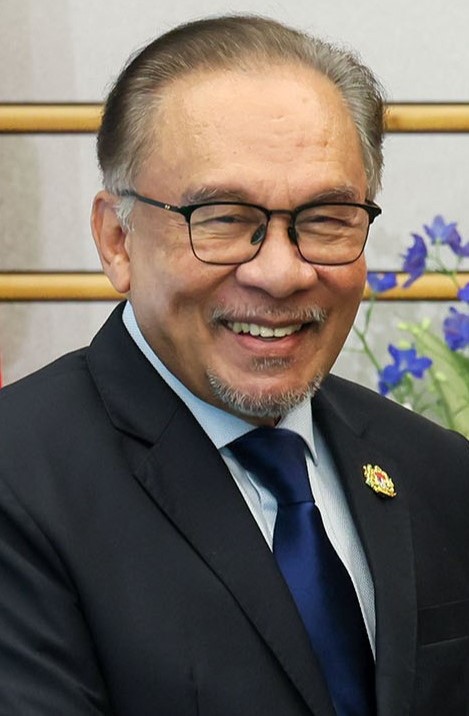
Prime Minister Datuk Seri Anwar Ibrahim will return to Johor to undertake a dual-event visit in the Segamat district, continuing his active engagement with communities across the state as the coalition girds itself for the forthcoming state election. The two-pronged programme marks his second appearance in Johor within a 72-hour window, underscoring the government's priority in building ground-level momentum in a state that has traditionally been politically competitive. Segamat, situated approximately 200 kilometres from the state capital of Johor Bahru, represents a significant political battleground with its own demographic and socioeconomic characteristics that make it strategically important for the Pakatan Harapan coalition.
The centrepiece of the Prime Minister's visit is the official launch of the MADANI KITA programme in partnership with the Rukun Tetangga (KRT) network at Dataran Segamat in the evening. This initiative reflects the government's broader philosophy of strengthening social cohesion at the grassroots level, functioning as a vehicle to reinforce neighbourly relations and foster cross-communal understanding in an increasingly diverse Malaysia. By anchoring the launch at the community level through Rukun Tetangga—the traditional neighbourhood watch associations that serve as crucial conduits between government and residents—the administration aims to embed the MADANI framework within the social fabric of ordinary Malaysian neighbourhoods.
The MADANI KITA programme operates on a distinctive premise: it seeks to translate abstract governmental objectives into tangible, locally-felt initiatives that resonate with residents' day-to-day concerns. Rather than imposing top-down policies, the initiative emphasises horizontal collaboration between government agencies and community organisations, creating space for residents to articulate their needs and priorities. This grassroots orientation becomes particularly valuable in the context of state-level elections, where local issues—infrastructure, education facilities, healthcare accessibility, and economic opportunities—often determine electoral outcomes more decisively than national narratives.
The second engagement scheduled for the evening, the "Jom! Makan Durian" programme at the Yayasan Bazaar site, signals a deliberate shift in tone and setting. By pivoting from the formal officiation ceremony to an informal gathering centred around a beloved Malaysian culinary tradition, Anwar seeks to humanise political engagement and create an atmosphere conducive to candid dialogue. This juxtaposition of formal governance functions and casual community socialising reflects a communication strategy that values accessibility and relatability, recognising that electoral success often hinges on voters' perception of their leaders as genuinely engaged with their lived experiences rather than distant functionaries.
The timing of these activities carries considerable political significance. Just days prior, on Monday, Anwar announced the complete slate of Pakatan Harapan candidates for the 16th Johor state election at an event in Bukit Gambir and Tangkak. The coalition's candidate roster totals 56 contenders across all state seats, comprising 20 from PKR, 19 from Amanah, and 17 from DAP. This distribution reflects the balance of power within the coalition and the strategic allocation of constituencies based on each party's perceived electoral strength in different regions. The sequential nature of these announcements—formal candidate declarations followed immediately by ground-level engagement—suggests a coordinated campaign strategy designed to maintain momentum and sustain media attention throughout the pre-election period.
For Malaysian political observers, Anwar's intensive personal involvement in the Johor campaign warrants particular attention. As Prime Minister, his direct participation in state-level electoral activities underscores the national significance attributed to Johor's outcome. The state, with its large electorate and historical swinging capacity, carries outsized influence on perceptions of federal government legitimacy and coalition viability. A strong showing in Johor would provide Pakatan Harapan with renewed political capital and validate its governance record, while a disappointing result could embolden opposition forces and create internal fissures within the ruling coalition.
The Election Commission has established a clear timeline for the electoral process. Nomination day is scheduled for June 27, allowing parties the final window to register their candidates officially. Early voting will occur on July 7, primarily accommodating those unable to vote on polling day due to work commitments or other obligations. The main polling day has been set for July 11, meaning voters will render their verdict approximately two weeks after the formal campaign period commences. This compressed timeline places premium value on sustained grassroots engagement and media presence during the intervening period.
From a Southeast Asian governance perspective, Malaysia's subnational electoral processes offer interesting lessons in coalition management and federalism. Unlike some neighbouring democracies where regional elections function as straightforward referendums on incumbent performance, Malaysian state elections operate within the complex framework of a federal system where multiple layers of governance coexist and sometimes compete for resources and legitimacy. Johor's election, therefore, represents not merely a contest for state assembly seats but a statement about the viability of coalition-based governance structures in an era of increasing electoral volatility and shifting voter preferences.
The MADANI KITA programme itself deserves closer examination as a governance innovation. Named after the coalition's broader policy framework—MADANI standing for Memperkasa Angkatan Kerja, Demokratik, Agamis, Negeri-negeri Bersatu, and Inovasi—the initiative attempts to operationalise abstract democratic commitments through concrete community-building exercises. In multicultural Malaysia, where social cohesion remains both an asset and a potential vulnerability, programmes that deliberately foster inter-ethnic neighbourhood bonds address a genuine policy imperative. Whether such initiatives genuinely alter voter behaviour or merely provide platforms for political visibility remains an open question that empirical research has yet to fully resolve.
Anwar's dual-programme approach in Segamat reflects broader strategic considerations about electoral messaging and voter persuasion. The formal ceremonial launch establishes government credibility and demonstrates institutional capacity, while the informal durian-eating gathering humanises the political leader and creates unscripted moments that, in the social media age, often resonate more powerfully than prepared statements. This combination of the ceremonial and the casual represents a sophisticated understanding of contemporary political communication, where voters increasingly demand authenticity and accessibility alongside competence and proven governance capability.
As Johor enters its electoral season, the intensity of high-level political engagement evident in these Segamat events will likely intensify. Opposition parties will simultaneously mobilise their own ground campaigns, and the state's voters will encounter competing visions for their state's future development trajectory. For observers across Southeast Asia watching Malaysian politics, the Johor election will provide valuable insights into how established ruling coalitions navigate electoral competition in an environment of economic pressures, demographic change, and evolving voter expectations about governance quality and democratic participation.