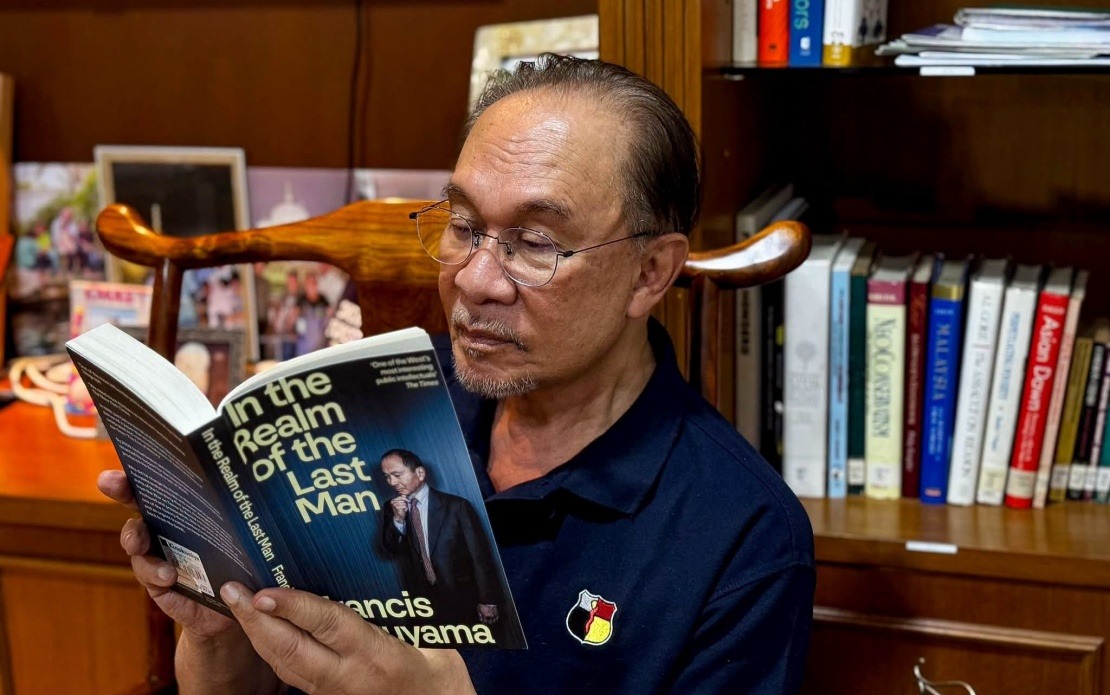
Prime Minister Datuk Seri Anwar Ibrahim has returned to his residence following his discharge from hospital on Monday evening, marking the conclusion of a planned surgical procedure that kept him under specialist care for several days. The announcement came through a social media post in which Anwar shared an image of himself reading at home, accompanied by the caption "Alhamdulillah, back home", signalling his satisfaction with the successful completion of his treatment and recovery process.
The Prime Minister's wife, Datuk Seri Dr Wan Azizah Wan Ismail, had earlier confirmed that her husband was expected to return home on the day of his discharge after completing his hospital stay. The timing of Anwar's return was consistent with medical expectations for this type of surgical intervention, though the exact duration of his hospitalisation underscores the significance of his condition and the need for careful post-operative monitoring.
According to medical reports, Anwar underwent an elective laparoscopic surgical procedure on the preceding Monday to address a para-umbilical hernia, a condition involving a protrusion through the abdominal wall near the navel. The laparoscopic approach, which uses minimally invasive techniques involving small incisions and camera-guided instruments, represents a modern surgical standard that typically allows for faster recovery compared to traditional open surgery. This method reduces tissue trauma and generally results in less post-operative pain and complications.
Throughout his hospital stay, Anwar remained under the continuous observation of a dedicated team of medical specialists who monitored his post-operative progress and ensured appropriate wound healing. The presence of a multidisciplinary medical team reflects the standard of care provided to the nation's chief executive and underscores the importance of comprehensive medical oversight during the recovery phase following any surgical intervention.
The para-umbilical hernia that required surgical attention is a relatively common abdominal condition where tissue protrudes through a weakness in the abdominal muscles near the umbilicus. While such hernias can sometimes be managed conservatively, elective surgical repair is often recommended to prevent potential complications such as incarceration or strangulation of the protruding tissue. The decision to pursue elective surgery rather than watchful waiting suggests that medical consultation had determined intervention would be in the Prime Minister's long-term health interests.
For a sitting Prime Minister, the timing and nature of any medical procedure carries implications for government operations and public confidence in leadership continuity. In Malaysia's parliamentary system, the temporary absence of the Prime Minister for scheduled medical treatment generally involves appropriate delegation of duties and maintenance of governmental functions. Anwar's discharge and return home within the expected timeframe would reassure both the public and international observers regarding governmental stability during this period.
The laparoscopic procedure selected for Anwar's treatment demonstrates Malaysia's access to contemporary surgical techniques and the availability of specialist surgical teams capable of managing such interventions in the nation's healthcare facilities. The decision to conduct the operation domestically, rather than seeking treatment abroad, also reflects confidence in the quality of Malaysia's private or public healthcare infrastructure and the expertise of local medical professionals.
Recovery from laparoscopic hernia repair typically involves a gradual return to normal activities over several weeks, with most patients able to resume light duties within days and more strenuous activities within four to six weeks. The Prime Minister's return home allows him to continue his convalescence in familiar surroundings while remaining under ongoing medical supervision to ensure proper healing and the absence of complications.
The public announcement of Anwar's discharge and homecoming through social media reflects contemporary political communication practices, allowing direct engagement with the Malaysian public and providing transparent updates regarding the Prime Minister's health status and availability. Such announcements help maintain public confidence by demonstrating that leadership remains engaged and functional despite temporary medical absences.
As Anwar resumes his duties from home during the initial recovery phase, the government's administrative machinery continues its operations with appropriate adjustments made to accommodate his recuperation period. The successful completion of his surgical procedure and discharge home suggest that the Prime Minister's health has progressed favourably, though medical guidance regarding activity levels and work intensity during the coming weeks would likely inform the pace at which he resumes full operational duties.

