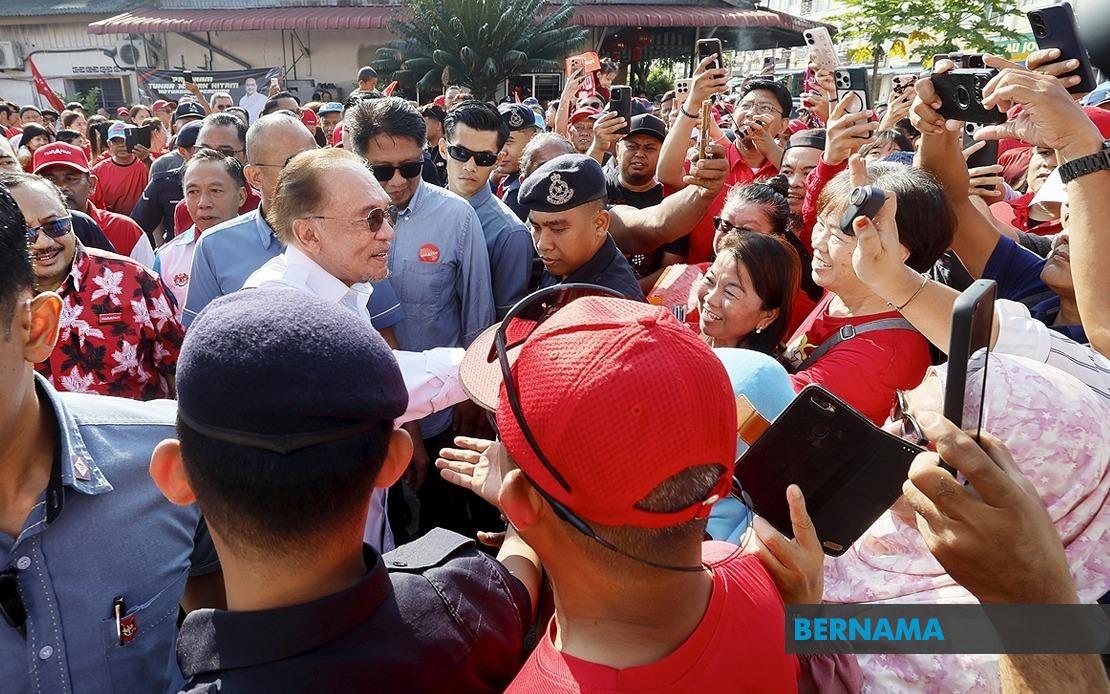
Prime Minister Datuk Seri Anwar Ibrahim took a moment during a campaign event in Johor to reconnect with an elderly couple whose determination to meet him had captured public attention online. The reunion took place in Senggarang on Tuesday as Anwar attended the "Yok! Meriahkan Johor! Undi Harapan" programme, bringing together Abdul Razak Pelangga, aged 86, and his wife Jamilah Samsudin, 64, whose earlier encounter with the Prime Minister had generated considerable social media interest.
The couple's initial meeting occurred when Anwar made a breakfast stop at a local eatery in Senggarang the previous Sunday. During that visit, Abdul Razak had undertaken a remarkable effort to ensure his wife's wish became reality, pedalling a traditional trishaw for nearly one kilometre through the neighbourhood to reach the location where the Prime Minister was dining. The spontaneous gesture and the image of the octogenarian transporting his wife by human-powered vehicle resonated with online audiences, transforming a simple family moment into a trending topic across Malaysian social platforms.
When the two met again during Tuesday's campaign event, Anwar approached the encounter with warmth and humour. The Prime Minister engaged Abdul Razak in light-hearted banter, playfully remarking on the elderly man's impressive physical capability to pedal the trishaw at his advanced age. Beyond the joviality, however, Anwar used the moment to express genuine appreciation for the couple's commitment and their support for the administration, acknowledging the gesture as emblematic of grassroots engagement in the democratic process.
The gathering underscored the role of personal interactions in political campaigning, particularly during state elections when candidates and leaders seek to strengthen connections with voters through direct engagement. The decision to formally meet with the couple again suggested an awareness of the symbolic value such moments carry—the image of an elderly man going to extraordinary lengths to support his wife's aspirations aligned with broader themes Pakatan Harapan has emphasised regarding family values and community support.
Packatan Harapan's Communications director Datuk Fahmi Fadzil, who simultaneously serves as the Minister of Communications, was present at the Senggarang event, underscoring the campaign's organised structure and high-level attention to public engagement activities. The presence of multiple PH candidates, including Onn Abu Bakar contesting for the Senggarang seat, Mohd Khuzzan Abu Bakar representing Semerah, and Felicia Poh Rui Ling standing for Penggaram, indicated that this particular campaign stop was designed to amplify party messaging across multiple constituencies within the area.
The timing of this reunion proved significant within the broader electoral calendar. The 16th Johor State Election was scheduled to take place on Saturday, with early voting having already occurred the previous Tuesday. This compressed campaign window meant that every high-profile appearance and positive engagement carried multiplied impact, as voters were finalising their preferences within a narrow timeframe. The organisers' decision to highlight the Prime Minister's human side through the reunion with Abdul Razak and Jamilah served a dual purpose: reinforcing Anwar's accessibility and empathy while simultaneously generating fresh media coverage in the critical days before polling.
The story of the elderly couple resonated particularly within Malaysian political discourse because it transcended typical partisan messaging. The image of an 86-year-old man exerting himself physically to fulfil his wife's modest wish—simply to see the nation's leader—tapped into universally recognisable emotions around family devotion and democratic participation. This narrative arc moved beyond policy discussion into the realm of human interest, which often proves more memorable to voters than campaign rhetoric.
For Johor specifically, the event illustrated how incumbent administration figures were leveraging state elections to reinforce political messaging and party loyalty. The state has traditionally been politically significant, and Pakatan Harapan's organisational capacity to stage well-coordinated campaign events, complete with senior federal leadership presence, demonstrated the coalition's commitment to the state contest. The breadth of candidate representation at the Senggarang gathering suggested a comprehensive approach to mobilising support across multiple demographic groups and constituencies.
From a broader Southeast Asian perspective, the episode highlighted how even in an age of mass digital communication, personal political encounters remain consequential. Malaysian voters, like their counterparts across the region, appreciate opportunities to witness their leaders engaging authentically with constituents, particularly elderly citizens whose participation in the democratic process deserves acknowledgement. The viral nature of the original trishaw journey indicated that audiences hunger for these unscripted, genuine moments of human connection within the often stage-managed environment of electoral politics.
The reunion also reflected generational dynamics within Malaysian society. Abdul Razak's willingness to engage in physical exertion for a cause he valued, combined with his wife's desire to meet the Prime Minister, represented older citizens maintaining active participation in civic life. Such visible engagement from senior demographics can influence younger voters' perceptions of political involvement as inclusive and accessible to all age groups.
As Johor moved toward its election day, the positive coverage surrounding Anwar's interaction with the couple provided the administration with grassroots momentum at a critical juncture. The genuine warmth evident in the reunion, contrasted against the formal machinery of campaign operations, created a narrative of leadership that remained connected to ordinary Malaysians' aspirations and concerns. Whether such personal moments translate into sustained electoral advantage remains to be determined by voting patterns, but their immediate effect on public sentiment during the final campaign days appeared decidedly favourable to the governing coalition.

