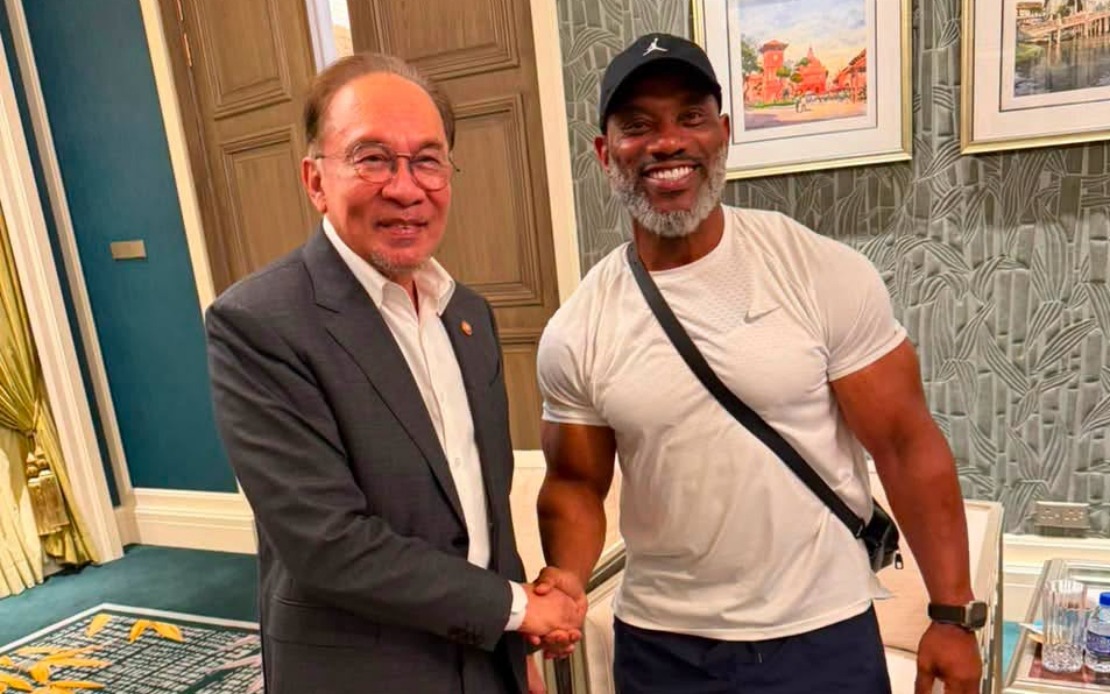
Prime Minister Datuk Seri Anwar Ibrahim marked a notable encounter on July 1 when he met with Dexter Jackson, one of the most accomplished figures in competitive bodybuilding history. The Malaysian leader took to Facebook to share his excitement about the meeting, posting a photograph of himself shaking hands with the legendary athlete. In his post, Anwar highlighted Jackson's remarkable achievements in the sport, noting the 56-year-old's victories as the 2008 Mr Olympia champion and 2012 Masters Mr Olympia winner.
Dexter Jackson's credentials in the bodybuilding world are extraordinarily impressive, extending far beyond his Mr Olympia titles. The American athlete holds the distinction of being the most successful competitor in Arnold Classic history, a prestigious competition that ranks among the sport's most coveted titles. Jackson's nine Arnold Classic victories represent an unparalleled achievement in this particular arena, cementing his legacy as one of the sport's all-time greats. His longevity at the elite level of competitive bodybuilding—maintaining champion status well into his fifties—sets him apart from peers and demonstrates exceptional dedication to physical conditioning and athletic discipline.
Anwar's public acknowledgment of the meeting reflects a pattern of engagement with international personalities across various fields. The Prime Minister's willingness to document and share such encounters demonstrates an openness to celebrating global achievements and sporting excellence. His comment that the meeting had inspired him to consider returning to fitness activities carries a lighthearted tone that humanizes the nation's political leadership, presenting Anwar as approachable and engaged with contemporary culture beyond traditional political spheres.
The significance of such diplomatic and cultural exchanges extends beyond mere celebrity sightings. When senior political figures interact with internationally recognized athletes, it often carries implicit messaging about national values—in this instance, discipline, perseverance, and the pursuit of excellence. For Malaysia, these moments of engagement with global icons can enhance the nation's profile on the international stage, positioning the country as a destination that attracts world-class personalities and demonstrates openness to diverse forms of human achievement.
Bodybuilding, while not always commanding mainstream media attention in Malaysia compared to sports like football or badminton, represents a significant global industry worth billions annually. The sport has experienced substantial growth in Southeast Asia, with increasing numbers of local competitors participating in regional and international competitions. Events like the Arnold Classic and Mr Olympia draw athletes from across the region, including Malaysian competitors who aspire to international recognition. Jackson's prominence in the sport makes encounters with him particularly meaningful for bodybuilding enthusiasts throughout the region.
The photograph and announcement on social media platforms serve multiple purposes in contemporary political communication. They provide authentic, unfiltered moments that humanize political leaders and create engagement with audiences who might not typically follow political news. Such posts, when genuine and relatable, can strengthen connections between leaders and citizens by demonstrating that political figures share interests in health, fitness, and global culture. The accessibility and immediacy of social media allow Prime Ministers to communicate directly with constituents without intermediary interpretation.
Anwar's reference to "hitting the gym" suggests a commitment to personal fitness that aligns with global health consciousness. In Malaysia, where obesity and lifestyle-related diseases have become increasingly prevalent health concerns, visible leadership engagement with fitness and wellness sends a subtle public health message. When national leaders publicly acknowledge the importance of physical activity, regardless of the context, it can indirectly encourage broader societal awareness about maintaining healthy lifestyles. This is particularly relevant given Malaysia's position as a developing nation grappling with rising rates of non-communicable diseases.
The timing of such a meeting—whether it occurred during an official visit, at a sporting event, or at a private engagement—would provide additional context about the nature of international relations and Malaysia's role in hosting or attracting global sporting personalities. The bodybuilding community, while niche, maintains strong international networks and championships that attract competitors and fans worldwide. If Jackson's visit to Malaysia was connected to sporting events or fitness industry activities, it underscores the nation's growing importance as a hub for athletic and wellness-related activities in the region.
From a diplomatic perspective, these seemingly informal encounters between political leaders and international celebrities often facilitate soft power dynamics. Malaysia's efforts to position itself as a modern, internationally-engaged nation are reinforced through association with globally recognized figures. Such moments, amplified through social media, contribute to the nation's cultural brand and its perception as an open, cosmopolitan society that values both tradition and global connectivity. For Southeast Asia more broadly, they demonstrate the region's integration into global cultural and sporting networks.

