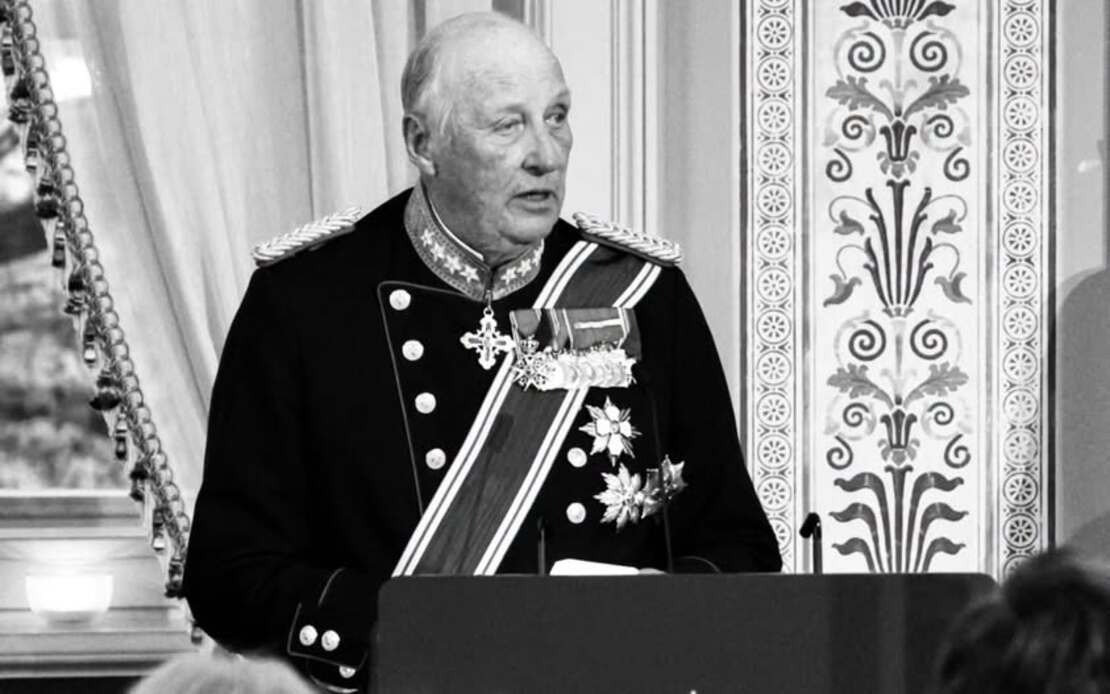
Malaysia has joined the international community in mourning the passing of Norway's King Harald V, with Prime Minister Datuk Seri Anwar Ibrahim conveying the nation's condolences on behalf of the government. The Norwegian monarch, who died at the age of 89 at the National Hospital in Oslo, leaves behind a legacy that extended well beyond his Nordic kingdom, having shaped a modern vision of national identity that resonated across diplomatic circles globally.
The King's health had declined significantly in recent weeks. He was admitted to hospital on August 17 and underwent cortisone treatment for hemolytic anemia, a condition affecting red blood cells. His hospitalization marked a period of concern among the Norwegian public, though the exact circumstances of his final days remained closely guarded by the royal household and medical staff. His death on Friday marked the end of an era for Scandinavia's oldest reigning monarch.
In his statement released via Facebook, Anwar highlighted a particularly distinctive aspect of Harald's reign: his articulate commitment to multicultural integration at a time when such advocacy required genuine conviction. The Prime Minister specifically recalled the King's public acknowledgement that Norway comprised citizens whose ancestral roots stretched across diverse regions—Afghanistan, Pakistan, Poland, and numerous other nations. This candid recognition of immigration and cultural pluralism from a European head of state stood as a counterpoint to rising nationalist sentiments in various parts of the world during his later years.
Anwar drew deeper meaning from Harald's approach to national belonging, interpreting it as a statement about foundational governance principles. According to Malaysia's leader, the Norwegian King understood that a nation's true strength does not emerge from ethnic or cultural homogeneity, but rather from the respect and dignity it extends to all its inhabitants, regardless of their origins. This philosophical position carries particular resonance for Malaysia, a Southeast Asian nation with its own complex tapestry of communities, religions, and ethnic groups navigating the ongoing challenge of building inclusive national cohesion.
The Prime Minister also commended Harald's personal commitment to oath and duty, characteristics Anwar framed as essential to effective leadership. The Norwegian monarch's lengthy reign from 1991 until his death demonstrated a steadfast dedication to constitutional responsibility and public service. In Malaysian political context, where questions of institutional loyalty and governmental accountability frequently surface in public discourse, Anwar's invocation of these qualities suggested an implicit model for how leaders ought to conduct themselves.
King Harald had reigned for over three decades, witnessing profound transformations in Norwegian society, Europe, and the global order. His reign encompassed the end of the Cold War, Norway's deepening European integration without formal EU membership, and the country's emergence as a major energy exporter. Throughout these shifts, the monarchy maintained its constitutional role while the King himself became known for his environmental advocacy and his efforts to strengthen Norway's social bonds during periods of rapid change.
From a Southeast Asian perspective, Norway and Malaysia maintain cordial diplomatic relations, though they operate within distinct geopolitical frameworks. Norway's emphasis on human rights, democratic governance, and international humanitarian law sometimes places it at variance with Malaysian domestic policy priorities. However, both nations share commitments to multilateral engagement, maritime cooperation in regional and international forums, and sustainable development objectives outlined in global agreements.
The expression of condolences from Malaysia's highest office reflects established diplomatic protocol, yet Anwar's personal framing of the late King's achievements suggests a genuine appreciation for Harald's contribution to evolving concepts of national identity in the modern era. The emphasis on dignity and inclusion resonates with Malaysia's own stated constitutional principles, even as implementation of those principles remains contested within domestic political debate.
Harald's successor, Crown Prince Haakon, now assumes the Norwegian throne, bringing a new generation of leadership to the Scandinavian nation. The transition marks a significant moment for European constitutional monarchy at a time when traditional institutions face evolving scrutiny regarding their relevance and utility in contemporary democracies. Malaysia's official acknowledgement of this transition through the Prime Minister's statement positions the country within the broader community of nations recognizing the importance of Norway's institutional continuity and the personal legacy of a long-serving sovereign who advocated for progressive values within his realm.

