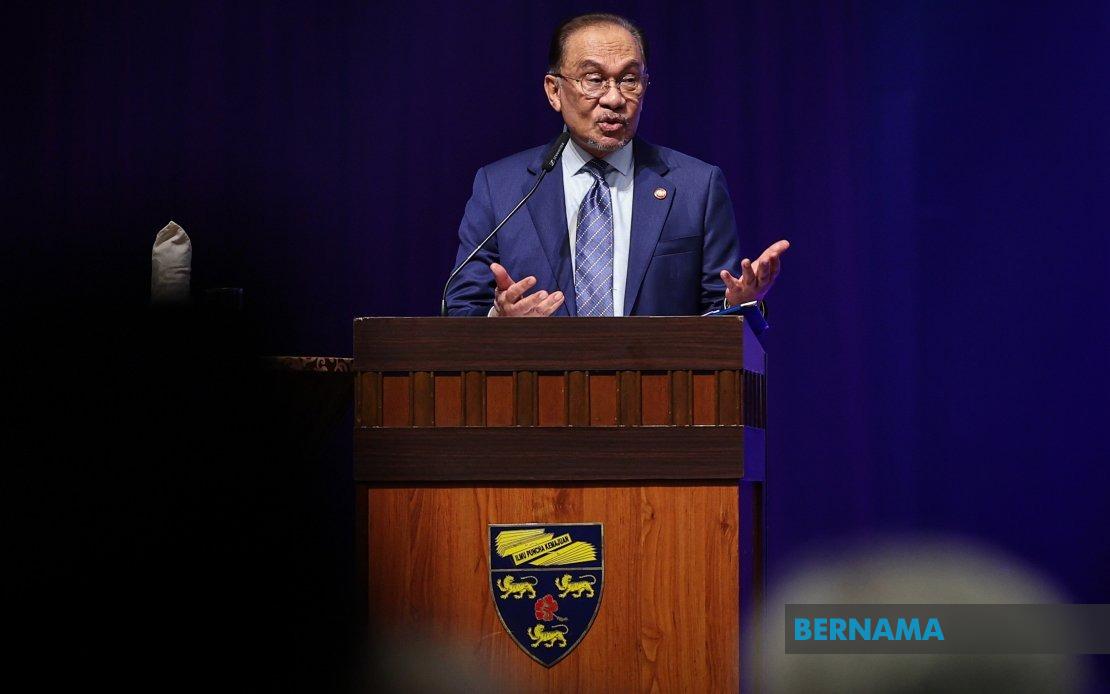
Prime Minister Datuk Seri Anwar Ibrahim has personally extended financial assistance to Rosli Abdullah, a 52-year-old gravedigger in Kuala Terengganu who has been battling mouth cancer for the past three years. The intervention highlights the government's ongoing efforts to reach vulnerable citizens in need of medical support, particularly those working in informal sectors who often fall outside conventional social safety nets.
The RM2,000 donation was formally presented to Rosli on July 9 at the Flat Batas Baru surau in Kuala Terengganu by Azhar Abd Hamid, deputy director of the Terengganu Federal Development Department's Implementation Coordination Unit under the Prime Minister's Department. According to Azhar, the contribution aims to alleviate Rosli's financial strain as he prepares for upcoming surgical intervention, a procedure that has been repeatedly delayed due to limited resources and the severity of his condition.
Beyond the immediate monetary relief, officials have initiated steps to formally integrate Rosli into Malaysia's e-Kasih assistance programme, a targeted welfare initiative designed to support vulnerable populations. Azhar noted that despite his years of residing in the community, Rosli had not previously been registered with the system, a gap that administrative review has now identified. This inclusion will unlock access to additional government assistance in the coming months, potentially providing more sustainable support for his medical expenses.
Rosli's health trajectory has deteriorated significantly in recent months, according to Mohd Radzali Mohamad, deputy chairman of the surau management. For the past month, severe swelling in his mouth and right cheek has rendered him unable to speak, effectively isolating him from normal social communication. The situation has worsened further, as the condition has prevented him from consuming solid food for two weeks, forcing him to rely entirely on liquid nutrition administered through a feeding tube.
The medical complexity of Rosli's case underscores the urgency of the situation. He has already undergone two surgical procedures, but the cancer has returned with renewed aggression, necessitating immediate further intervention. The Sultanah Nur Zahirah Hospital in Kuala Terengganu has determined that his case requires more specialized treatment and has accordingly referred him to the Universiti Sains Malaysia Hospital in Kubang Kerian, Kelantan, for advanced surgical management. This referral represents a significant step in his treatment pathway, though it also highlights the resource constraints within Malaysia's healthcare system when dealing with complex oncological cases.
Rosli's circumstances reveal the precarious economic situation of informal-sector workers in Malaysia. Beyond his primary occupation as a gravedigger at the surau, he has supplemented his income through cleaning services at the religious facility, work that his deteriorating health has made impossible to continue. Living alone and unmarried, he has no family support network to absorb the financial shock of prolonged illness and lost income, leaving him entirely dependent on community goodwill and government assistance.
The surau management has demonstrated considerable compassion by providing Rosli with shelter for over three decades and initiating an internal donation fund to cover his mounting medical bills. However, their fundraising efforts have been inadequate to meet the scale of his needs, particularly given the specialist care now required. This gap between community-level charitable capacity and the actual costs of modern medical treatment illustrates why formal government intervention becomes necessary in such cases.
Rosli's story reflects broader patterns within Malaysia's healthcare and welfare systems. While the country has developed several targeted assistance programmes, gaps remain in identifying and reaching individuals living on the margins of formal society. His previous non-registration in e-Kasih despite years of residence in the community suggests that vulnerable individuals sometimes remain invisible to administrative systems, particularly those without family members to advocate on their behalf or knowledge of how to navigate bureaucratic processes.
The Prime Minister's direct involvement in this case signals administrative attention to individual hardship stories that gain public visibility. However, it also raises questions about whether systemic improvements might prevent future situations where individuals endure prolonged suffering before receiving state assistance. Enhanced community screening mechanisms or partnerships between religious institutions and welfare agencies could potentially identify cases earlier, when intervention might be more effective.
For Malaysian readers, Rosli's situation underscores the importance of social safety nets and the critical role that both government programmes and community institutions play in supporting citizens facing health crises. It also demonstrates that personal circumstances, rather than personal failings, often determine who falls into destitution when faced with serious illness. His case exemplifies the intersection of occupational vulnerability, lack of family support, and healthcare costs that can rapidly overwhelm individuals in the informal economy.
The coordination between different government agencies in responding to Rosli's case—the Prime Minister's Department, the Terengganu Federal Development Department, and the healthcare system—illustrates how administrative effort can mobilize resources when cases gain attention. Moving forward, the question remains whether such coordinated responses can become routine for vulnerable citizens rather than exceptional interventions dependent on visibility and chance encounters with officials.

