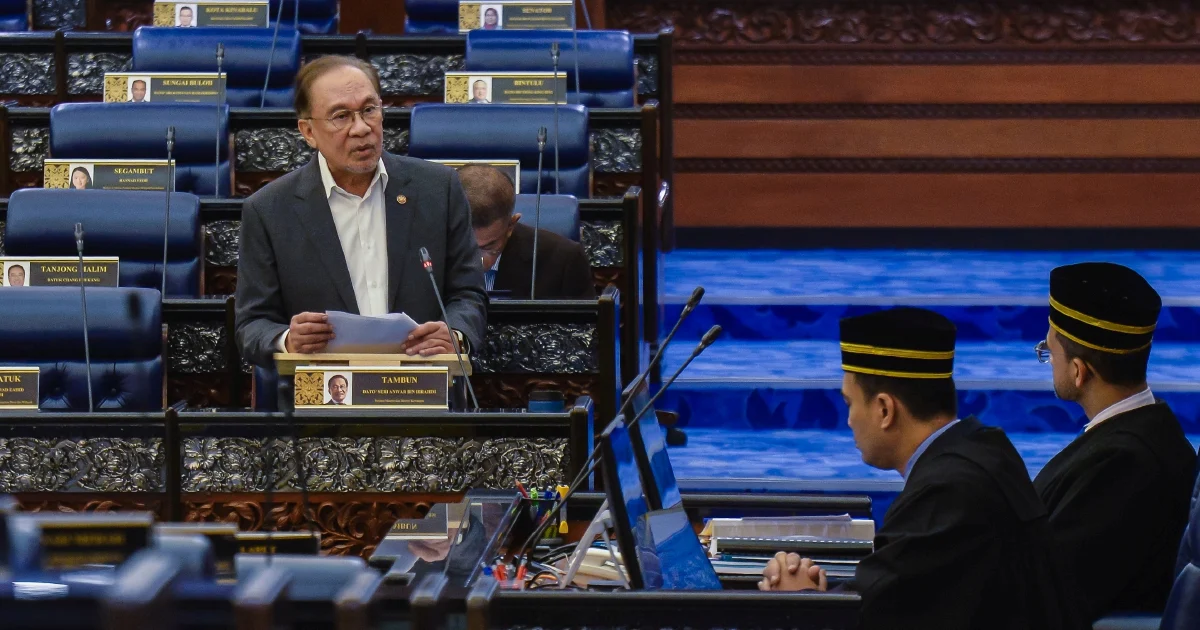
Prime Minister Datuk Seri Anwar Ibrahim has once again rejected assertions that he personally mandated the cancellation of a Johor Felda Settlers' Day gathering planned for Kluang, clarifying to parliament that no such directive emanated from his office. Speaking in the Dewan Rakyat, he emphasized that the only measure implemented was a blanket restriction preventing the deployment of government resources and apparatus for partisan campaign activities throughout the electoral period—a standard practice during election cycles rather than a specific intervention against the particular event.
The controversy surrounding the Kluang celebration has simmered beneath the surface of political discourse in Johor, where the Felda settlement scheme remains deeply embedded in the state's economic and social fabric. Federal Land Development Authority settlements have historically served as crucial constituencies in electoral politics across Malaysia, with Felda farmers representing a demographically significant voting bloc whose allegiances can substantially influence outcomes in competitive constituencies. The alleged cancellation of a settlers' day celebration therefore carried political undertones that extended well beyond a mere administrative decision about scheduling a community event.
Felda Settlers' Day commemorations across Johor typically draw substantial attendance from both the farming communities directly settled within the schemes and government representatives seeking to reinforce links with these important voter communities. Such occasions provide platforms for officials to showcase development initiatives benefiting the settlements, distribute assistance programmes, and maintain the political goodwill that has historically underpinned Felda's role as a government-supported institution. The proposed Kluang gathering would have followed established precedent as a venue for celebrating the agricultural heritage and contributions of Felda farmers to the national economy.
The prime minister's parliamentary statement represents his latest response to mounting pressure regarding the event's status, suggesting that the matter had generated sufficient parliamentary interest and public concern to warrant multiple clarifications from his office. Opposition lawmakers and various constituencies had apparently challenged the government's position on what transpired, necessitating repeated denials from the highest executive authority. Such persistent questioning indicated deeper anxieties within certain political circles about potential governmental interference in community celebrations and the perceived politicization of routine administrative decisions.
Election period regulations governing the use of government facilities, personnel, and resources represent a longstanding mechanism intended to maintain electoral neutrality and prevent incumbent administrations from leveraging state apparatus for competitive advantage during campaigns. These prohibitions typically extend to preventing state vehicles, civil servants acting in official capacities, and public infrastructure from serving election-related activities. However, distinguishing between routine governmental functions and prohibited campaigning can become contested terrain, particularly when community celebrations organised by government-linked entities occur during electoral windows and attract political figures.
The Kluang situation exemplifies the tensions inherent in enforcing election regulations that must simultaneously protect electoral integrity while avoiding blanket restrictions on legitimate community activities and celebrations that historical precedent or institutional mandate would ordinarily support. Determining whether a Felda Settlers' Day celebration constitutes a governmental or community-based event, and whether attendance by political figures necessarily renders it a campaign activity, requires nuanced interpretation of regulations and the specific circumstances surrounding each gathering.
For Malaysian observers, particularly those within Felda settlements across the peninsula, the dispute highlights longstanding sensitivities surrounding federal-state relations, the perceived independence of governmental institutions, and concerns about political neutrality during electoral periods. Felda's evolution from a social development programme into an entity with significant political salience means that controversies affecting its communities attract scrutiny from multiple stakeholder groups invested in its operations and beneficiaries' interests. The controversy thus transcends a single cancelled celebration to encompass broader questions about institutional autonomy and governmental even-handedness.
The prime minister's clarification that only general election-period restrictions applied, rather than a specifically targeted cancellation directive, attempts to position his government as merely implementing neutral electoral regulations rather than engaging in politically motivated event suppression. This framing suggests that if the Kluang celebration faced obstacles, such difficulties arose from the blanket application of regulations rather than from personalised intervention by the premier's office. However, the persistence of questions in parliament implies that stakeholders remained unconvinced by this distinction or sought to maintain political pressure around the matter.
Such episodes reveal the complex negotiations required when governance frameworks designed to regulate political conduct intersect with community institutions and celebrations that carry both genuine cultural significance and potential political dimensions. Malaysian election management must navigate between preventing misuse of state resources for campaigning and recognizing that some community activities, even those attracting political figures, reflect legitimate institutional functions rather than masked campaign operations. The Felda context particularly complicates these determinations given the settlements' historical relationship with government support and their enduring importance in electoral geography.
Moving forward, the government may face pressure to articulate clearer guidelines distinguishing prohibited electoral activities from permissible community gatherings during campaign periods, particularly regarding events organised by government-linked entities serving specific constituencies. Without such clarity, future community celebrations risk becoming entangled in similar disputes over regulatory interpretation and governmental intent. For Felda communities and similar constituencies throughout Malaysia, the outcome of such definitional debates carries practical consequences for their ability to organise commemoration activities and maintain institutional gatherings without encountering administrative obstacles during electoral periods.
The prime minister's parliamentary remarks also reflect broader accountability mechanisms within Malaysia's legislative framework, where opposition members retain prerogatives to question government decisions and press ministers for explanations of potentially controversial actions. This parliamentary scrutiny, while sometimes politically motivated, serves important functions in documenting official positions, creating records of governmental explanations, and maintaining pressure for transparency around administrative decisions affecting communities.

