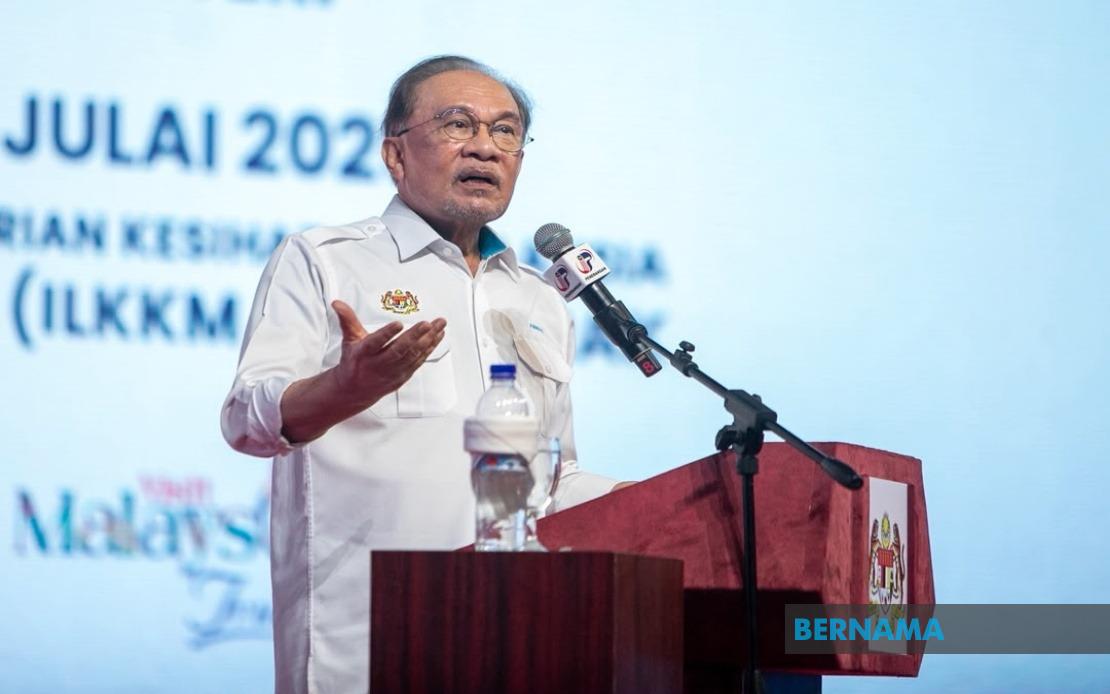
Prime Minister Datuk Seri Anwar Ibrahim has challenged Malaysia's younger generation to move beyond superficial patriotism and develop a genuine appreciation for the historical struggles that secured the nation's independence. Speaking at the official launch of the 2026 National Month and Fly the Jalur Gemilang Campaign in Ipoh on July 19, Anwar underscored the critical importance of reconnecting contemporary Malaysians with the profound costs paid by those who fought for freedom, arguing that such awareness remains essential for national cohesion and progress.
The Prime Minister framed the campaign not merely as an exercise in flag-waving nationalism, but as an opportunity to educate younger citizens about the depth of sacrifice embedded in Malaysia's founding narrative. He emphasised that independence was not achieved through abstract ideals alone, but through the tangible hardship, physical toll, and personal loss experienced by countless independence fighters across the region. This perspective reflects a broader concern within Malaysian leadership about generational disconnection from foundational national narratives, particularly as Malaysia's founding generation passes from the scene and living memory of the struggle fades.
Anwar's intervention carries particular weight given Malaysia's contemporary political landscape, where questions about national identity, social cohesion, and inter-communal relations remain sensitive. By invoking the shared sacrifice of the independence struggle, he seeks to redirect public discourse toward unifying themes that transcend current partisan divisions. The framing suggests an attempt to anchor younger voters and citizens in a historical consciousness that emphasises collective achievement rather than sectarian grievance, potentially offering a counter-narrative to more polarising political messaging.
The campaign itself operates on multiple registers simultaneously. At its most straightforward level, the 2026 National Month initiative encourages Malaysian households and institutions to display the national flag as a visible expression of civic pride. However, Anwar's remarks at the launch indicate that government messaging intends the symbolic act of flag-flying to serve as a springboard for deeper historical reflection. By linking the physical symbol to the historical narrative, officials hope to transform routine patriotic observance into an occasion for contemplating the values and principles that should animate national life.
The linguistic emphasis on "blood, sweat and tears" deliberately evokes the physical and emotional dimensions of the independence struggle, moving beyond sterile historical recitation. This rhetorical choice appears calculated to penetrate the consciousness of digital-native audiences accustomed to abstract political discourse. By repeatedly invoking bodily sacrifice and emotional investment, the Prime Minister attempts to make historical abstraction tangible and emotionally resonant for audiences potentially distant from these events.
Notably, the campaign launch convened senior figures from multiple portfolios, including Communications Minister Datuk Seri Fahmi Fadzil, National Unity Minister Datuk Aaron Ago Dagang, and Perak Menteri Besar Datuk Seri Saarani Mohamad. This multi-ministerial presence signals that the initiative commands cross-portfolio attention and reflects a whole-of-government approach to civic education and national consciousness-building. The involvement of the National Unity Minister specifically suggests that officials perceive connections between historical awareness and contemporary social cohesion.
For Malaysian readers and regional observers, this intervention reflects broader challenges facing post-independence Southeast Asian nations in maintaining civic engagement across generational divides. Malaysia, like its regional neighbours, confronts the fundamental question of how to transmit national consciousness and historical memory to populations born decades after foundational events. The rapid pace of social and technological change, combined with economic pressures and competing global influences, creates friction between official narratives and lived experience, particularly for younger citizens navigating multiple identity registers simultaneously.
The 2026 campaign timing also warrants consideration within Malaysia's evolving political calendar. Occurring four years before the next general election cycle, the initiative allows governing coalitions to frame patriotic messaging in non-electoral terms, while simultaneously positioning themselves as custodians of national memory and historical continuity. This strategic positioning proves particularly relevant in Malaysian politics, where questions of legitimacy and representation frequently intersect with interpretations of the country's founding social contract.
Anwar's exhortation to avoid forgetting the sacrificial dimensions of independence carries implicit warnings against complacency and entitlement. The characterisation of contemporary Malaysians as beneficiaries of struggle who risk losing sight of that inheritance suggests concern that present freedoms—political stability, economic development, regional standing—may be taken for granted by populations who have never experienced existential threats to national survival. This intergenerational transfer of historical consciousness represents a persistent challenge for any nation seeking to maintain civic participation and social resilience across time.
The emphasis on using historical reflection to "move forward to ensure a brighter and more glorious future" suggests that Anwar frames historical awareness not as nostalgic backward-looking but as a foundation for future vision. This formulation attempts to resolve a common tension in national commemorations: the danger that historical emphasis might encourage resignation to past achievements rather than ambition for future progress. By explicitly connecting historical understanding to forward momentum, officials signal that patriotic consciousness should animate contemporary problem-solving rather than substitute for it.

