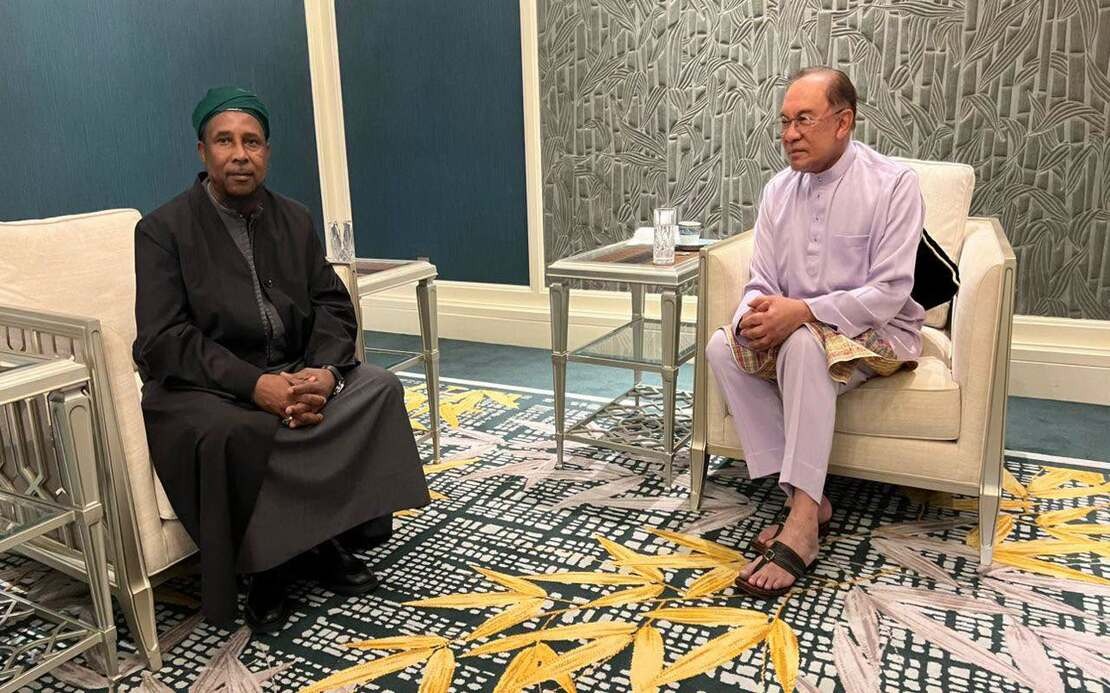
Prime Minister Datuk Seri Anwar Ibrahim this week received a farewell visit from Sheikh Muhammad Haydara Al-Jilani, a respected Islamic scholar from The Gambia whose extended stay in Malaysia has involved delivering religious and educational programmes to audiences across the nation. The meeting, which took place on Friday, marked the conclusion of the Sheikh's month-long engagement with Malaysian Muslim communities and institutional partners who invited him to share Islamic knowledge and lead devotional sessions.
The timing of the encounter held particular spiritual significance, coinciding with the Day of Ashura, a date of religious importance in the Islamic calendar. Anwar, in a statement posted on his official Facebook page, highlighted the meaningful nature of receiving the visiting scholar on this auspicious occasion, underscoring the interconnection between diplomatic hospitality and religious observance in Malaysia's approach to interfaith and intra-faith engagement.
During their meeting, Anwar requested that Sheikh Al-Jilani offer special prayers for Malaysia's continued prosperity, national peace, and the overall welfare of Malaysian citizens. This gesture reflects a long-standing tradition within Malaysia's governance framework of seeking blessings and spiritual protection for the nation through respected religious figures. The Prime Minister's emphasis on requesting prayers for the country's wellbeing demonstrates how Malaysia's leadership integrates Islamic values into official diplomatic protocols, a practice that resonates with the nation's constitutional identity as a Muslim-majority country with Islam as the religion of the Federation.
Sheikh Muhammad Haydara Al-Jilani's tour of Malaysia formed part of a broader dakwah programme, an Islamic term referring to the propagation and teaching of Islamic principles. Throughout his month-long presence, the scholar conducted a series of knowledge-sharing sessions and dhikr gatherings—communal remembrance of God through recitation and spiritual reflection—at multiple venues nationwide. These programmes were designed to engage Malaysian Muslim audiences with contemporary Islamic scholarship while fostering community participation in religious learning activities.
The visit underscores Malaysia's role as a hub for Islamic learning and international Islamic engagement within Southeast Asia. By hosting scholars of international repute like Sheikh Al-Jilani, Malaysia reinforces its position as a centre for moderate, knowledge-based Islamic discourse. The Gambian scholar's tour demonstrates the cross-continental networks that exist within the Muslim world, facilitating the exchange of ideas and religious instruction across African and Asian contexts.
For Malaysian readers, the significance of such visits extends beyond ceremonial protocol. International Islamic scholars bring diverse perspectives on Islamic jurisprudence, theology, and contemporary applications of Islamic principles to modern society. Their engagement with local communities, religious institutions, and government leadership helps enrich Malaysia's intellectual and spiritual landscape while projecting an image of Malaysia as an inclusive destination for serious Islamic scholarship and interfaith dialogue.
The scheduling of the farewell meeting during the Day of Ashura also carries deeper meaning within Islamic tradition. This day, falling in the Islamic month of Muharram, holds different significance across Muslim communities. For many, it is a day of reflection and prayer. By conducting the farewell audience on this date, the Prime Minister's office demonstrated cultural and religious awareness, acknowledging the spiritual calendar that guides Muslim observance and practice.
Sheikh Al-Jilani's month-long itinerary across Malaysia likely included engagements with Islamic institutions, mosques, universities, and community organisations. Such programmes typically involve lecture sessions, scholarly discussions, Quranic recitations, and interactive learning opportunities. The multi-location format ensured that communities beyond the capital region could benefit from the scholar's expertise and spiritual guidance, reflecting Malaysia's commitment to distributing religious and educational opportunities across the country.
The visit also highlights Malaysia's diplomatic approach to strengthening ties with African nations, particularly those with significant Muslim populations. The Gambia, located in West Africa, is a Muslim-majority nation with its own rich Islamic heritage. Facilitating scholarly exchanges between Malaysian and Gambian Islamic figures strengthens people-to-people connections and fosters mutual understanding between the two nations. Such cultural and religious diplomacy often proves more enduring than purely political or economic engagement.
As Sheikh Al-Jilani concludes his Malaysian sojourn, the impact of his teachings and spiritual guidance will likely extend well beyond his departure. Those who participated in his programmes will carry forward the knowledge and inspirational experiences gained, becoming ambassadors for the scholarly traditions he represents. The ripple effects of such visits often include renewed commitment to Islamic learning, strengthened community bonds, and enhanced appreciation for Malaysia's pluralistic yet Islamic-conscious society.
Anwar's personal reception of the visiting scholar at this final moment of his tour demonstrates the Malaysian government's commitment to honouring international guests involved in educational and religious missions. Such gestures, while seemingly ceremonial, carry weight in diplomatic relations and signal Malaysia's openness to fostering relationships with respected voices from across the Muslim world. The farewell audience serves as a bridge between formal state reception and spiritual acknowledgment, embodying Malaysia's distinctive approach to integrating Islamic values within national governance and international relations.

