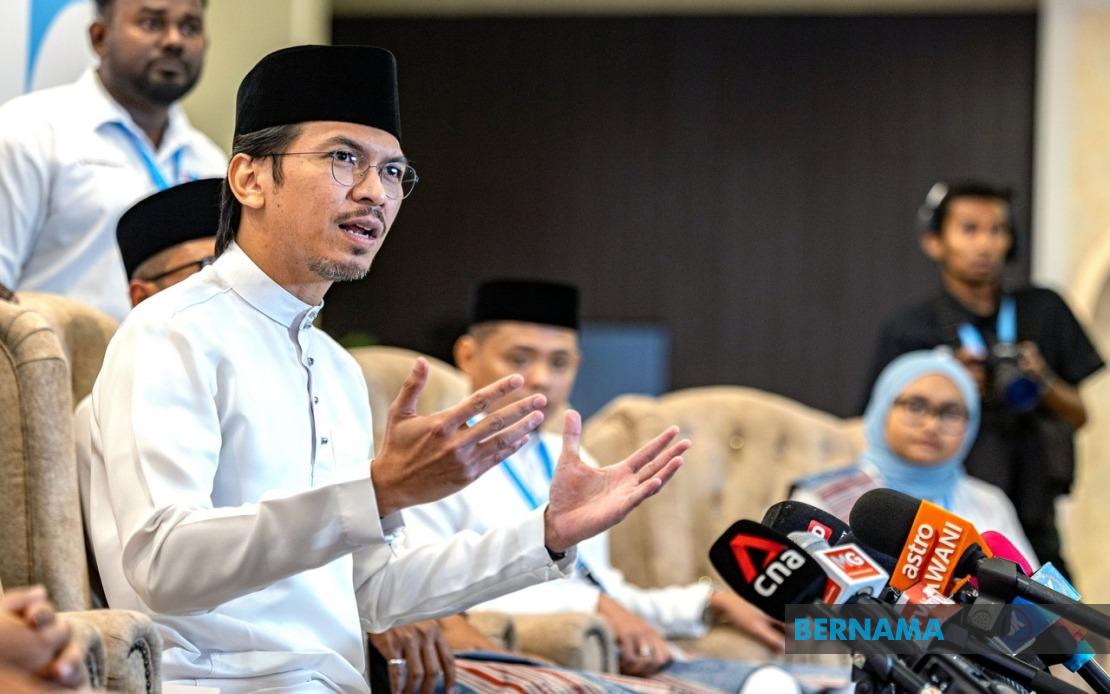
The Parti Keadilan Rakyat's youth wing has moved to reassure members and supporters that recent departures do not represent a fundamental challenge to the party's institutional stability or forward momentum. Speaking at the 2026 Angkatan Muda Keadilan (AMK) National Congress in Melaka on August 14, AMK chief Muhammad Kamil Ahmad Munim characterised the exodus as a minor phenomenon that reflects individual decisions rather than systemic weakness within Malaysia's largest opposition coalition partner.
Muhammad Kamil's remarks represent an official attempt to reframe a narrative that has gained traction in recent weeks, particularly following claims by Parti Bersama Malaysia co-founder Datuk Seri Rafizi Ramli that approximately 25 per cent of Bersama's new membership comprises former PKR cadres. Rather than dismissing these claims outright, the AMK chief acknowledged that departures have occurred but insisted they remain statistically inconsequential to the party's overall health. The distinction is significant: by conceding that some members have indeed left while simultaneously minimising their impact, PKR seeks to project both transparency and confidence.
The context surrounding these departures touches on deeper fissures within Malaysia's opposition landscape. The emergence of Bersama as a new political vehicle has created an alternative destination for members dissatisfied with PKR's direction or internal dynamics. For some departing members, the stated reason involves a loss of confidence in party leadership or direction, suggesting that the departures are not random but reflect deliberate political choices. Muhammad Kamil's characterisation of these decisions as matters of personal choice represents a diplomatic acknowledgment that PKR cannot compel loyalty through institutional pressure alone.
The timing of these reassurances coincides with heightened organisational activity within PKR, evidenced by the substantial delegate turnout at the AMK congress. Muhammad Kamil interpreted this participation as a barometer of grassroots commitment, arguing that high attendance at party functions demonstrates that the overwhelming majority of members remain invested in PKR's project. This metric-based argument—where presence at internal gatherings serves as proof of institutional vitality—reflects common party management tactics but may obscure the composition of the remaining membership and their motivation levels.
A complicating factor in assessing PKR's stability concerns the current status of deputy president Nurul Izzah Anwar, who is on leave from her formal duties. Muhammad Kamil addressed this directly, emphasising that her absence has not disrupted party operations or created a leadership vacuum. Instead, he highlighted the distribution of responsibilities across the party hierarchy, with vice-president Datuk Seri Saifuddin Nasution Abdullah and election director Datuk Seri Amirudin Shari managing key portfolios. This delegation model suggests deliberate organisational design rather than ad hoc crisis management.
The deputy president's leave raises questions about PKR's succession dynamics and the party's ability to maintain coherent direction when senior figures step back from active involvement. For Malaysian political observers, the stability of leadership structures matters considerably, particularly as PKR positions itself as a viable alternative to UMNO-led governance. Any perception of leadership instability or internal dysfunction could affect voter confidence in the broader opposition coalition ahead of forthcoming state elections and the next general election.
Muhammad Kamil's statement regarding grassroots acceptance of internal arrangements suggests that PKR has invested effort in explaining leadership changes through party channels. State and branch-level leadership have apparently provided justifications for Nurul Izzah's leave status, and members have accepted these explanations in what the AMK chief characterises as an open-minded manner. This narrative of managed communication contrasts with scenarios where leadership changes generate surprise, confusion, or resentment among ordinary party members.
The broader context involves PKR's preparation for upcoming electoral contests, including state elections and the next general election cycle. From this perspective, organisational maintenance and member retention take on strategic significance. Every departure represents not merely a lost card-carrying member but potentially a reduced volunteer base, fundraising capacity, and grassroots mobilisation capability. The youth wing's emphasis on strengthening and empowering the organisation reflects awareness that electoral performance depends on functional party infrastructure.
The emergence of Bersama as a competing political entity introduces a new dynamic into Malaysian opposition politics. As a nascent party drawing substantially from PKR's membership base, Bersama represents both a competitive threat and a potential coalition partner. Rafizi Ramli's claim about the composition of Bersama's membership inadvertently highlights PKR's vulnerability to poaching of cadres by rivals, even if those cadres represent only a small percentage of the total membership. For PKR strategists, the challenge involves retaining enough human capital and institutional cohesion to remain the dominant opposition force while accommodating those who choose alternative political homes.
Malaysian political analysts will likely scrutinise the actual figures regarding PKR departures, as the precise scale matters considerably for assessing trajectory. Muhammad Kamil's acknowledged uncertainty about exact percentages creates room for divergent interpretations of the situation. If departures number in the hundreds from a party with tens of thousands of members, the impact may indeed be marginal. If they number in the thousands, the cumulative effect could prove more consequential, particularly in marginal constituencies where volunteer intensity affects electoral outcomes.
Looking forward, PKR faces the challenge of consolidating its position as Malaysia's principal opposition force while managing internal diversity and external competition. The party's ability to retain members during a period of leadership transition and emerging rival parties will test its organisational effectiveness. Muhammad Kamil's public positioning of the departures as insignificant represents an attempt to project strength and continuity, but the underlying reality may prove more complex as the electoral cycle approaches.

