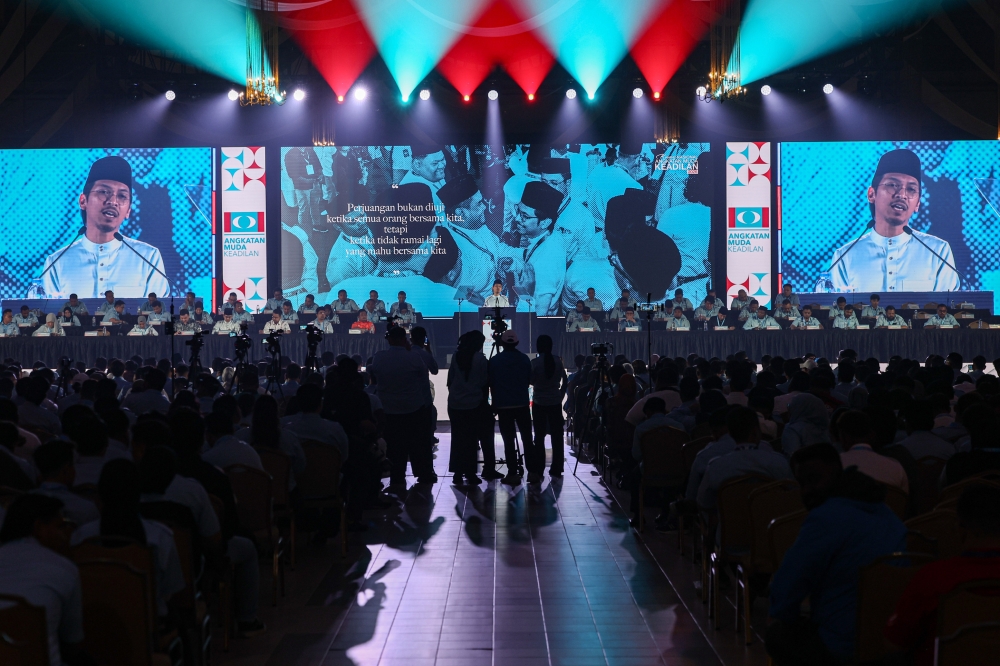
The PKR Youth leadership has publicly challenged the party to embrace accountability and honest self-evaluation in the aftermath of disappointing state election results, rather than deflecting responsibility onto the electorate. Speaking in Melaka, the Youth chief's remarks represent a significant intervention from within the party structure, signalling growing frustration among younger members over how the leadership has responded to recent electoral setbacks.
This internal critique arrives at a sensitive moment for PKR, which continues to navigate its complex relationship with other Pakatan Harapan coalition partners while managing expectations among members and supporters. The Youth wing's willingness to publicly articulate concerns about the party's direction suggests deeper dissatisfaction beneath the surface, raising questions about whether the leadership's explanations for recent losses have resonated with grassroots activists.
The call for reflection encompasses a broader conversation about PKR's positioning within Malaysian politics. As a relatively younger party compared to DAP and Amanah within the opposition coalition, PKR faces particular pressure to demonstrate organisational maturity and strategic capability. Recent electoral performance across various state contests has prompted soul-searching among party members about messaging, candidate selection, ground presence, and the effectiveness of internal party machinery.
For Malaysian political observers, this episode illustrates the structural tensions within multi-party coalitions, where stronger-performing components often maintain unity while weaker performers face internal questioning. The Youth wing's intervention suggests that younger members see an opportunity for constructive criticism that might strengthen rather than weaken the party. This generational dynamic reflects broader patterns seen across opposition and ruling political structures in Malaysia, where junior members increasingly demand accountability from senior leadership.
The Melaka context carries particular significance. As a state where PKR has historically sought to consolidate support and build state-level governance experience, recent electoral outcomes there would naturally trigger internal examination. The Youth chief's comments imply that party machinery, candidate quality, campaign execution, or messaging may not have achieved optimal effectiveness, suggesting areas requiring immediate attention before subsequent electoral contests.
PKR's broader strategic positioning also merits consideration. The party has attempted to position itself as a reform-minded, youth-oriented alternative within Pakatan Harapan, particularly under Anwar Ibrahim's leadership. However, recent elections suggest that this positioning has not uniformly translated into electoral success, prompting questions about whether the party's messaging aligns with voter priorities or whether implementation capacity remains constrained.
Internal party dynamics play a crucial role in understanding this intervention. The Youth wing typically serves as a barometer for younger members' sentiment, and their public call for self-reflection rather than externally focused blame-shifting indicates confidence that the party's fundamental structures remain sound but require recalibration. This framing avoids suggesting the party faces existential challenges while clearly indicating that performance improvement is essential and achievable.
The willingness to critique from within stands in contrast to common patterns where political parties present unified external faces regardless of internal tensions. The Youth chief's public statements suggest that PKR's internal culture may permit—or even encourage—this form of constructive challenge, potentially strengthening rather than undermining party cohesion. Such candor, if channelled productively, can accelerate institutional learning and adaptation.
For the broader opposition coalition, PKR's internal self-examination carries indirect significance. Pakatan Harapan's overall electoral competitiveness depends partly on each component party's internal health and performance capacity. If PKR successfully identifies and addresses underlying issues, this could enhance coalition effectiveness in subsequent contests. Conversely, unresolved internal tensions could create vulnerabilities that ruling coalition actors might exploit.
The Youth wing's framing also reflects sophisticated political communication. By emphasizing self-reflection over victim narratives, the leadership positioning becomes less defensive and more forward-looking. This approach potentially resonates better with voters who may view self-critical politicians more favourably than those who consistently attribute losses to external circumstances.
Looking forward, the impact of this intervention depends on whether party leadership meaningfully engages with the Youth wing's critique. If treated as a genuine invitation for institutional improvement, recent elections could catalyse positive change. If dismissed or treated as factional positioning, it could deepen internal divisions and undermine morale precisely when organisational unity matters most.
The Youth chief's intervention represents a moment where Malaysian political parties demonstrate whether they possess sufficient internal democratic culture to accommodate constructive criticism. PKR's response will signal to members, supporters, and voters alike whether the party genuinely commits to continuous improvement or prefers comfortable explanations for electoral underperformance. Such institutional responses, multiplied across numerous political parties, shape the overall quality of Malaysian democratic competition.

