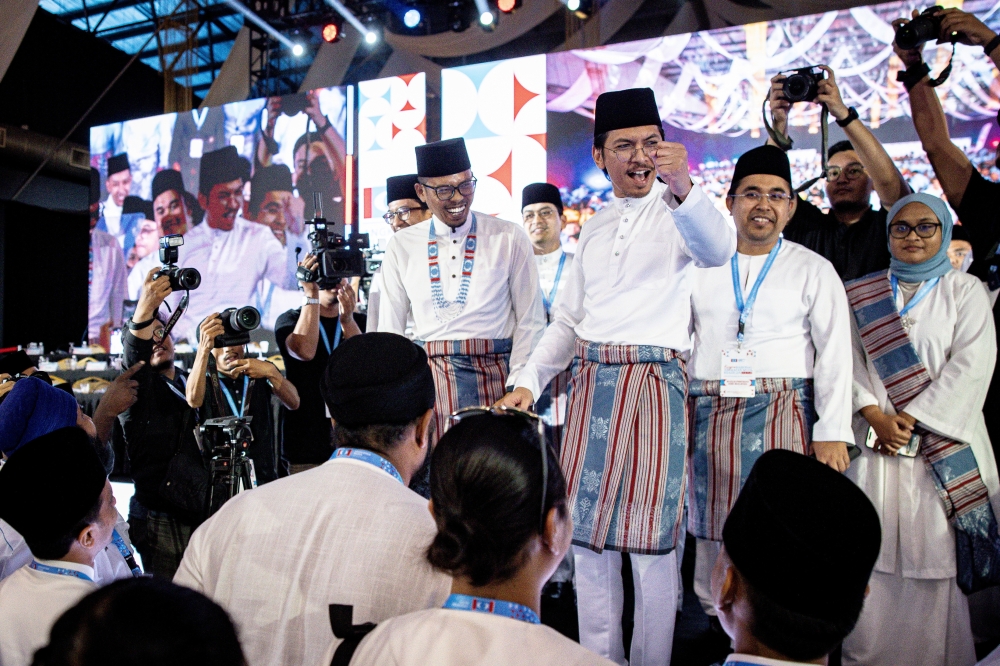
PKR Youth has thrown its weight behind Prime Minister Datuk Seri Anwar Ibrahim's proposal to dismantle the Universities and University Colleges Act, framing the move as a watershed moment for student activism and institutional reform across Malaysia's higher education sector. The youth wing's endorsement signals growing momentum within the ruling coalition for legislative changes that could fundamentally reshape how universities operate and grant students greater voice in campus affairs.
The repeal of the Universities and University Colleges Act represents one of the government's most significant education-related commitments since taking office. PKR Youth's backing amplifies calls from student organisations and civil society groups who have long contended that the current legislation constrains academic freedom and student participation in institutional decision-making. By publicly supporting the initiative, the party's youth division has positioned itself alongside a constituency that increasingly views campus governance reform as essential to Malaysia's democratic maturation and competitiveness in attracting international talent.
PKR Youth's intervention carries particular weight because younger party members often serve as bridges between government policy and grassroots expectations. Their endorsement suggests the party recognises that meaningful reform requires mobilising student constituencies beyond formal parliamentary mechanisms. The youth wing's call for students to articulate their own visions for change indicates a deliberate strategy to build bottom-up pressure that complementing top-down legislative efforts, potentially inoculating any eventual repeal against accusations of tokenism or insufficient scope.
The Universities and University Colleges Act has governed Malaysian higher education for decades, establishing frameworks that critics argue prioritise institutional stability and state oversight above student participation and academic autonomy. Restrictions on student political activity, limited mechanisms for meaningful representation in governance structures, and centralised curriculum controls have drawn persistent criticism from education advocates and international observers monitoring Malaysia's commitment to intellectual freedom. The prospect of repeal opens pathways to fundamentally reimagining these relationships.
For Malaysian students, the timing of PKR Youth's advocacy proves significant given broader regional trends toward student activism and demands for institutional accountability. Neighbouring countries have witnessed surging student movements addressing everything from tuition fees to campus sexual harassment policies. Malaysia's student population, often characterised as politically constrained by existing legislation, may view a successful repeal as validating demands for participation in shaping their educational experience and institutional futures.
The repeal initiative also intersects with Malaysia's broader efforts to enhance its standing as a regional education hub. International universities and prospective students increasingly evaluate destinations based partly on institutional autonomy and campus freedom metrics. Countries perceived as restricting student expression or limiting democratic participation within academic settings face competitive disadvantages in global talent competition. A legislative shift toward granting universities greater autonomy and students more substantive voice could strengthen Malaysia's appeal to both foreign institutions considering partnership arrangements and high-achieving students weighing study options.
Implementing meaningful reforms following any repeal will prove more demanding than legislative passage itself. Questions loom regarding how university governing structures should be reformed, what mechanisms genuinely empower student participation beyond advisory roles, and how institutions can balance operational autonomy with public accountability. PKR Youth's emphasis on students articulating their own reform visions suggests recognition that sustainable change requires incorporating beneficiary input rather than imposing externally designed solutions. This approach potentially yields stronger institutional buy-in and more enduring practical reforms.
The proposal also reflects evolving coalition dynamics within Malaysia's government. Support from multiple stakeholder groups, including PKR Youth, strengthens the case for prioritising the repeal amid competing legislative agendas. Conversely, such broad-based backing may intensify scrutiny from groups concerned about potential unintended consequences of weakening institutional controls, including campus security considerations or concerns about extremist influence within student organisations. Architects of any new framework will need addressing such concerns credibly while advancing genuine freedom gains.
International precedent offers instructive examples of repeal and reform outcomes. Some democracies substantially deregulating university operations experienced productivity gains and enhanced reputational standing, while others confronted unanticipated complications requiring recalibration. Malaysia can potentially learn from both categories, tailoring approaches suited to local institutional contexts and regulatory environments. PKR Youth's mobilisation of student constituencies suggests awareness that successful reform hinges partly on building stakeholder engagement rather than relying exclusively on legislative change.
Looking forward, the substantive architecture of post-repeal governance frameworks will determine whether reforms genuinely expand student agency or merely constitute symbolic gestures. PKR Youth's call for students to articulate their own reform priorities creates opportunities for meaningful input if institutions establish genuine mechanisms for integrating student perspectives rather than pro forma consultation exercises. The coming months will reveal whether government commitment translates into comprehensive institutional transformation or more incremental adjustments.

