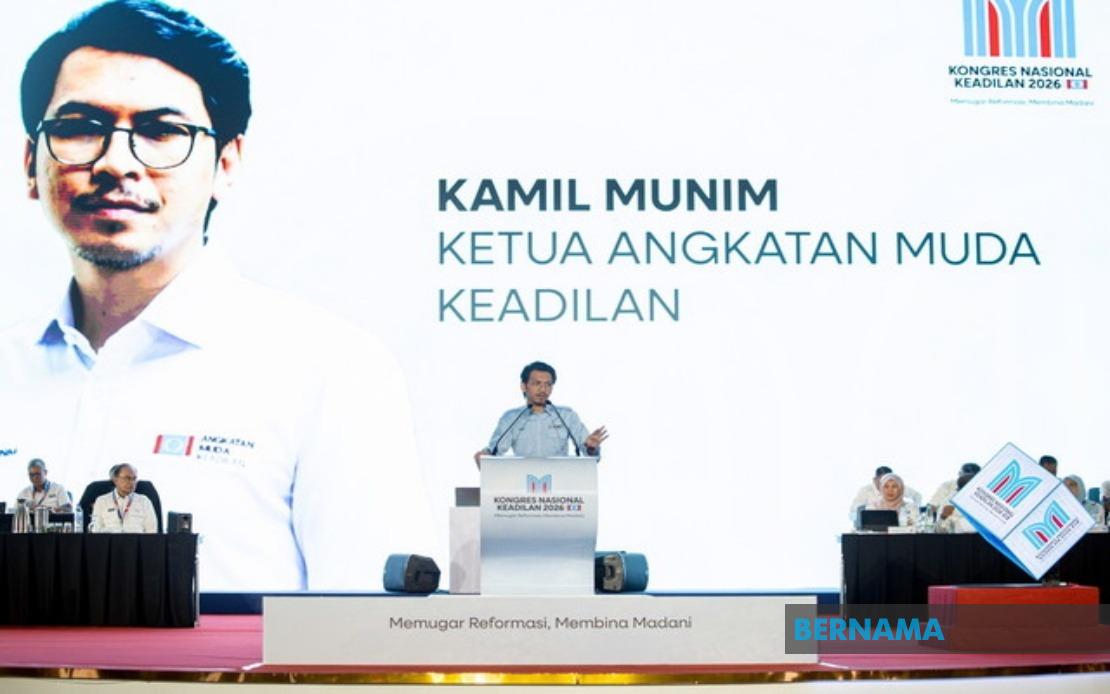
PKR Youth (AMK) must undertake a comprehensive strategic overhaul to better connect with voters aged 45 and below, a demographic that represents the single largest voting bloc in Malaysia, according to party youth leader Muhammad Kamil Abdul Munim. Speaking at the PKR National Congress in Melaka on August 16, he emphasised that the party's approach to winning electoral support requires substantial refinement to capture this crucial segment of the electorate.
The push for strategic recalibration comes in the wake of disappointing results in the Johor and Negeri Sembilan state elections, which have prompted serious reflection within the party ranks about its organisational effectiveness and campaign methodologies. Muhammad Kamil framed these electoral outcomes not merely as defeats but as instructive moments that should catalyse fundamental change in how the party operates at all levels. The leadership's willingness to acknowledge gaps between voter sentiment and party performance suggests an organisation attempting to learn from recent missteps rather than doubling down on existing approaches.
The demographic reality driving this strategic reassessment is stark. Electoral data consistently shows that voters aged 45 and below now constitute the largest cohort on Malaysia's electoral roll, fundamentally reshaping the political arithmetic for any party seeking to govern. This generational cohort carries distinctly different concerns, communication preferences, and political expectations compared to older voters, yet traditional party machinery often struggles to address these differences effectively. Muhammad Kamil's explicit acknowledgment of this reality indicates that PKR recognises the necessity of demographic-focused strategy if it hopes to maintain relevance and electoral competitiveness.
Beyond simple demographic analysis, Muhammad Kamil directed grassroots leaders to deepen their understanding of community concerns rather than remaining fixated on administrative functions. This distinction carries significant weight, as it suggests a shift from bureaucratic party management toward genuine constituent engagement. Ground-level party operatives, he argued, must move beyond internal organisational matters to develop authentic leadership capabilities rooted in understanding and responding to what citizens actually care about. This reframing positions local leaders as problem-solvers and community advocates rather than merely party functionaries.
The gap between positive public perception of the MADANI Government's performance and the electoral losses in Johor and Negeri Sembilan presents a puzzle that party strategists must solve. While government initiatives may be generating favourable feedback in some quarters, this sentiment has failed to translate into electoral victory or broader political support. This disconnect suggests that either messaging is not reaching intended audiences effectively, or that voters are distinguishing between government performance and party viability—a nuanced political calculus that many analysts overlook. Muhammad Kamil's recognition of this void indicates the party understands it cannot simply rest on government achievements but must actively work to connect those accomplishments with party identity and electoral appeal.
Muhammad Kamil specifically highlighted the importance of direct engagement with communities, particularly in rural settings where small-scale interactions often carry outsized influence. Rural Malaysia has historically been difficult terrain for PKR compared to the party's relatively stronger urban performance, yet these areas contain substantial voting populations that determine election outcomes in many constituencies. By directing party machinery toward intensive grassroots conversation in these regions, PKR seeks to identify local anxieties and develop contextualised responses that resonate with specific communities rather than applying uniform national messaging.
The transformation required must involve all party machinery and leadership structures preparing for the next general election, which Muhammad Kamil characterised as approaching with increasing urgency. This forward-looking perspective, combined with backward-looking analysis of previous defeats, frames party renewal as simultaneously defensive—learning from what went wrong—and offensive—building capacity to win future contests. The implicit timeline is that this strategic recalibration must occur relatively quickly, before the next national electoral cycle arrives.
Historical perspective provides Muhammad Kamil with a narrative of resilience and periodic breakthroughs that he invoked to motivate party members. PKR's success in 2008 in denying Barisan Nasional a parliamentary two-thirds majority and its 2018 triumph in helping form the Pakatan Harapan federal government serve as historical anchors demonstrating that the party is capable of creating significant political surprises. This historical framing transforms recent electoral disappointments from existential threats into temporary setbacks within a longer pattern of periodic electoral renewal—a perspective designed to maintain activist morale and commitment.
The challenge facing PKR in executing this strategic shift is substantial. Moving from administrative-focused grassroots operations to constituent-responsive community engagement requires not simply new directives but changed mindsets, reoriented training, and sustained effort. Many party cadres have developed expertise and comfort within traditional organisational frameworks, and shifting toward more organic, relationship-driven politics demands different skills and temperament. Whether PKR's organisational machinery can successfully complete this transformation before the next general election remains an open question with significant implications for the party's electoral prospects.
For Malaysian politics more broadly, PKR's strategic recalibration illustrates how demographic shifts are forcing major parties to reimagine their approaches to electoral competition. As younger voters become numerically dominant, their concerns—often including economic mobility, climate change, governance integrity, and digital-age communication preferences—increasingly determine electoral outcomes. Parties that fail to meaningfully address the specific priorities of voters aged 45 and below risk irrelevance regardless of their performance in other areas, a reality that extends far beyond PKR alone.

