Parti Keadilan Rakyat (PKR) is committing to a significant overhaul of its communications apparatus, recognising that the government's economic successes and policy initiatives are failing to resonate meaningfully with ordinary Malaysians at the household level. The pledge emerged during the party's National Congress 2026, held at the Melaka International Trade and Exhibition Centre (MITC) in Ayer Keroh, where delegates raised substantial proposals centred on improving how the administration explains and promotes its work to the electorate. This acknowledgement signals an internal recognition that despite tangible government efforts across multiple sectors, the messaging infrastructure has proven inadequate in translating macroeconomic achievements into public understanding and support.
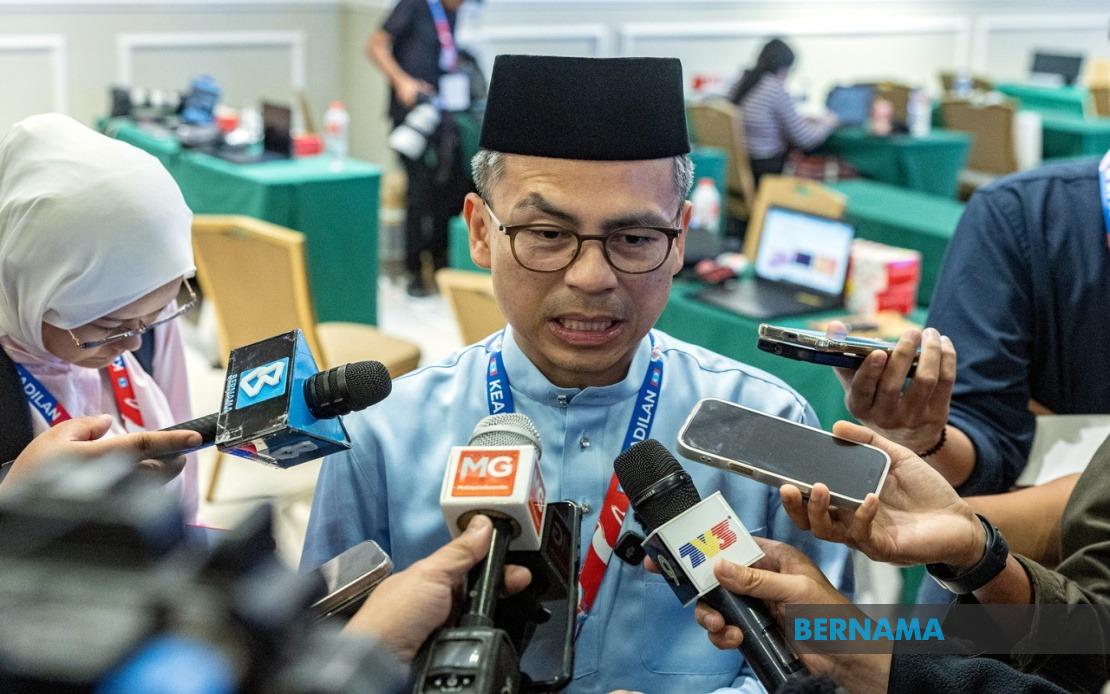
Communications Minister Datuk Seri Fahmi Fadzil, who doubles as PKR's Information Chief, articulated the core challenge facing the coalition government: a persistent disconnect between headline economic indicators and the lived experience of Malaysian households. While successive administrations can point to improvements in inflation management, fiscal discipline, and investment flows, these gains often feel abstract to voters grappling with daily cost-of-living pressures. Fahmi indicated that PKR's leadership recognises this perception gap represents not merely a marketing problem but a fundamental communications failure that requires systematic remediation. His comments to journalists following a visit to the congress media room underscored the urgency party officials attach to recalibrating how government accomplishments are packaged, framed, and distributed across communities.
The communications restructuring will draw heavily on feedback and recommendations submitted by party delegates at the ongoing congress. Fahmi confirmed that multiple proposals addressing information dissemination methods and communication architecture have been formally tabled and will feature prominently during the congress's concluding sessions. Rather than implementing top-down directives, PKR's approach involves consolidating grassroots input from branch representatives and party activists who interface directly with constituents and understand local communication requirements. This bottom-up methodology reflects a strategic recognition that party machinery and elected officials at the parliamentary and state levels possess valuable intelligence about which messages resonate, which fall flat, and where information gaps exist in public understanding of government policy.
A particularly noteworthy dimension of PKR's communication evolution involves formalising links between constituency-level party structures and the federal government machinery based in Putrajaya. Fahmi acknowledged that informal channels for escalating local concerns and parliamentary-level intelligence to federal administrators have existed previously but lack the systematic architecture necessary for consistent, transparent operation. The proposed formalisation aims to create a structured mechanism whereby ground-level issues identified by branch leaders can be expeditiously communicated to relevant ministries and cabinet-level decision makers, with feedback loops ensuring solutions developed in Putrajaya are communicated back to communities facing those problems. This bidirectional flow of information could substantially strengthen the government's ability to address localised grievances while simultaneously improving the narrative around how federal initiatives address community-identified priorities.
The underlying issue Fahmi highlighted reflects a chronic challenge for ruling coalitions across the region: governments often struggle to communicate the connection between their macroeconomic stewardship and household welfare improvements. In Malaysia's context, the Pakatan Harapan administration has pursued orthodox fiscal and monetary policies designed to enhance medium and long-term economic stability. Yet these policies, while economically sound, frequently impose near-term adjustment costs on households and small businesses. Citizens experiencing inflation or wage stagnation may intellectually understand that these phenomena reflect global conditions rather than policy failure, but emotional and material hardship shapes voter perception more powerfully than technical economic explanations. PKR's communication strategy must therefore navigate this treacherous terrain by acknowledging household challenges while situating government action within broader economic realities.
Fahmi's remarks also revealed that PKR's Central Leadership Council (MPP) has adopted a receptive posture toward the communication reform proposals emerging from the congress floor. Rather than dismissing or minimising delegate input, party leadership has signalled commitment to implementing changes, beginning with transformations within PKR's own organisational structures before cascading outward. This approach recognises that any communications overhaul requires institutional buy-in from party cadres who must execute revised strategies in their respective constituencies. By positioning leadership transformation as a precursor to public communications improvements, Fahmi implicitly acknowledged that credible external messaging requires internal alignment and demonstrated commitment to change.
The timing of this communications reassessment proves significant given Malaysia's evolving political dynamics and the government's legislative agenda. As Pakatan Harapan enters the latter phase of its current electoral mandate, consolidating public support becomes increasingly critical for prospects in the next general election. Opposition parties have effectively weaponised the perception gap that Fahmi now seeks to address, arguing that government policies benefit elites while ordinary Malaysians shoulder adjustment burdens. A revitalised communications strategy could blunt these attacks by proactively narrating government achievements in language connecting to household concerns. Whether PKR's communication reforms suffice to substantially shift public perception remains an open question, but the party's willingness to acknowledge shortcomings and systematically address them demonstrates political maturity.
Pakatan Harapan's communication challenges extend beyond PKR alone, encompassing the broader coalition's capacity to present unified messaging on behalf of the government. Democratic coalitions inherently struggle with message discipline because coalition partners maintain distinct identities, constituencies, and sometimes contradictory policy preferences. PKR's efforts to strengthen its own information dissemination therefore occur within this larger competitive dynamic, where DAP and Amanah simultaneously operate their own communication apparatus. Coordination between coalition partners on messaging remains imperfect, occasionally creating contradictions that opposition actors exploit. PKR's congress deliberations may generate pressure for coalition-wide communication standards and mechanisms to ensure consistent narrative across all ruling parties.
For Malaysian voters and observers of Southeast Asian politics more broadly, PKR's communication strategy overhaul illuminates how ruling coalitions adapt to democratic accountability pressures. Unlike authoritarian systems capable of imposing top-down messaging without public consultation, Malaysian governments must continuously negotiate with constituents, party activists, and elected representatives to maintain political legitimacy. The congress proposals and Fahmi's responses demonstrate this democratic bargaining process in action. Whether the resulting communication improvements translate into measurable shifts in public perception ultimately depends on whether PKR and Pakatan Harapan can deliver on the substantive policy improvements that effective communication merely articulates. Strong messaging cannot overcome policy failure, but strategic communications can certainly illuminate policy successes that remain invisible to inattentive publics.

