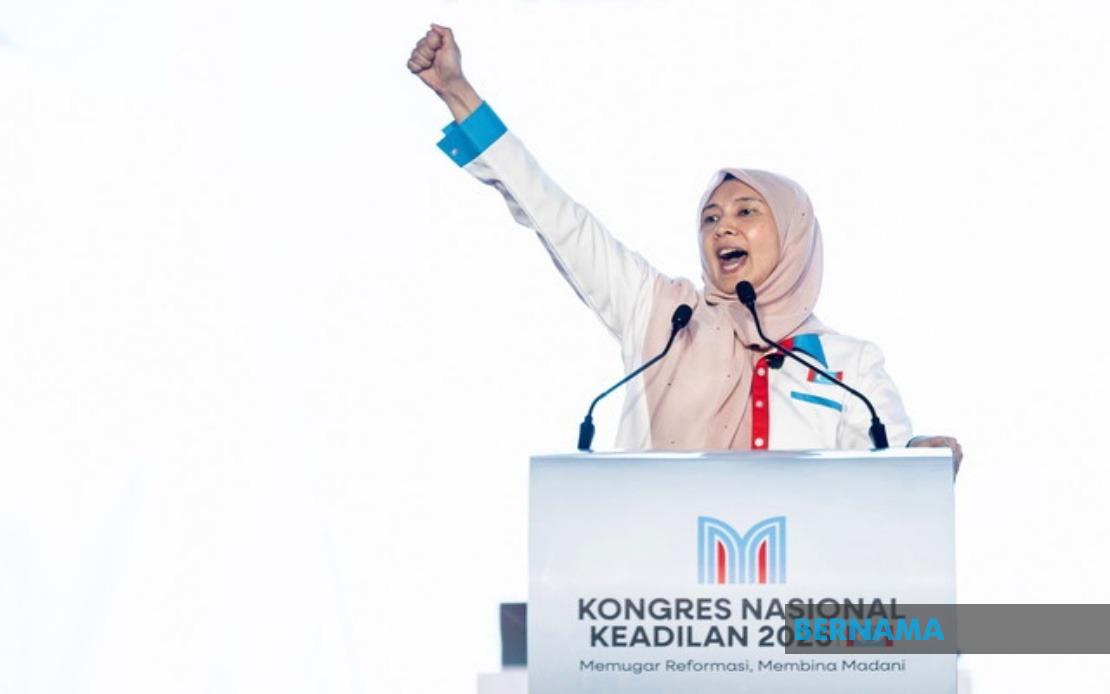
PKR deputy president Nurul Izzah Anwar has called for the party to sustain its commitment to institutional and policy reform even as it exercises governmental power, arguing that the reform impulse that birthed the party should never be abandoned regardless of its political status. Speaking during the closing session of the PKR 2026 National Congress in Melaka on August 16, she framed reform not as a temporary campaign slogan but as an enduring obligation that party members must carry forward as a generational responsibility.
The remarks came as PKR, which emerged from the reformasi movement of the late 1990s, consolidated its position within Malaysia's ruling coalition. Nurul Izzah, widely recognised as a symbol of the party's reformist credentials, articulated a concern that political parties risk losing their ideological moorings once they transition from opposition to government. Her warning suggests underlying tensions within PKR about maintaining institutional discipline and reform ambitions amid the pragmatic pressures of governing.
One concrete example she cited was the repeal of the Universities and University Colleges Act (AUKU) 1971, a long-standing goal of reform advocates that PKR had previously championed. The party's ability to realise this reform upon gaining governmental leverage demonstrated that power could be instrumentalised for structural change, though she implied that such victories required sustained internal commitment rather than mere formal authority. The AUKU repeal represents symbolically important terrain, as restrictions on student activism and academic freedom had long troubled Malaysian civil society and reform-minded intellectuals.
Beyond institutional reform, Nurul Izzah emphasised that Malaysia's strong economic performance under the MADANI Government must translate into tangible improvements in living standards and economic participation. She highlighted three specific areas requiring structural attention: expanding genuine employment opportunities, fostering growth of small and medium enterprises (SMEs), and widening economic participation for women and young people. Her framing treated economic inclusion not as a welfare concern but as a core reform objective intrinsically linked to broader democratisation and social justice.
She particularly underscored the necessity of continuing wage reform to ensure that salary structures remain equitable and that compensation rises proportionally with worker productivity. This emphasis resonates with Malaysian concerns about cost-of-living pressures affecting urban and semi-urban workers, where nominal wage growth has historically lagged inflation and property price appreciation. By tethering wage reform to productivity metrics, she sought to frame improved compensation as economically rational rather than merely redistributive, potentially broadening political support for such measures.
A significant dimension of her address involved cautioning PKR's leadership cadre against viewing ministerial and party positions as personal acquisitions or status symbols. She articulated a vision of public office as trusteeship—a temporary stewardship of institutional authority rather than an entitlement or personal fief. This admonition carries particular weight in Malaysian politics, where patronage networks and personalised power structures have historically shaped party dynamics and governance outcomes. Her comments implicitly acknowledged risks of complacency and self-dealing that accompany transition to power.
The philosophical stance she offered—that titles change, positions shift, and names fade from prominence—reflects a long view of political legacy oriented toward substantive institutional change rather than individual aggrandisement. She contended that what endures beyond individual political careers are the concrete reforms implemented and the values embedded within institutional structures. This perspective challenges the transactional orientation sometimes prevalent in Malaysian politics, where office-holding becomes primarily a vehicle for personal or factional advancement.
For Malaysian readers and Southeast Asian observers, Nurul Izzah's remarks illuminate ongoing tensions within reform-oriented parties that have achieved governmental power. The challenge of sustaining ideological coherence and reform momentum while managing the complex bureaucratic, fiscal, and political constraints of governing remains acute. PKR's experience—transitioning from civil society agitation to coalition partner in less than three decades—exemplifies this dynamic across the region.
Her emphasis on structural economic reform also reflects recognition that electoral victories and political access, while necessary, remain insufficient without accompanying changes to wage structures, business frameworks, and sectoral opportunities. The Malaysian economy's persistent inequalities, despite periods of solid overall growth, suggest that macro-level economic expansion does not automatically produce broadly-distributed prosperity. Sustained attention to structural reform is therefore a rational precondition for translating economic performance into genuine welfare improvements.
The timing of these remarks at the PKR congress is significant, occurring in what appears to be a period of coalition consolidation. By reaffirming the party's reform origins and obligations, Nurul Izzah has articulated a standard against which PKR's governance record will be measured—a implicit challenge to complacency and a call for demonstrable institutional change. Whether the party can maintain this reform orientation while navigating the competing demands of coalition management and economic governance will substantially influence its long-term political trajectory and credibility among reform-conscious constituencies throughout the region.

