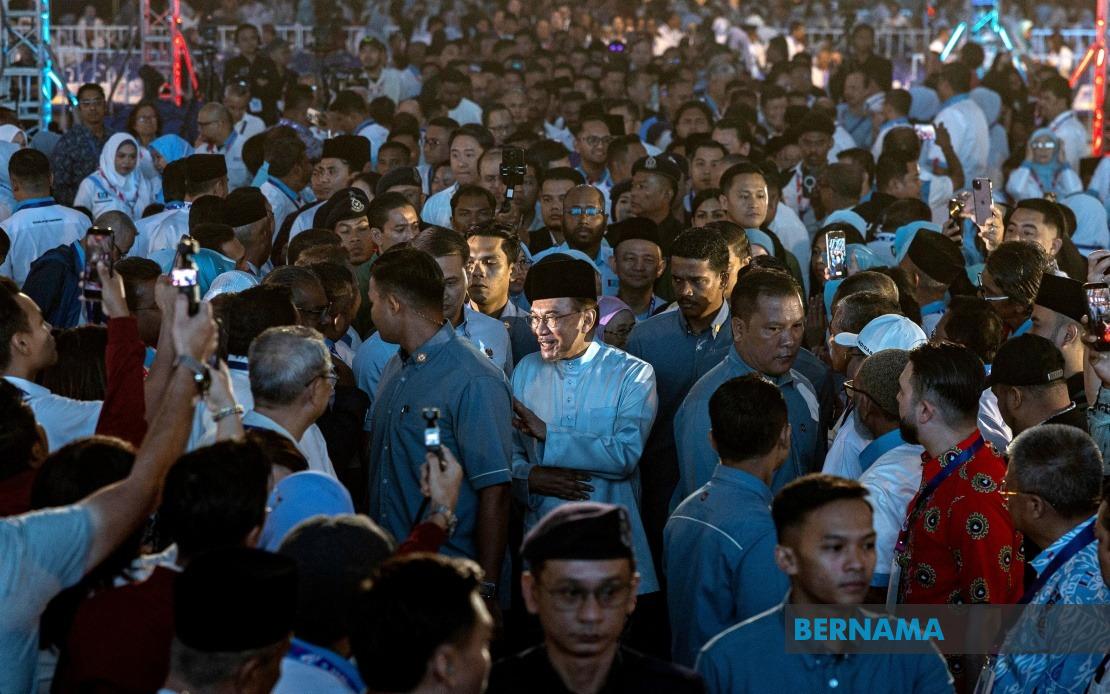
The upcoming 2026 PKR National Congress must become a pivotal moment for the party to consolidate its position, strengthen its organisational machinery, and reconnect with voters who have grown disillusioned with its performance, according to Tengku Datuk Seri Zafrul Tengku Abdul Aziz, the Prime Minister's senior political adviser. In remarks released on social media, the ex-officio member of the PKR Political Bureau framed the congress not merely as a routine party gathering but as a critical juncture for introspection and renewal.
Tengku Zafrul's intervention signals growing recognition within PKR's senior hierarchy that the party faces a trust deficit among the electorate. His comments come in the aftermath of recent state elections that delivered disappointing outcomes for the coalition, prompting party leaders to conduct a thorough assessment of what went wrong. The adviser's emphasis on honest self-reflection underscores the magnitude of the challenge confronting PKR as it seeks to maintain political relevance in an increasingly competitive Malaysian political landscape.
A central theme in Tengku Zafrul's message is the distinction between factors within the party's control and those beyond it. While acknowledging that PKR cannot dictate the behaviour or performance of its partners within the Unity Government coalition, he stressed that the party must concentrate its energies on areas where it can exercise direct influence. This pragmatic approach reflects an understanding that PKR's electoral fortunes ultimately rest on its own capacity to articulate a compelling vision and deliver tangible results to constituents.
The adviser identified several specific areas requiring urgent attention. Party machinery effectiveness across all levels—from grassroots community organisers to national leadership—needs systematic improvement. This includes ensuring that communication channels function properly, that local leaders are adequately resourced and trained, and that decision-making processes are transparent and responsive to members' concerns. The operational efficiency of PKR's structure has long been critiqued as an area requiring modernisation.
Crucially, Tengku Zafrul highlighted a communication gap between PKR's policy achievements and public perception. He argued that even when the government and party have delivered on their electoral promises, a failure to communicate these successes effectively to the general population can result in wasted political capital. This observation points to a broader challenge facing the Anwar Ibrahim-led coalition: translating policy initiatives into measurable improvements that voters recognise and appreciate in their daily lives.
The adviser's exhortation that party members listen to public grievances without becoming defensive offers important guidance on shifting the party's engagement approach. The tendency to immediately counter criticism or defend past decisions, rather than genuinely hearing what constituents are saying, can create an impression of an out-of-touch elite disconnected from ground realities. By prioritising listening over defensive responses, PKR could rebuild the perception that it remains accountable to voters rather than merely pursuing factional interests.
For Malaysian political observers, Tengku Zafrul's remarks illuminate internal debates within PKR about the party's strategic direction. The emphasis on party strengthening rather than blaming coalition partners or external circumstances suggests that senior figures recognise the need to take responsibility for PKR's current position. This contrasts with earlier rhetoric that sometimes attributed electoral disappointments primarily to dynamics beyond the party's control.
The timing of these comments carries additional significance given Malaysia's political trajectory. With elections cycles continuing to tighten and voter preferences becoming increasingly volatile, parties that fail to maintain strong grassroots organisations and effective communication mechanisms risk rapid erosion of support. PKR's position as a core component of the government coalition makes its internal health a matter of broader national significance for governance stability.
The 2026 National Congress will also serve as a barometer of whether PKR can translate such leadership exhortations into concrete organisational reforms. Party congresses typically offer opportunities for leadership elections, policy discussions, and renewal of the membership base. How effectively PKR utilises this forum to implement genuine structural improvements, rather than merely engaging in rhetorical exercises, will determine whether the party successfully rebuilds voter confidence or continues its gradual decline in electoral appeal.
Regional analysts watching Malaysian politics will be particularly attentive to whether PKR's self-strengthening efforts succeed in reversing membership and supporter attrition. The party's evolution over the coming months leading to the congress will provide crucial indicators about the stability of Malaysia's current political coalition and the broader trajectories of peninsular Malaysian politics heading into the latter half of this decade.

