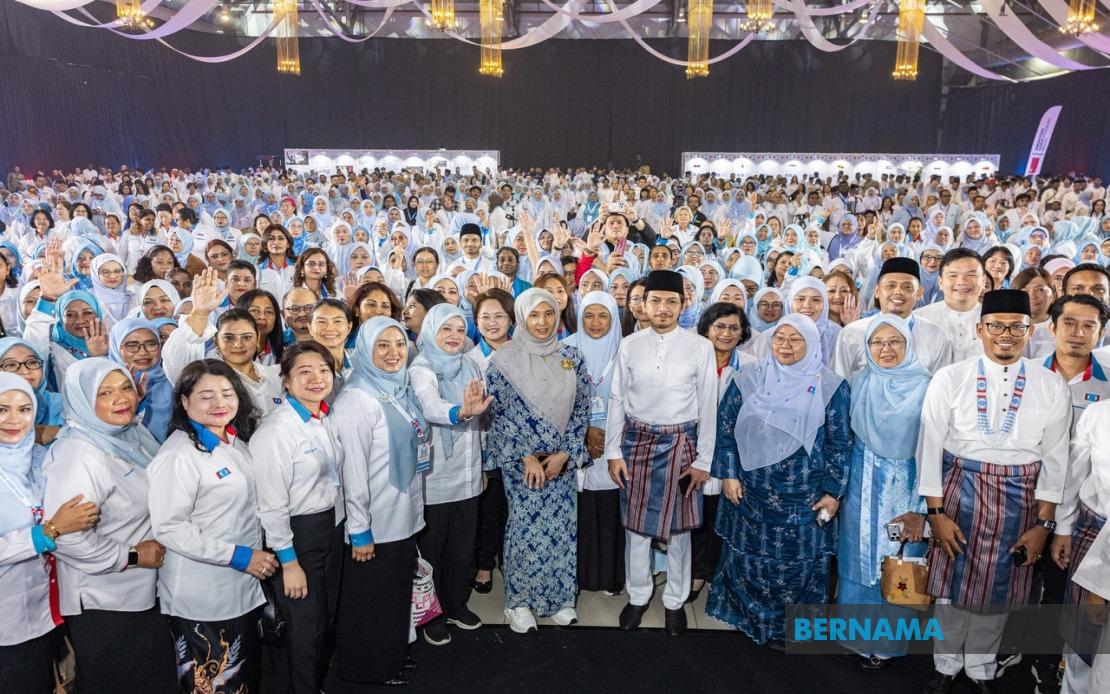
The leadership of Parti Keadilan Rakyat's youth division has issued a candid assessment of the party's current standing, signalling that despite its role in government, the organisation faces fundamental challenges that extend beyond public appeal. At the 2026 AMK National Congress held in Melaka, Muhammad Kamil Abdul Munim, chief of Angkatan Muda Keadilan, articulated concerns that resonate across Malaysia's political landscape as the country contemplates its next electoral cycle. His remarks underscore an uncomfortable reality within PKR—that the path from protest movement to governing party has exposed structural weaknesses that merit urgent attention.
Muhammad Kamil's diagnosis centres on a critical distinction between popularity and electoral capability. He observed that PKR's performance in recent state elections, including campaigns in Sabah, Johor, and Negeri Sembilan, demonstrated that widespread public sympathy does not automatically translate into seat gains. This observation carries weight given that PKR formed the foundation of the Pakatan Harapan coalition that captured federal power in 2018, reshaping Malaysian politics. The party's subsequent experience in government, followed by its navigation of coalition politics, has apparently revealed gaps between what supporters feel and what the party's ground machinery can deliver. For regional observers, this dynamic illustrates the broader challenge facing reform-oriented parties across Southeast Asia—converting momentum into sustainable institutional power.
The AMK chief attributed this gap to insufficient grassroots capacity. Rather than suggesting the party had lost public affection, Muhammad Kamil pointed to inadequate organisational depth to mobilise voters effectively. He referenced PKR's entire operational history since 1998, noting that previous electoral successes had relied substantially on spontaneous public participation rather than systematic party machinery. When ordinary citizens became movement activists during periods of opposition, they compensated for limited formal party structures. However, translating that voluntary enthusiasm into reliable electoral organisation remained unfinished business. This diagnosis suggests that PKR, despite nearly three decades of existence and years in government, has not yet built the sophisticated cadre-based system that established ruling parties typically possess.
Muhammad Kamil's call for renewed narrative strategy addresses what many political analysts view as a deeper problem—the loss of PKR's distinctive ideological positioning. The party emerged as a vehicle for reform and justice during the Anwar Ibrahim crisis of the late 1990s, but its subsequent evolution through opposition, coalition partnership, and government participation has sometimes obscured its core message. Competing within a multiparty coalition framework has forced compromises that may have diluted the party's singular appeal. For Malaysian voters accustomed to perceiving PKR as a voice for the marginalised and a challenger to entrenched power structures, the party's current posture as a governing coalition member presents a perception challenge that transcends ordinary party messaging.
The congress, convened under PKR deputy president Nurul Izzah Anwar's opening remarks, brought together senior party figures including vice-president Datuk Seri Dr Zaliha Mustafa and Wanita PKR chief Fadhlina Sidek. This gathering represented an opportunity for the party to engage in structured self-examination. Fadhlina's remarks emphasised precisely this point, framing the congress as a platform for honest reflection rather than celebration. She explicitly called on members and leaders to acknowledge weaknesses and listen to grassroots voices. This tone—inviting candid assessment rather than defensive posturing—suggests that party elders recognise the severity of organisational challenges and seek to mobilise internal resources for renewal.
Fadhlina's emphasis on translating leadership speeches into actionable party strategy highlights another dimension of PKR's challenge. Political rhetoric, no matter how compelling, achieves nothing without corresponding changes in how the party functions operationally. She urged delegates to view their congress contributions not as passive listening but as formulation of concrete recommendations. This approach attempts to bridge the gap between party leadership vision and grassroots implementation—a perennial problem for democratic organisations. In Malaysian context, where party rank-and-file often feel disconnected from decision-making circles, Fadhlina's invitation to grassroots participation addresses a legitimacy question as much as an organisational one.
The timing of this party self-examination carries significance for Malaysian politics broadly. With general elections constitutionally due by 2026, PKR's internal renovation efforts will unfold within a compressed timeframe. The party cannot afford extended deliberation if it hopes to field a revitalised campaign organisation. Simultaneously, potential rivals within the coalition and opposition have incentive to exploit any signs of PKR weakness. The Democratic Action Party and Amanah, PKR's Pakatan partners, possess their own organisational strengths and may gradually reposition themselves as alternatives if PKR appears to be losing capacity. This intracoalition dynamic influences how urgently PKR addresses its challenges.
Muhammad Kamil's acknowledgement that reform work differs depending on whether the party operates in or out of government captures an often-overlooked complexity. Opposition politics rewards agitation, moral clarity, and adversarial stance. Government participation demands accommodation, pragmatism, and willingness to compromise. PKR's fourteen-year tenure outside government (1998-2012) embedded certain operational patterns and leadership styles. The party's subsequent evolution through opposition partnership and eventual government participation required different capabilities. The transition created potential inconsistencies between the party's self-perception and its actual functioning. Resolving this tension requires more than rhetorical realignment—it demands genuine organisational restructuring.
The call to strengthen grassroots capacity also addresses resource questions. Well-organised parties invest substantially in training cadre, maintaining local infrastructure, and sustaining member engagement between elections. This requires financial commitment and institutional discipline. PKR's historical reliance on charismatic leadership and issue-based mobilisation, while generating passion, may not have built the stable funding and personnel systems that electoral competitiveness demands. The party may need to evolve from a personality-driven movement toward a more institutionalised structure—a transformation that generational changes within the party might facilitate but which senior leaders must actively promote.
For Malaysian voters and observers across Southeast Asia, PKR's current self-assessment has broader implications. The party represents an important experiment in whether reform-minded, anti-establishment movements can successfully transition to governing coalitions while maintaining their distinctive identity and supporter base. Similar parties across the region—from Thailand's Move Forward Party to the Philippines' various reform alliances—face comparable challenges. PKR's response to its identified weaknesses may offer instructive lessons about whether such parties can build durable political institutions or whether their energy inevitably dissipates once they enter government structures.
Muhammad Kamil's exhortation that party members and leadership maintain resolve while accepting harsh realities combines recognition of current difficulties with determination to overcome them. He positioned the congress as a moment for renewed commitment rather than recrimination. This framing acknowledges that electoral setbacks and grassroots weakness represent genuine problems requiring honest diagnosis, yet simultaneously asserts that remedy remains possible through collective effort. Whether PKR can translate this sentiment into substantive organisational renewal will significantly influence not only the party's electoral prospects but also the broader trajectory of Malaysian coalition politics and reform movements throughout the region.

