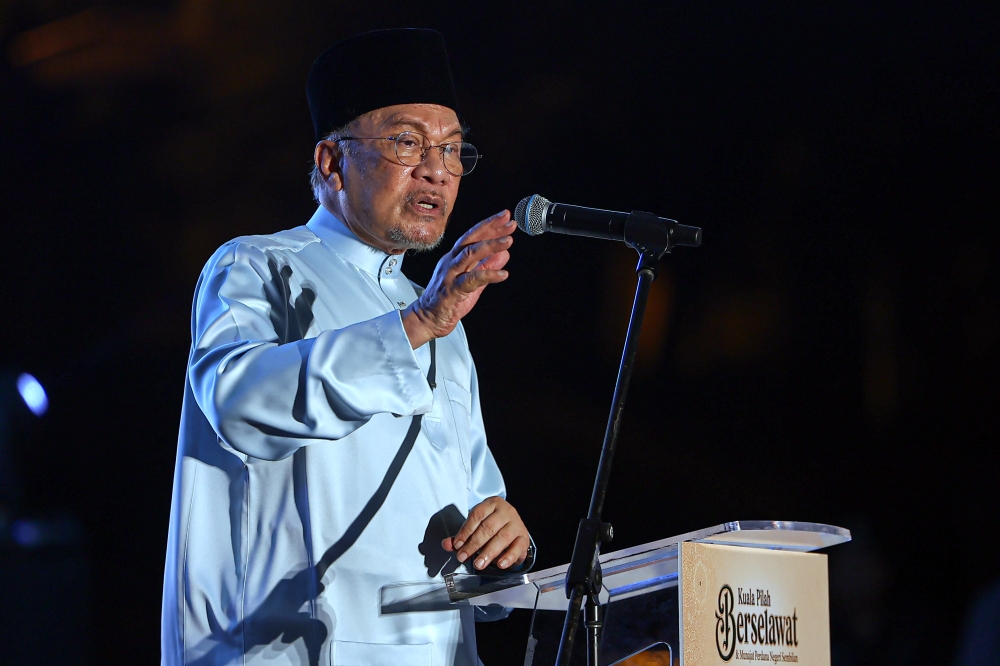
Anwar Ibrahim has delivered a pointed reminder to Parti Keadilan Rakyat that the party's fundamental purpose transcends the pursuit of political power through elections. Speaking in Kuala Lumpur on August 15, the PKR president underscored that the party must remain anchored to its identity as a grassroots movement committed to the principles of integrity, accountability, and public service that have defined its trajectory since its establishment.
The emphasis on PKR's foundational mission signals broader concerns within the party about maintaining its ideological moorings as it navigates the complexities of governing in Malaysia's fractious political landscape. Since taking office as Prime Minister in 2022, Anwar has confronted the tension between PKR's reform credentials and the pragmatic compromises required to sustain a coalition government. His latest statement appears designed to refocus party members on the constituencies and communities that provide PKR's legitimacy beyond ministerial portfolios and parliamentary seats.
Anwar's framing of PKR as fundamentally a mass movement carries particular weight given Malaysia's political history. The party emerged from the reformasi movement of the late 1990s, when thousands took to streets demanding democratic accountability and justice. That activist heritage remains central to PKR's identity, distinguishing it from older establishment parties that evolved through different institutional pathways. The reminder that electoral machinery should serve broader goals rather than become an end in itself speaks to concerns that political parties can gradually hollow out, becoming mere vehicles for personal advancement or factional interests.
The assertion also reflects internal party dynamics that have occasionally surfaced in public discourse. PKR encompasses diverse factions with different perspectives on how aggressively the party should pursue reform agendas versus maintaining coalitional stability. Some members push for bolder positions on issues affecting workers, the poor, and marginalised communities, while others prioritise the operational necessities of coalition governance. By invoking the mass movement identity, Anwar appears to be staking out a position that values both electoral success and principled advocacy for ordinary Malaysians.
For regional observers, PKR's positioning holds significance beyond Malaysia's borders. Across Southeast Asia, parties and movements navigating democratic transitions face similar pressures to balance institutional consolidation with activist origins. PKR's evolution as a major coalition partner offers lessons in how reform-oriented movements can sustain integrity while wielding executive power. The party's relative success in governance without abandoning its core constituencies distinguishes it from movements that have either compromised their values entirely or retreated into irrelevance through inflexibility.
The mass movement framework Anwar invokes carries practical implications for party operations. It suggests emphasis on grassroots organising, sustained engagement with community organisations, and responsiveness to feedback from non-elite party members. This stands in contrast to top-down party structures where decision-making concentrates among leadership circles disconnected from ordinary members' concerns. If taken seriously, such commitments require investments in party education, capacity-building at local levels, and mechanisms ensuring that leaders remain accountable to wider memberships rather than narrow factions.
Anwar's statement also addresses perceptions that Malaysian politics has become increasingly transactional, with parties treated as mere instruments for capturing office and distributing patronage. The critique extends beyond PKR to broader concerns about institutional decay in democratic systems where economic incentives to hold power overwhelm commitment to substantive governance or policy innovation. By articulating a counternarrative centred on PKR's mass movement character, Anwar positions the party as maintaining higher standards than rivals, whether sincerely or as political communication.
The emphasis on integrity deserves particular attention given Malaysia's recent anti-corruption campaigns and public consciousness about accountability in politics. PKR has presented itself as comparatively cleaner than certain rivals entangled in major scandals, though the party has faced its own controversies. Linking the mass movement identity to integrity suggests that staying true to grassroots constituencies serves as a check against the corruption and narrow self-dealing that can afflict politicians divorced from wider public oversight and expectations.
Looking forward, the challenge for PKR lies in translating these principles into concrete practices that extend beyond leadership rhetoric. Whether party structures actually empower ordinary members, whether policies reflect grassroots advocacy, and whether leaders genuinely subordinate personal interests to collective movements represent the tests by which such proclamations should be judged. Malaysian voters and PKR members will assess whether the party's evolution in power matches these renewal statements.
Anwar's reminder also carries implications for Malaysia's opposition coalition partners and potential rivals who may interpret his statement as signalling openness to broadening PKR's coalition beyond current arrangements or strengthening populist dimensions of governance. The mass movement framing potentially allows flexibility in coalition mathematics while maintaining principled positioning. For Southeast Asia more broadly, PKR's ongoing struggle to balance movement principles with institutional power offers insights into how democratic parties can navigate legitimacy challenges in increasingly polarised political environments.

